Imagine checking your bank account one morning and seeing money missing that you never spent. Or maybe you receive an email that looks exactly like it came from your bank, only to discover later that it was fake. These situations happen every single day, and they can happen to almost anyone.
Many people believe only careless people get scammed. That is simply not true. In 2026, online scams are smarter than ever. Fraudsters use fake websites, AI-generated messages, copied company logos, and even fake phone calls that sound real. Because of this, even smart and careful people sometimes become victims.
This is where the word fraudee becomes important. A fraudee is the person, business, or organization that gets tricked by fraud. Learning what a fraudee is and how fraud works can help you spot danger before it is too late.
In this guide, you will learn everything in simple words. We will explain what a fraudee is, how scams happen, who is most at risk, the warning signs to watch for, the real impact of fraud, and the best ways to protect yourself. By the end, you will feel more confident when using the internet and handling your money online.
What Is a Fraudee?
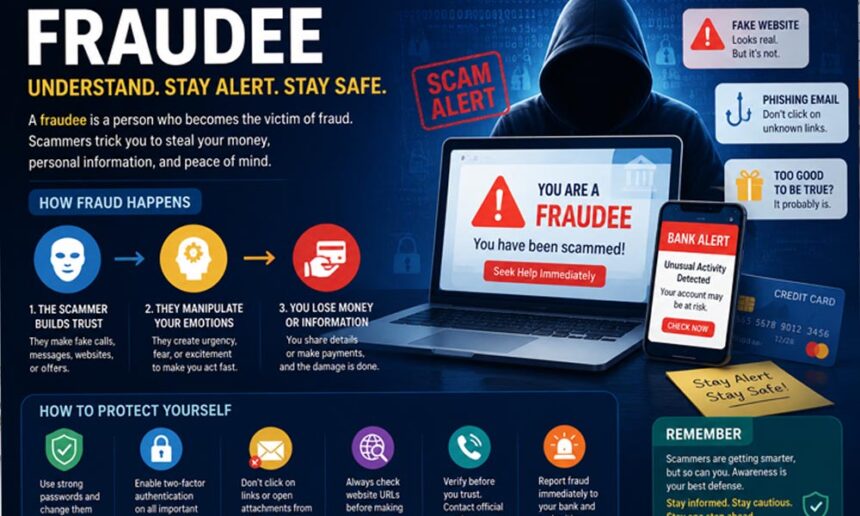
A fraudee is a person, business, or organization that becomes the victim of fraud. In simple words, it means someone who is tricked into giving away money, personal details, or valuable information because they trusted something that was not real.
Think about this simple example. You find a website selling a brand-new phone for half the normal price. The deal looks amazing, so you place an order and pay. Days pass, but nothing arrives. Later, you discover the website was fake. In this situation, you are the fraudee because you were deceived.
Being a fraudee does not always mean losing money. Sometimes criminals steal personal information instead. They may use your name to open bank accounts, apply for loans, or make online purchases. Even though you never approved these actions, you still become the fraudee because your identity was used without permission.
The word fraudee is becoming more common because online fraud continues to grow every year. As more people shop, bank, invest, and work online, the number of fraud victims also increases. Understanding this simple term helps people recognize the problem and learn how to avoid becoming the next fraudee.
Fraudee vs Fraudster
Many people confuse the words fraudee and fraudster, but the difference is actually very simple.
A fraudster is the person who plans and carries out the scam. They create fake websites, send false emails, make dishonest phone calls, or promise amazing offers that do not really exist. Their goal is to steal money, personal information, or valuable data from others.
A fraudee is the person who believes the scam and suffers the loss. The fraudee may lose money, personal information, business records, or even peace of mind. The fraudee is the victim, while the fraudster is the criminal.
Here is an easy way to remember it:
-
Fraudster = The person who cheats
-
Fraudee = The person who gets cheated
For example, imagine someone pretends to work for your bank. They call you and ask for your online banking code. You believe them and share the information. They empty your account. The fake bank worker is the fraudster, while you become the fraudee.
Knowing the difference between these two words makes it much easier to understand how fraud works and how to talk about it correctly.
Who Can Become a Fraudee?
One of the biggest myths about fraud is that it only happens to people who are careless. The truth is very different. Anyone can become a fraudee, no matter their age, education, or experience.
Students may receive fake scholarship emails. Workers may get fake job offers. Parents can fall for online shopping scams. Older adults are often targeted with fake support calls or investment offers. Every group faces different types of fraud, but the result is often the same.
Businesses can also become fraudees. A small company might receive an invoice that looks completely real. The payment is sent, but later the business learns the supplier never existed. Some businesses lose thousands of dollars because of one fake email.
Large companies, charities, and even government organizations can become fraudees too. Criminals often target organizations because larger payments can mean larger rewards. Fraud does not choose its victims based on size. It simply looks for opportunities.
Even people who work in technology or finance sometimes become fraudees. Fraudsters understand human emotions. They create fear, excitement, urgency, or trust to make people act without thinking carefully.
This is why learning about fraud is so important. The more you understand how scams work, the better your chances of avoiding them.
How Someone Becomes a Fraudee
Most scams do not happen in a single moment. They usually follow a step-by-step process designed to gain your trust before taking your money or information.
The first step is building trust. A fraudster may pretend to be from your bank, a delivery company, a government office, or even someone you know. They often use official-looking logos, websites, and email addresses that seem completely real.
The second step is creating pressure. You may hear things like, “Your account will be locked today,” or “This offer ends in one hour.” These messages are designed to make you react quickly instead of thinking carefully.
The final step is exploitation. Once you click the fake link, share your password, send money, or provide personal information, the fraudster has what they wanted. At that moment, you become the fraudee.
Imagine receiving a message saying there is suspicious activity on your bank account. You panic and click the provided link without checking it. The website looks exactly like your bank’s login page, so you enter your username and password. Within minutes, the criminals access your account.
This example shows that fraud is not only about technology. It is also about human emotions. Fear, trust, excitement, and curiosity are often the tools that fraudsters use the most.
Common Scams That Create Fraudees
Fraud comes in many different forms. Some scams have existed for years, while others are becoming more advanced because of new technology. Knowing the most common scams can help you recognize danger early.
Online shopping fraud is one of the biggest problems today. A fake website advertises expensive products at very low prices. People place orders, but the products never arrive. The website disappears, leaving the buyers as fraudees.
Phishing scams are also extremely common. These usually arrive through email, text messages, or social media. They ask you to click a link, update your account, or confirm your personal details. The goal is to steal your passwords or banking information.
Investment scams continue to grow in 2026. Criminals promise quick profits with little or no risk. Some even create professional-looking investment platforms with fake charts and customer reviews. People invest their savings only to discover everything was fake.
Cryptocurrency scams have also become more common. Fake trading websites, fake coins, and fake investment groups often target people who are new to digital assets. Because crypto payments are difficult to reverse, recovering lost money can be very hard.
Identity theft is another serious problem. Criminals steal personal details such as your name, address, or national ID number. They may use this information to open accounts, apply for loans, or make purchases without your knowledge.
Business fraud is also increasing. Criminals send fake invoices, pretend to be trusted suppliers, or trick employees into transferring company money. Small businesses are especially at risk because they often have fewer security checks.
Romance scams, fake job offers, social media giveaways, and fake customer support calls are also creating new fraudees every day. While each scam looks different, they all have one thing in common—they depend on trust and quick decisions.
Warning Signs of a Possible Fraudee
Many people only realize they are a fraudee after losing money. However, fraud often leaves warning signs before the damage becomes too serious. Learning to spot these signs can help you act quickly.
One of the biggest warning signs is finding bank transactions you do not recognize. Even a small payment should never be ignored. Criminals sometimes test an account with a small amount before attempting a much larger theft.
Another common warning sign is receiving password reset emails or login alerts that you did not request. This may mean someone is trying to access your account. If this happens, change your password immediately and enable extra security if available.
Be careful if someone contacts you unexpectedly and asks for private information. Real banks, government offices, and trusted companies rarely ask for passwords, security codes, or full banking details through email, text messages, or phone calls.
You should also question offers that sound too good to be true. Huge discounts, guaranteed investment profits, or prizes you never entered are often signs of fraud. Fraudsters want you to feel excited so you stop asking questions.
Another warning sign is being pressured to act immediately. Messages like “Pay within one hour,” “Your account will be closed today,” or “Do not tell anyone” are designed to create panic.
Whenever something feels unusual, pause for a moment and think. A few extra minutes of checking could save your money, your identity, and your peace of mind.
The Real Impact of Fraud on a Fraudee
Becoming a fraudee is about much more than losing money. The effects can stay with someone for months or even years. Some people lose a small amount, while others lose their savings, personal information, or even their business.
The first and most obvious impact is financial loss. A fraudee may lose money from a bank account, credit card, online payment app, or fake investment. Sometimes banks can help recover the money, but not every case has a happy ending.
The emotional impact can be just as serious. Many fraudees feel shocked, angry, embarrassed, or worried after being scammed. Some even blame themselves, even though the fraud was carefully planned by criminals. It is important to remember that anyone can become a fraudee.
Fraud can also damage trust. After being tricked once, many people become afraid to shop online, answer phone calls, or trust emails. This can make daily life more stressful and less enjoyable.
In some cases, fraud creates legal and financial problems that take months to fix. A stolen identity may lead to fake loans, unpaid bills, or damaged credit records. Fixing these issues often takes time and patience.
One important thing to remember is that fraud is not a victimless crime. Every scam affects real people, real families, and real businesses. The damage often goes far beyond the money that was stolen.
How Fraud Hurts Businesses and Society
Fraud does not only affect individuals. Businesses of every size can also become victims. In fact, small businesses are often at greater risk because they usually have fewer security checks and fewer employees to spot suspicious activity.
Imagine a small business paying a fake supplier. The money is gone, but the products never arrive. For a large company, this may be a setback. For a small business, it could mean serious financial trouble or even closure.
Fraud also hurts customers. When businesses lose money, they may have to increase prices, reduce services, or delay new projects. Honest customers often end up paying the price for crimes they had nothing to do with.
The impact reaches even further. Governments lose billions of dollars every year because of fraud. That money could have been used for schools, hospitals, roads, or other public services. When fraud increases, everyone in society feels the effects.
Charities and non-profit groups can also become targets. If donations are stolen, fewer people receive the help they need. This can affect families, older adults, children, and many others who depend on these services.
Fraud also damages trust in industries. When customers hear about repeated scams, they become more careful about where they shop, invest, or share personal information. Honest businesses must work even harder to earn that trust back.
How to Avoid Becoming a Fraudee
The good news is that many scams can be avoided by following a few simple habits. You do not need to be a technology expert. You simply need to stay aware and take your time before making important decisions.
Start by using strong passwords for all your accounts. Avoid using your name, birthday, or simple number patterns. Create different passwords for different accounts so one stolen password cannot unlock everything.
Turn on two-factor authentication whenever possible. This adds another layer of protection by asking for a second code before someone can log in. It only takes a few seconds but can stop many attacks.
Always check website addresses before entering personal or payment details. A fake website may look almost identical to the real one. Look carefully for spelling mistakes or unusual web addresses.
Be careful with emails, text messages, and phone calls asking for private information. If someone creates pressure by saying, “Act now,” slow down instead. A few extra minutes of checking can prevent a costly mistake.
Before buying something online, read reviews and make sure the seller is trustworthy. If an offer seems unbelievably cheap, ask yourself why. Most scams begin with deals that seem too good to be true.
Finally, keep your phone, computer, and apps updated. Security updates fix problems that criminals often try to use. These simple habits greatly reduce your chances of becoming a fraudee.
What to Do If You Become a Fraudee
If you discover that you have become a fraudee, do not panic. Acting quickly gives you the best chance of reducing the damage.
Your first step should be contacting your bank or payment provider. Tell them exactly what happened and ask them to block your card, freeze suspicious transactions, or secure your account if needed.
Next, change your passwords right away. Start with your email account because many other accounts are connected to it. Then update your banking, shopping, and social media passwords using strong, unique combinations.
You should also report the fraud to your local authorities or the official fraud reporting service in your country. Keep all emails, text messages, receipts, screenshots, and payment records because they may help during the investigation.
If your identity was stolen, check your credit reports and financial accounts regularly. Look for loans, purchases, or accounts that you did not create. Finding these early makes them easier to fix.
One more thing to remember is that scammers sometimes contact victims again. They may promise to recover your money for a fee. This is often another scam. Be careful and only work with trusted organizations.
The faster you act, the better your chances of limiting the damage and protecting yourself from future fraud.
Fraudee Rights, Technology, and Future Risks
Many people do not realize that a fraudee has important rights. If you become a victim, you have the right to report the crime and ask for help from your bank, payment provider, or local authorities.
In some situations, you may also be able to recover part or all of your money. The outcome depends on how the fraud happened and how quickly it was reported. This is why acting immediately is so important.
Banks and technology companies are working harder than ever to stop fraud. Many banks now use smart computer systems that watch for unusual activity. If your card is suddenly used in another city or country, you may receive an alert within seconds.
Modern security tools such as fingerprint scans, face recognition, and one-time verification codes also make accounts much safer. These tools cannot stop every scam, but they make it much harder for criminals to succeed.
Looking ahead, fraud will continue to change. In 2026, criminals are already using artificial intelligence to create fake voices, realistic videos, and convincing emails. These scams can look very real, making awareness more important than ever.
Cryptocurrency scams, fake investment platforms, and social media fraud are also growing. As technology improves, criminals continue looking for new ways to trick people. Learning about these risks is one of the best ways to stay protected.
The future belongs to people who stay informed. The more you learn about online safety, the harder it becomes for fraudsters to fool you.
Conclusion
A fraudee is someone who becomes the victim of fraud, but the story does not have to end there. Learning how fraud works is one of the strongest ways to protect yourself and the people around you.
The internet makes life easier in many ways. We can shop, pay bills, invest, and talk to people around the world in just a few clicks. But these same tools also create opportunities for scammers. That is why staying alert matters more than ever in 2026.
Remember that anyone can become a fraudee. Age, education, or experience do not guarantee protection. Fraudsters are becoming smarter, and they often use trust, fear, or excitement instead of complicated technology.
The best defense is simple. Slow down before clicking a link, check information carefully, use strong passwords, and never feel pressured into making quick decisions. Small safety habits can prevent very big problems.
If you ever become a fraudee, do not feel ashamed. Report the fraud, protect your accounts, and ask for help as soon as possible. Quick action can reduce the damage and improve your chances of recovery.
Always remember this simple rule: If something feels wrong or sounds too good to be true, stop, check, and think before you act. That small pause could protect your money, your identity, and your peace of mind.
(FAQs)
What is a fraudee in simple words?
A fraudee is a person, business, charity, or organization that becomes the victim of fraud. This happens when someone uses lies, fake offers, false messages, or stolen details to take money or information. In simple words, the fraudster cheats, and the fraudee is the one who suffers the loss.
What is the difference between a fraudee and a fraudster?
A fraudster is the person who plans or carries out the scam. A fraudee is the person or group that gets tricked. For example, if someone creates a fake shopping website and takes your payment, that person is the fraudster. You are the fraudee because you trusted the offer and lost money.
Can a smart and careful person become a fraudee?
Yes, anyone can become a fraudee. Scammers do not only target careless people. They often use fear, trust, pressure, or excitement to make people act quickly. Even a smart person may click a fake bank link if the message looks real and says their account is in danger.
What are the most common types of online fraud?
Common online fraud includes fake shopping websites, phishing emails, identity theft, investment scams, romance scams, fake job offers, and banking fraud. Social media scams and fake customer support messages are also common. Most of these scams try to steal money, passwords, card details, or personal information.
How can I know if I have become a fraudee?
You may have become a fraudee if you notice unknown bank payments, login alerts you did not request, missing money, new accounts in your name, or strange changes in your credit record. You may also receive messages about purchases or loans you never made. Any unusual account activity should be checked quickly.
What should I do first after becoming a fraudee?
Contact your bank or payment provider first. Ask them to block your card, stop payments, or secure your account. After that, change your passwords, especially your email password. Save all messages, receipts, screenshots, and payment records. You should also report the fraud to the correct local authority.
Can a fraudee get their money back?
Sometimes a fraudee can recover the money, but it depends on the type of fraud and how quickly it is reported. Banks may reverse certain payments or block a transfer before it is completed. However, money sent through gift cards, cryptocurrency, or direct transfers can be harder to recover.
How can I avoid becoming a fraudee?
Use strong and different passwords for every account. Turn on two-factor authentication and avoid clicking unknown links. Check website addresses before entering payment details. Never share passwords or security codes. Most importantly, slow down when someone pressures you to act quickly or send money.
Can businesses and charities also become fraudees?
Yes, businesses and charities can become fraudees. They may receive fake invoices, pay false suppliers, or lose money through hacked email accounts. Charities can also lose donations to fraud. Small organizations may face greater risk because they often have fewer staff members and weaker security checks.
Why is fraud becoming more dangerous in 2026?
Fraud is becoming more dangerous because scammers now use advanced technology. They can create fake voices, realistic videos, copied websites, and very convincing emails. AI makes some scams harder to detect. More people also shop, bank, work, and invest online, giving fraudsters more chances to find victims.
You might also like: Neatlanta: A Complete Guide to This Growing Online Trend