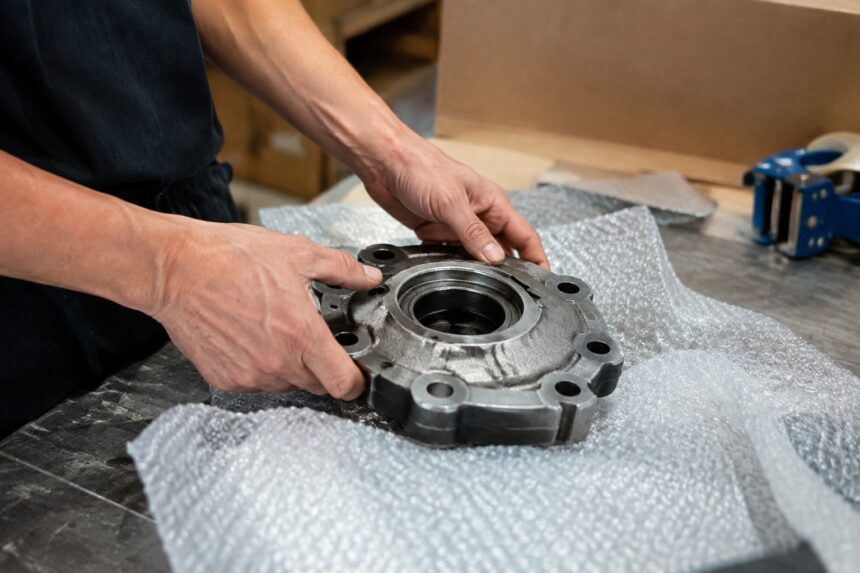
Seven out of ten heavy-part shipments don’t need a box. They just ship in one because that’s how the line was set up in 2014.
Industrial mailers are changing that math for a lot of 3PLs and distribution centers this year. Carrier rate changes keep punishing dead air, and every extra inch of carton shows up on the invoice. So managers are asking a blunt question: can a rigid corrugated or padded mailer carry a 4-pound bracket without the damage claims piling up?
Sometimes yes. Sometimes it’s a disaster. After 22 years of running docks, I’d say the difference comes down to construction, fit, and whether anyone bothered to test before buying a pallet. Skip that step, and you’ll find out the expensive way (usually mid-peak, when you can’t switch).
Here’s how to sort the winners from the problem mailers.
Why Warehouse Managers Are Rethinking Industrial Mailers Right Now
A pick line is running behind on a Tuesday.
Pallets of 12-inch brackets sit staged next to a stack of 14x11x6 cartons, and the dock supervisor is staring at a carrier invoice that’s higher than last quarter’s, again. That’s the moment a lot of teams start asking whether a mailer could do the job.
Carrier Rate Changes and Dimensional Weight Are Pushing Teams Off Boxes
Dimensional weight is the culprit. A carton with three inches of dead air gets billed for air. Carriers have bumped rates 5-9% a year, so that waste adds up fast. A flat corrugated or rigid mailer cuts the billable cube, and it stores flat, so a case takes a fraction of the shelf space.
Do the math on your own lanes. Pull 30 days of invoices, flag every parcel billed on dim weight, and count them. Most managers are shocked.
What Counts as an Industrial Mailer (and What Doesn’t)
Here’s the line. Industrial mailers are built for dense, abrasive, or awkward items. Think puncture-resistant poly at 2.5 mil or thicker, crush-resistant corrugated, and foam-lined or padded formats.
- Counts: heavy-gauge poly for soft goods and small hardware, rigid corrugated for flat parts, bubble-lined for fragile electronics.
- Doesn’t: thin retail envelopes sold by the dozen, or anything that stretches at the seam.
Weight matters more than size. Test the seal first.
Matching Mailer Construction to Part Weight and Shape
Weight alone doesn’t pick the mailer. Shape does half the work. Industrial mailers fail at corners and edges, so a 2-pound bracket with sharp points needs a different build than a 2-pound flat plate (a distinction most buyers learn after the first claim).
Rigid Corrugated and Crush-Resistant Cardboard Mailers for Flat, Dense Parts
Go corrugated first for flat, dense parts like gaskets, shims, and brackets. Die-cut, self-locking designs ship flat, stage fast, and hold their shape under a stacked pallet. Most run reliably to about 10 pounds. Past that, the fold lines start to give. Check the board grade, not the label.
Padded and Bubble Lined Mailers for Small Fragile Components
Bubble — padded mailers suit sensors, fittings, and small electronics. A 10×13 handles most of those loads, and the cushion absorbs drops that would crack a part in plain kraft. Here’s the catch: sharp-edged metal can cut through the inner bubble layer. Wrap those parts first.
Poly Mailers: Where They Hold Up and Where They Tear
Poly is cheap, light, and waterproof. It’s also the first thing to split on a heavy shipment. Use it for:
- Soft goods and cable assemblies
- Hardware kits under 2 pounds
- Parts already sealed in their own bags
Skip it for anything with points or hard corners. Thickness matters here, and 2.5 mil is the practical floor. One more thing: recyclable options exist, but they don’t change the tear strength.
Reading the Numbers: Damage Rates, Cost Per Order, and Reorder Points
So what do you actually track once industrial mailers hit the dock? Three numbers. Damage rate, packaging cost per order, and days of stock on hand. Skip any one, and you’re guessing.
Here’s what most people miss: a mailer that looks cheap on the invoice can lose money fast. If damage runs above 1.5%, the refund, the reship, and the postage both ways wipe out the savings from a lighter poly or padded envelope.
Running a 500-Order Pilot Before You Buy a Pallet
Pull 500 orders of one heavy SKU. Pack them in the new mailer, whether that’s rigid corrugated, a kraft padded envelope, or a heavy poly. Log everything.
- Damage claims and returns tied to those 500 shipments.
- Pack time per order (seconds matter at volume).
- Billed weight compared to your current box.
Two weeks of data beats any spec sheet. Compare it against a matching 500 shipped the old way.
Setting Par Levels for Bulk and Wholesale Mailer Stock
Use a simple formula.
Daily usage times lead time, plus a safety buffer of three to five days. Ship 400 mailers a day with a four-day lead time? Your reorder point sits near 2,400.
Cases of 250 or 500 flat mailers take little floor space, so you can hold more without crowding the aisle. Review par levels monthly. Seasonal swings will bite you otherwise.
Sizing, Sealing, and Storage Details That Decide Whether Mailers Work
About 1 in 3 damage claims on mailer shipments trace back to a bad fit, not weak material. Industrial mailers hold up fine when the part sits snug. They fail when it slides.
Sizes Like 10×13 and Why Fit Beats Void Fill
A 10×13 padded envelope handles most small brackets, fittings, and gaskets. But a heavy part in a mailer that’s two inches too big will punch through the corner in transit. Size up only when the part needs it. Skip the extra paper, since void fill adds weight and the part still shifts.
Measure the part, add about half an inch per side, and stop there. Corrugated mailers with a rigid frame suit flat, dense parts. Bubble-lined poly suits odd shapes.
Seal Strength, Kraft Versus Plastic, and Recyclable or Compostable Options
Test the seal before you order a case.
Press it, load it, drop it from waist height. A weak strip is the first thing to go.
- Kraft paper mailers: better tear resistance for sharp edges, and easy to recycle.
- Poly mailers: waterproof and light, but they puncture faster under point loads.
- Compostable options: fine for light parts. Check the seal on every lot (humidity changes adhesive).
Flat Storage and Pick-Line Layout
Mailers store flat, so a pallet holds thousands where boxes hold hundreds. Put your top three sizes at waist height on the pick line. Keep the rest overhead, and set a reorder point at two days of volume.
Heavy parts don’t automatically mean a box. That’s the lesson most pick lines learn only after a few rounds of testing. Industrial mailers can carry dense, flat, or small hardware just fine when the construction matches the weight and the fit is tight, and they’ll shrink dimensional weight bills while they’re at it.
But the spec sheet won’t settle it. Damage rates will. A warehouse manager who ships 500 orders in a candidate mailer, logs every return, and compares cost per order against the current box has a real answer instead of a guess. (Most teams skip this step. Most teams regret it.)
Once a mailer passes the pilot, par levels and flat storage keep it from becoming a new headache at the pick line.
So here’s the next step. Pick your three heaviest, highest-volume SKUs this week. Weigh them, measure them, and match each one to a rigid corrugated, padded, or poly option from the sizing section. Run the 500-order test on the best fit, and set the reorder point only after the damage numbers come back clean.