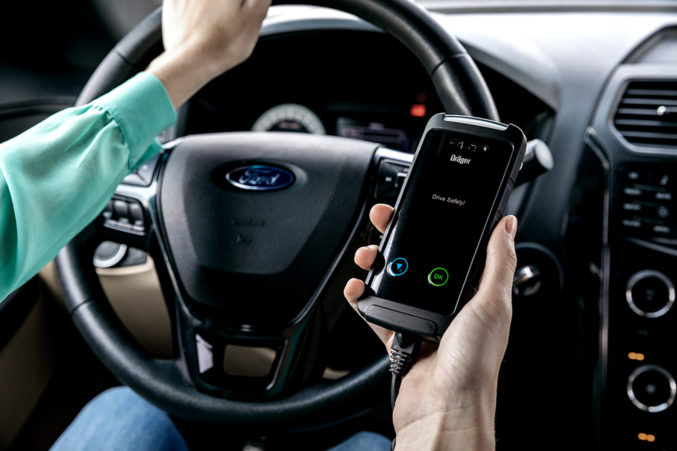
I have a friend who recently got a DUI. It was his first offense with a low BAC reading and no accident involved. He is losing his license for a few months and has to pay a fine. What really surprised him and I was shocked too when he told me that he has to install an interlock in his car. He had no idea that something like this existed. I had no idea either.
Most people don’t know anything about Interlocks until they need one.
I tried to outline what actually happens when the interlock requirements are triggered and the differences between “maybe” and “almost for sure” cases.
What Does Require Mean (and Why It Gets Complicated Real Fast)
A common misconception is that interlock devices are only required for very serious offenses. However, impaired driving offenses that require an interlock can be very serious or even relatively minor. Impaired driving is a serious offense and can have very serious consequences, including the loss of your license and even your freedom.
Ignition interlock devices are required for impaired driving offenses. However, the interlock requirement is based on a number of different factors such as the province where the offense was committed, the severity of the offense, the offender’s blood alcohol concentration (BAC) reading at the time of the offense, and whether or not the offense is a first offense or repeat offense. There is no national interlock program in place across Canada. Instead, each province has its own interlock program and the rules for interlock in each province are different. For example, the rules for interlock in Ontario are very different from the rules for interlock in Alberta or in BC.
In some provinces, interlock devices are required for a first offense even for a low reading of BAC. Impaired driving offenses generally have seen interlock requirements increase in recent years across Canada.
- A first-time impaired driving conviction, even with no accident or injury involved
- Any conviction where BAC was 0.16 or higher (often called “high BAC” and treated more seriously)
- Repeat impaired driving offences, where interlock periods are typically much longer
- Situations where a driver refused to provide a breath sample (refusal is often treated as harshly as a high BAC reading)
- Court-ordered conditions, sometimes even before a formal conviction, as part of a probation arrangement
In some provinces, interlock requirements are now mandatory for first offenders with low readings. Impaired driving offenses are generally required to be treated with more severity, and many offenses will require an interlock condition for a period of time.
Is Interlock Required or Optional?
To make things clearer, in most of the provinces across Canada, when you get a DUI and you lose your license for a period of time, when your license is reinstated it is conditional and you have to go through the interlock program in order to be able to drive again. Therefore, the interlock program is not an additional suspension of your license. It is a program that you go through in order to get your license back in the first place.
This is an important point of confusion. Many people understand that after their license has been suspended for a period of time (as it is with a first time DUI offense for example) that they will receive their license back after that period of time has expired. However, what they don’t realize is that this is not the case. Instead, after the hard suspension has expired, the convicted driver must apply for reinstatement of their license. The interlock device is one of the many conditions of having their license reinstated.
To give you an idea of the options available for the interlock devices for cars currently being distributed by certified providers through Canada, click here for the ignition interlock device products.
Interlock devices have to be serviced (calibrated) every 60 days, and the results of all breath tests and program data transferred to the Province by the provider. Failed tests, late calibrations, and any attempt to tamper with an ignition interlock device, among other things, will result in penalties against the driver. The majority of Canadians underestimate just how much monitoring is going on with an interlock installation in their vehicle.
How BAC levels and offense history stretch the timeline
The length of an interlock requirement depends on the severity of your offense. The following are general guidelines for typical interlock requirements by offense type:
| Scenario | Typical interlock period | Hard suspension first? |
| First offence, BAC under 0.16 | 1 year (approximately) | Yes, often 3 months |
| First offence, BAC 0.16 or higher | 1 to 3 years | Yes, longer initial suspension |
| Second offence | 2 to 3 years minimum | Yes, significantly longer |
| Third or subsequent offence | 3 years or indefinite | Yes, multi-year suspension possible |
| Refusal to provide breath sample | Treated similarly to high BAC | Yes |
The misconceptions that keep tripping people up
There is a misconception that interlock devices are typically required after a person has been convicted of an impaired driving offense. However, in many provinces, the interlock device is required as a condition of an administrative license suspension prior to the impaired driving offense even being heard in court. In such cases, the individual will be required to install an interlock device on all of their registered vehicles as a condition of their administrative license suspension at the roadside.
The misconception that the interlock is not required by someone who does not own or operate a vehicle. Most programs require an interlock to be installed on any vehicle that the offender regularly operates, whether registered in their name or not. This means that borrowing a family member’s car to go to the odd bar or party could result in the interlock being required on that vehicle as well.
There are a few Myths about Interlocks that I have come across. One of the biggest ones is that a person is not required to install an interlock until they have been convicted of an impaired driving offense. This is not true in many provinces. A person can be required to install an interlock as a condition of having their administrative license suspension lifted following a roadside suspension. This can occur while a person is waiting for their impaired driving offense to be heard in court. This means that a person can be required to install an interlock before they have even entered a guilty plea for impaired driving.
This Article Is Not:
Please note that the information provided above is not legal advice. Because interlock legislation is constantly changing and every individual’s situation is unique it is strongly recommended that individuals charged with Impaired Driving or Over .08 seek the advice of a competent lawyer who practices in the province where the offense was committed. The above article serves as a general knowledge base for the interlock legislation as it pertains to Impaired Driving charges, however it is by no means a substitute for a qualified legal advisor. My friend’s situation could have been avoided with the simple phone call to inquire as to the installation of an interlock device in his car. Instead, he found out the hard way while standing in a parking lot, phone in hand, that his car was about to be converted into a very expensive breath testing device. He went on to complete the full program of interlock monitoring, was able to have his full license returned but it was a long drawn out process that never really left him. Monitoring an interlock device never really left his consciousness.
The individual in question completed his portion of the Smart Start ignition interlock program and was returned to his full unrestrictive Province-issued drivers license. Monitoring proved to be an added inconvenience to the individual but one he grew accustomed to in time.