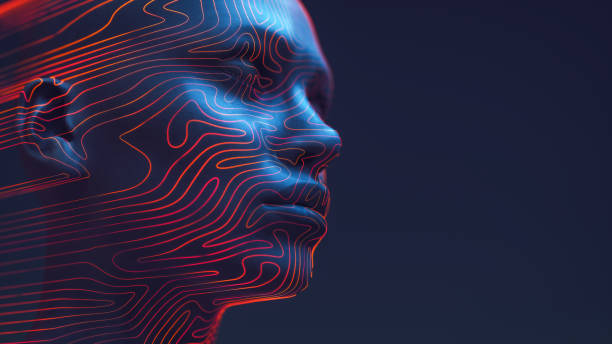
A few years ago, “photoshopped” was the word people reached for when a picture felt wrong. Today it’s not enough. Diffusion models and GAN-based generators can produce faces, products, and entire scenes that never existed, and they do it in seconds. That shift has pushed a very practical tool into the mainstream: the AI image detector.
Whether you’re a journalist checking a viral photo, an online seller verifying product images, or someone who just got sent a picture that feels a little too perfect, the questions people ask about AI image detection tend to repeat themselves. Below are the ones that come up most often, along with straightforward answers.
What exactly does an AI image detector look for?
An AI image detector isn’t just glancing at a picture and guessing. It examines the file at a technical level, checking things a human eye would never catch: pixel-level noise patterns, the consistency of lighting and shadows across the frame, how textures behave up close, and whether objects relate to each other the way they would in a real photograph. Color distribution is another giveaway, since generative models often produce palettes that are subtly more uniform than natural photography.
CudekAI’s AI Image Detector runs an uploaded image through several of these layers at once, analyzing pixel patterns, texture consistency, lighting physics, facial features, and object relationships together rather than relying on a single signal. That layered approach is closer to how a trained analyst would work through an image than a single-pass scan.
Can these tools actually tell AI images apart from edited photos?
This is where a lot of people get tripped up. A heavily filtered or Photoshopped photo isn’t the same thing as one generated from a text prompt, and a good detector needs to draw that distinction rather than lumping everything into “suspicious.”
CudekAI’s tool separates these cases: it evaluates edited photos and enhanced visuals differently from fully AI-generated or partially generated content, so the result tells you not just whether something looks synthetic, but what kind of alteration is likely involved. That matters if you’re deciding whether a photo was doctored, upscaled, or built from scratch.
Does it work on images from specific AI generators, like Midjourney or DALL·E?
Yes, and this is one of the more technical but useful parts of image forensics. Different generators leave different “fingerprints” — subtle noise signatures tied to how their models were trained and how they render an image.
CudekAI’s detector is built to recognize output signatures from named generators including DALL·E 3, Midjourney v6, Stable Diffusion XL, Bing Image Creator, Adobe Firefly, and Leonardo.AI, along with dozens of other AI art tools. Because it’s checking for generator-specific patterns rather than one generic “AI or not” signal, it holds up better against newer models than tools built around a single detection method.
What about deepfakes and altered ID documents?
This is arguably the highest-stakes use case. A manipulated face in a video call or a doctored ID isn’t just a content-quality problem, it’s a fraud and trust problem. Detection here needs to catch manipulation patterns, not just obvious generation artifacts.
CudekAI’s Image Detector is built to flag deepfakes and fake documents specifically, in addition to general AI-generated imagery, which is why it gets used beyond content teams — by anyone who needs to confirm that a face, signature, or document is what it claims to be.
Will heavy editing or compression fool the detector?
It’s a fair concern. Someone trying to hide AI generation will often compress an image, resize it, or run it through a filter before sharing it. A weak detector can be thrown off by that kind of post-processing.
CudekAI addresses this by pairing pattern recognition with noise fingerprinting designed to persist through compression and format conversion, so heavily edited images don’t automatically slip through as “human-made.” No detector is immune to determined tampering, but this kind of layered check is meaningfully harder to defeat than a basic metadata scan.
Is there a free way to try one before committing to a paid tool?
Most people don’t want to hand over payment details just to check a single suspicious photo, and they shouldn’t have to. CudekAI offers a free version of its AI Image Detector, letting you test image authenticity without downloading software or creating an account, with paid plans available for higher volume or more frequent use. That’s a reasonable way to get a feel for how a detector performs before deciding whether you need it regularly.
How accurate are these tools, really?
Be skeptical of any AI detector, image or text, that claims to be flawless. Detection is probabilistic by nature, and results are best read as a confidence score rather than a courtroom verdict. Complex, heavily edited, or borderline images can still produce occasional false positives or false negatives.
CudekAI reports accuracy above 94% across its testing, and — as with any detector — that number holds up better on straightforward cases than on ambiguous, multi-layered edits. Pairing the tool’s confidence score with a manual check (odd hand anatomy, garbled text in the image, inconsistent shadows) is still the most reliable approach.
The bottom line
AI-generated images aren’t going away, and neither is the need to verify what’s real. The useful question isn’t whether an AI image detector is perfect — none are — but whether it gives you a clear, layered, and current read on an image so you can make an informed call. Tools like CudekAI’s AI Image Detector, which combine multi-layer forensic analysis, generator-specific fingerprinting, and a free tier to test the waters, are built for exactly that job.