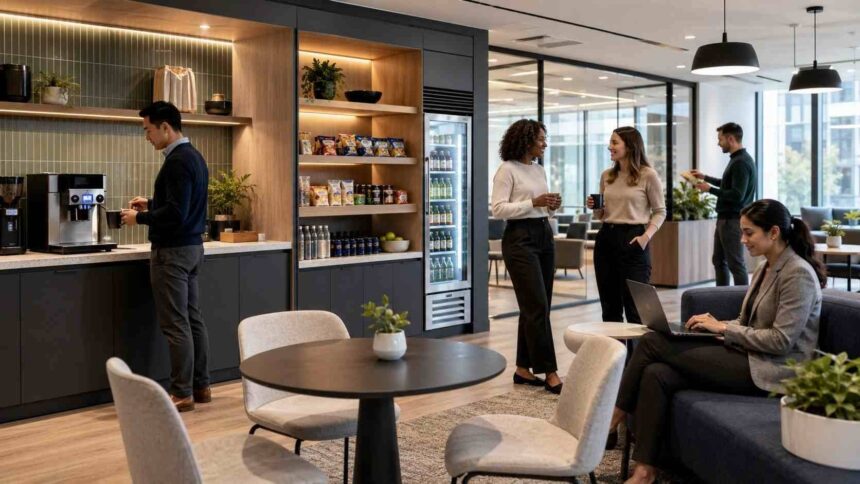
The modern workplace is no longer defined only by desks, meeting rooms, and basic office equipment. Companies are paying much more attention to the overall employee experience, including the spaces and services people use throughout the workday. From wellness areas and collaborative spaces to an office pantry service, workplace amenities are increasingly viewed as practical investments that can support employee satisfaction, convenience, and day-to-day productivity.
One reason for this shift is the growing competition for skilled employees. Salary and benefits remain important, but workers also notice the environment in which they are expected to spend much of their day. A workplace that feels comfortable, well maintained, and thoughtfully designed can create a stronger impression than an office that provides only the basics. Businesses therefore have an incentive to consider how everyday amenities contribute to the overall employee experience.
Convenience has also become an important part of workplace design. Employees may lose valuable time when they need to leave the office for coffee, snacks, meals, or other basic needs. Providing convenient options within the workplace can reduce unnecessary interruptions and make it easier for people to manage their schedules. For employers, small improvements in convenience can contribute to a smoother and more efficient working environment.
Food and beverage options are a good example of how workplace amenities are evolving. A well-managed company pantry can provide employees with convenient access to drinks, snacks, coffee, and other refreshments without requiring them to leave the workplace. While these services may seem simple, they can make the office more comfortable and give employees useful spaces where they can take short breaks, recharge, and interact with colleagues.
Employee Experience Has Become a Business Priority
Employee experience covers nearly every interaction a person has with their workplace, from technology and management practices to physical surroundings. Businesses increasingly recognize that the office itself can influence how employees feel about coming to work.
Comfortable seating, reliable technology, quiet areas, wellness spaces, and accessible refreshments can all contribute to a better working environment. No single amenity will determine whether an employee stays with a company, but together these features can communicate that the organization pays attention to employees’ everyday needs.
This matters particularly as companies encourage employees to spend more time in physical offices. If workers can complete many tasks remotely, businesses need to think carefully about what the workplace offers beyond a desk and an internet connection. Amenities can help make the office a place where employees can collaborate, connect, and work comfortably.
Better Amenities Can Support Productivity
Workplace productivity is influenced by more than individual effort. The environment surrounding employees can either make daily tasks easier or create unnecessary distractions.
For example, employees who regularly leave the office to buy coffee or lunch may spend additional time traveling, waiting in lines, and returning to work. Providing convenient alternatives inside the workplace can reduce some of these interruptions. Break areas can also give employees an appropriate place to step away from their desks rather than remaining in the same position throughout the day.
The goal should not be to eliminate breaks. Short breaks are a normal part of the workday. Instead, employers can create spaces that allow employees to take those breaks conveniently and return to their responsibilities without unnecessary delays.
Amenities Can Strengthen Workplace Culture
Some of the most useful workplace amenities also create opportunities for informal interaction. Employees from different teams may rarely work together directly, but shared areas such as kitchens, lounges, coffee stations, and break rooms give them opportunities to meet naturally.
These informal conversations can help employees build relationships across departments. A stronger sense of connection can be especially valuable in larger organizations where teams might otherwise operate separately.
Businesses can therefore think about amenities not only as individual perks but also as shared spaces that support workplace culture. Thoughtful design can encourage interaction without forcing employees into scheduled networking activities.
Businesses Are Competing for Talent
Recruitment has made workplace experience more important for many employers. Candidates often compare several factors when evaluating job opportunities, including compensation, career development, flexibility, company culture, and the physical working environment.
An attractive workplace will not compensate for poor management or inadequate pay, but it can strengthen the overall employment package. Businesses that invest in practical amenities may demonstrate that they are willing to improve the everyday experience of their teams.
Amenities can also become part of an employer’s identity. A company emphasizing wellness, for example, might provide fitness facilities, healthy food choices, or comfortable outdoor spaces. A technology-focused organization might prioritize smart meeting rooms, collaborative workspaces, and flexible seating.
The most effective investments are usually those that reflect how employees actually work rather than simply following workplace trends.
Small Improvements Can Have Practical Value
Businesses do not necessarily need expensive renovations to improve workplace amenities. Smaller changes can often make a noticeable difference.
Upgrading coffee facilities, improving break rooms, adding comfortable seating, providing better food choices, or creating quiet areas can make the workplace easier to use. Employers can also collect employee feedback before making major investments to understand which improvements would be most valuable.
This approach helps businesses avoid spending money on amenities that look impressive but receive little use. A workplace gym, for example, may sound appealing, but employees might value better meal options or additional collaborative areas more highly.
Understanding employee preferences allows businesses to focus resources where they can provide the greatest practical benefit.
Workplace Amenities Should Match Business Goals
Amenities should ultimately support the broader goals of the organization. Companies should consider factors such as workforce size, office location, employee schedules, and available space before deciding what to provide.
A large corporate office may benefit from extensive food and beverage services, wellness facilities, and multiple collaborative areas. A smaller business might focus on a comfortable kitchen, quality coffee, flexible meeting spaces, and a few carefully selected employee conveniences.
The important point is that workplace amenities should serve a purpose. Businesses should evaluate whether an investment improves convenience, encourages collaboration, supports employee well-being, or makes the workplace more functional.
The Office Is Becoming an Experience
The role of the workplace continues to change. Offices are increasingly becoming places where employees collaborate, communicate, meet clients, and build relationships rather than simply complete individual tasks.
This shift makes the quality of the workplace environment more important. Businesses that want employees to use office spaces effectively need to consider how those spaces support both work and everyday needs.
Amenities are one part of that equation. When chosen carefully, they can make offices more convenient, comfortable, and appealing without distracting from the organization’s core business objectives.
Final Thoughts
Modern businesses are investing in workplace amenities because the employee experience has become closely connected to recruitment, productivity, culture, and workplace satisfaction. Companies are recognizing that the physical office can influence how employees interact with their organization and with one another.
The most successful workplace improvements do not need to be extravagant. Practical amenities that solve everyday problems, improve convenience, and create comfortable shared spaces can often provide meaningful value. As workplace expectations continue to evolve, businesses that understand what their employees actually need will be better positioned to create environments where people can work effectively and feel comfortable doing so.