Most vacations don’t actually rest anyone. You land, and within a day the itinerary takes over: the museum you’re supposed to see, the restaurant with the four-month waitlist, the viewpoint everyone photographs at sunrise because the algorithm said so. By the third day you’re more tired than you were at home, just tired in a different city. This isn’t a failure of willpower or planning. It’s what happens when a vacation is built around doing rather than around actually switching off — and there’s an increasingly well-studied reason why time near and on open water can help interrupt that pattern.
What Is the Blue Mind Effect?
Marine biologist Wallace J. Nichols popularized the term “Blue Mind” to describe the calm, mildly meditative state many people associate with being near, on, or in water. The term itself isn’t a clinical diagnosis or a single measured biomarker — it’s a concept, not a lab result. But it points toward something researchers do study under names like “blue spaces” and “blue health”: a growing body of work linking exposure to oceans, rivers, lakes and other waterscapes with lower reported stress, improved mood and greater perceived well-being. The UN’s own ocean assessment work has pointed to similar associations between marine and coastal environments and human wellbeing.
There is evidence for a physiological component, but it appears more modest than the popular version of the story suggests. Experimental studies on natural environments have found signs of physiological recovery after stress — including slower heart rate and increased parasympathetic activity in some settings. Earlier work cited in this literature has also reported similar recovery responses during exposure to forest and water environments. It isn’t a guaranteed switch that flips the moment water enters your field of view; it’s a pattern that shows up often enough, across enough studies, to take seriously.
Why Being Near Water Can Help Restore Attention
There’s a second, related idea worth knowing about: attention restoration. Attention Restoration Theory, developed by Rachel and Stephen Kaplan and later tested experimentally by other researchers, describes the role of “soft fascination” — the effortless kind of attention that watching waves, clouds, or a horizon line tends to hold, as opposed to the directed, effortful focus a packed itinerary or a phone screen demands. In the Kaplans’ framework, this kind of effortless engagement may give directed attention a chance to recover. In travel terms, it’s a very different mode from constantly navigating maps, reservations and sightseeing schedules — even if it isn’t literally “the opposite” of anything in a strict scientific sense.
Put those two strands together — evidence of physiological recovery in some settings, plus a well-established framework for understanding how natural environments may help restore attention — and you get a fairly grounded explanation for a feeling most people have had but never quite named: sitting by a pool with a to-do list still humming in the background doesn’t feel like a real vacation. An unhurried evening on open water often does.
Why Being on the Water Can Feel Different From Sitting Beside It
Not all “time near water” produces the same effect, and a crowded beach can undercut it more than people expect. A busy beach can introduce many of the same demands people are trying to escape on holiday: crowds, noise, belongings to manage, decisions about where to go next. The water is right there, but the surrounding conditions work against the kind of undemanding attention described above.
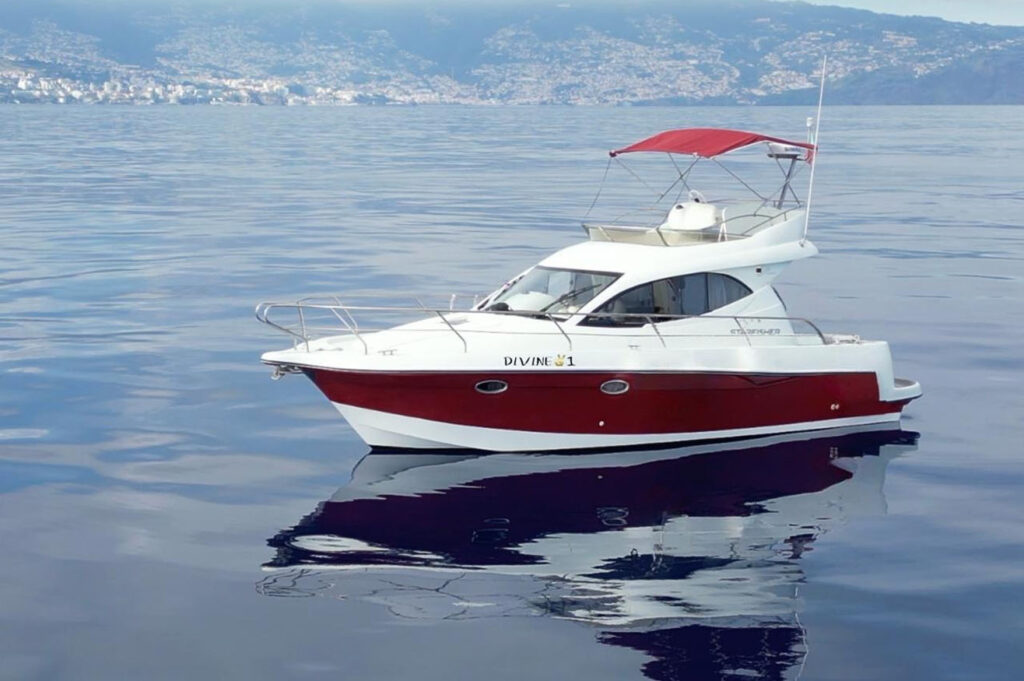
Being out on the water changes several of those conditions at once — there’s less to manage, fewer nearby decisions, and someone else is usually driving. Madeira’s own geography plays into this in a useful way: the island’s steep volcanic coastline means it opens quickly onto the Atlantic, so a private boat trip along Madeira’s coastline can shift the perspective from a busy waterfront to open sea surprisingly fast. That shift — from managing a shoreline to simply being on open water — is where the experience tends to diverge most from a standard beach day.
Why Sunset Changes the Experience
Evenings on the water are often the part of a trip people remember years later, after the museum and the restaurant have blurred together. It’s tempting to explain that with a tidy biological story about golden-hour light resetting the body’s clock, but the evidence for evening light as a simple “wind-down cue” is more complicated than that — depending on intensity and timing, evening light exposure can just as easily delay the body’s internal clock as calm it.
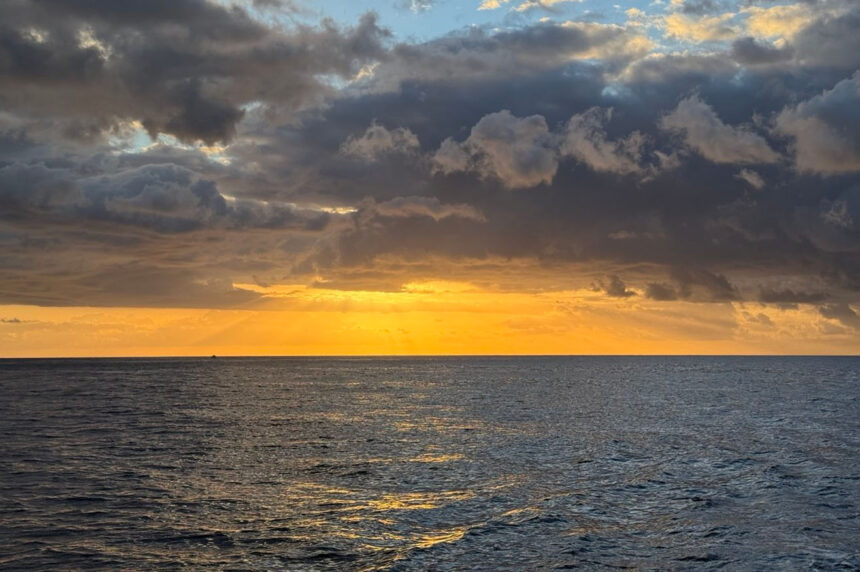
What changes most obviously at sunset isn’t some hidden physiological switch — it’s the environment itself. Brightness falls, visual contrast softens, activity along the coast begins to slow, and attention naturally narrows toward a single, slowly changing thing: the light on the horizon. A sunset boat trip in Madeira takes that shift and removes the variable that usually interrupts it on land — a schedule. Nobody’s checking a watch to make the next reservation; the boat simply moves along the coast as the light changes, and the only task is watching it happen.
How Fewer Decisions Can Make a Vacation Feel More Restful
There’s a less obvious cost to modern travel that rarely gets named directly: decision fatigue. Every “optimized” itinerary — the best restaurant, the best time slot, the best photo spot — is a small decision, and a vacation stacked with dozens of small decisions a day can produce a kind of tiredness that has little to do with physical activity. Mental rest isn’t necessarily the absence of activity. Often, what matters more is reducing the number of things that demand attention, planning and choice.
A private charter can reduce some of that decision load, because the route, pace and practical details are handled by the crew rather than continuously negotiated by the guests. Weather and sea conditions still shape the day, but passengers don’t need to manage every small decision themselves. It may sound like a minor luxury, but reducing those repeated demands on attention is one of the reasons an unstructured few hours can feel more restful than an equally enjoyable but tightly planned excursion.
How to Get More Restorative Time on the Water
None of this requires anything exotic — mostly it requires resisting the instinct to fill the time.
- Keep the phone out of reach for a while. Notifications and habitual screen-checking pull attention back toward tasks and decisions, which works against the kind of effortless engagement described in attention-restoration research.
- Don’t squeeze the outing between two commitments. A short gap in the schedule can feel very different from a stretch of time in which there is genuinely nowhere else to be.
- Give the experience enough time to unfold. Rather than treating the boat trip as another stop to complete, leave enough room for the surroundings, light and pace of the outing to change naturally.
- Let someone else make the small calls. Route, pace, when to stop — handing these off reduces the number of decisions competing for attention and makes it easier to stay engaged with the experience itself.
A Different Definition of a Good Vacation
None of this is an argument against museums or restaurants or the things that make a destination worth visiting in the first place. It’s a narrower point: if the goal of a vacation is genuinely to come back rested rather than merely well-photographed, the evidence — modest, real, and still being refined by researchers — points somewhere fairly specific: toward water, toward unstructured time, toward evenings rather than itineraries. Most people who’ve spent an unhurried evening on open water already sense this. The research is beginning to give us a clearer vocabulary for understanding why.