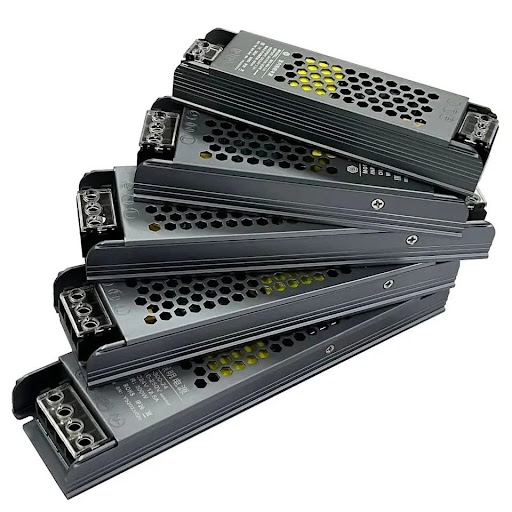
Choosing the right power source is one of the most important steps when installing LED strip lighting. Even a high-quality LED strip can perform poorly if its voltage and power requirements are not matched correctly. For installers, distributors, and commercial buyers, working with a reliable LED Power Supply Wholesale source can make it easier to maintain consistent performance across different projects.
DekingLED provides LED lighting products designed for different voltage requirements and applications. The company was established in 2014 and offers fast delivery, cost-effective solutions, top quality, and technical support, making these factors important when selecting components for professional LED installations.
Why the Power Supply Matters for LED Strips
LED strips require a compatible power source to operate safely and efficiently. The required voltage depends on the specific strip. For example, DekingLED’s 5050-WW-300 strip supports DC12V or DC24V input, with a maximum power rating of 72W. The manufacturer specifically recommends checking that the power supply complies with the LED strip’s power requirements before installation.
This is particularly important when purchasing lighting components in larger quantities. A power solution should be selected according to the strip’s voltage, power consumption, installation environment, and total length. Using the correct specifications helps prevent compatibility problems and supports more reliable operation.
Matching Voltage With the LED Strip
Voltage compatibility should always be checked before connecting an LED strip. DekingLED offers products operating at different voltages, including 12V DC, 24V DC, and AC220V, depending on the product design.
For example, the company’s 3528 LED strip uses 12Vdc/24Vdc, has 300 LEDs per 5 meters, and a maximum power rating of 4.8W per meter. It also features an IP65 waterproof rating.
By comparison, the 2835 high-voltage strip operates at AC220V, contains 550 LEDs per 5 meters, and has a maximum power rating of 10W.
These differences demonstrate why a single power solution should not automatically be used for every LED strip. The power source needs to correspond to the electrical requirements of the particular product.
Considering 12V and 24V LED Systems
For longer installations, voltage drop is another factor worth considering. According to the supplied DekingLED product information, 24V LED systems experience less voltage drop and can support longer strip runs, while 12V systems can experience greater voltage loss, which may cause brightness to decrease toward the end of the strip.
This makes 24V systems particularly useful when designing longer continuous lighting installations. However, the power supply should still be selected based on the actual strip specifications rather than voltage alone.
The 2835 LED strip with 180 LEDs per meter is one example. It operates at DC24V, contains 900 LEDs per 5 meters, and has a maximum power rating of 48W. It can also be cut by 9 LEDs at DC24V and reconnected using accessories.
Waterproof Applications Need More Attention
Outdoor and moisture-prone installations require additional consideration. A Waterproof Power Supply can be an important component when the complete lighting system is intended for environments where water exposure is possible.
DekingLED’s product information includes waterproof LED strip options designed for demanding environments. Its 5050 LED strip is available with IP65 and IP68 waterproof protection, while the supplied information states that its IP68 waterproof strip can remain protected from water ingress at a depth of 3 meters.
Water resistance should be considered as part of the complete installation rather than simply focusing on the LED strip. Connectors, power components, wiring, and installation methods should all be appropriate for the environment.
Power Requirements for Different LED Products
Different LED strips can have considerably different power requirements. The 5050 RGBW strip, for instance, uses 24V DC, has a maximum power rating of 88W, and provides RGB plus warm white lighting. Its warm-white version has CRI 80/90, 1200 LM brightness, and a 2700K–3000K color temperature range.
The 3014 LED strip has different specifications, using DC24V, with 1200 LEDs per 5 meters and a maximum power rating of 12W per meter. It also uses 3oz copper foil and has been tested for 10,000 switching cycles.
These examples show why professional buyers should review each product’s electrical specifications before ordering power equipment in bulk.
A Reliable Approach for Commercial Projects
When purchasing LED lighting components for commercial, architectural, signage, or decorative projects, buyers should evaluate voltage, wattage, waterproof requirements, installation length, and compatibility together. DekingLED’s products are designed for applications ranging from cove lighting and architectural lighting to signage backlighting, home lighting, path marking, exhibitions, and decorative installations.
For larger projects, purchasing from an experienced manufacturer can also simplify sourcing and technical support. DekingLED operates from Shenzhen, China, and lists technical support among its service advantages.
Final Thoughts
A suitable power solution is essential for getting dependable performance from LED strip lighting. Buyers should always match the power source with the strip’s voltage and power requirements while considering installation length and environmental conditions.
Whether the project involves indoor accent lighting, architectural installations, signage, or outdoor applications, careful electrical matching can help create a safer and more consistent lighting system. For bulk purchasing, choosing a supplier with technical support and a range of compatible LED products can also make project planning considerably easier.