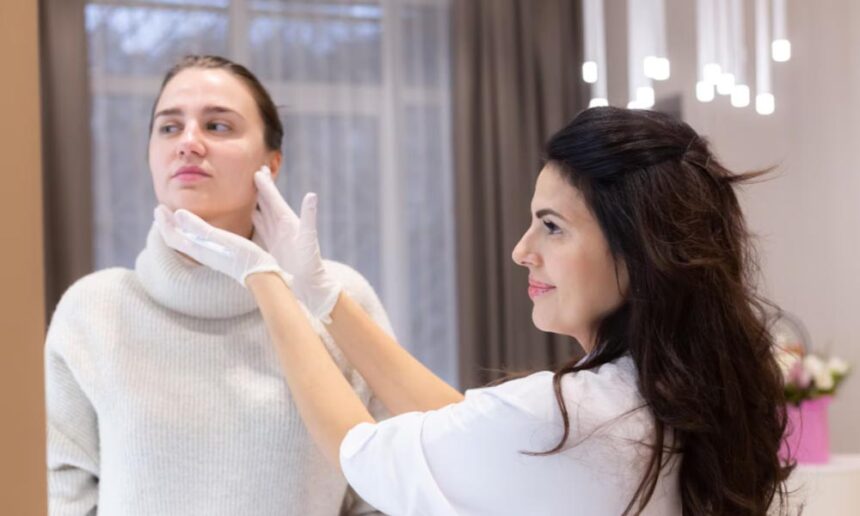
Deciding how to address uneven skin texture can feel complicated when every treatment promises a fresher appearance. Before comparing appointment packages or photographs, it helps to define what you actually want to change. Is it the texture left by old acne, the appearance of fine lines, or simply uncertainty about which treatment deserves a closer look? A specific concern gives the conversation a useful starting point.
Microneedling is one option people encounter while exploring professional skin treatments. Understanding its purpose, limitations, and practical demands makes it easier to assess whether a consultation is worthwhile. The goal is an informed decision that fits your skin and expectations, with enough room to ask questions before committing.
How the treatment works
The American Academy of Dermatology explains that microneedling uses tiny needles to puncture the skin and stimulate collagen production. Collagen helps provide skin with structural support. This healing response is why the procedure is also called collagen induction therapy. Dermatologists use it to improve the appearance of concerns such as acne scars, fine lines, and uneven texture.
For readers exploring this approach, Microneedling provides a relevant introduction to a professional treatment option and the kinds of concerns discussed during a consultation. Use a treatment page to prepare questions, then ask a qualified clinician how the information applies to your own skin.
It is helpful to separate three questions: what the procedure does, what your provider expects it to accomplish, and how you will decide whether the improvement is worthwhile. These questions keep the discussion focused. A broad promise of rejuvenation gives you less to evaluate than a clear explanation tied to one particular concern.
Define a realistic goal before comparing options
Write down your main concern in ordinary language. For example, you might want old acne marks to look less noticeable in everyday lighting. Bring that description to the appointment and ask the clinician to identify exactly what you are seeing. Ask whether the proposed treatment addresses that finding and what degree of change would be reasonable.
According to the American Academy of Dermatology, improvement develops gradually, and full results usually take several months. Some people need a series of sessions. That makes a treatment plan more useful than a promise about how your skin will look immediately afterward.
Agree on how progress will be reviewed. Photographs can be useful discussion tools, but ask for comparable lighting, angles, and timing. Also ask whether example photographs show microneedling alone or a combination of procedures. A picture without that context gives you an incomplete basis for comparing your own expectations.
Make the consultation specific to you
Cleveland Clinic describes the consultation as an opportunity for a skin examination, a health history review, and a discussion of goals. Share your medication list, previous procedures, and any history of unusual scarring, cold sores, or recurring skin problems. Include products you use regularly so the clinician can give relevant preparation advice.
Bring a short written list of questions instead of relying on memory. Ask who will perform the procedure, what training they have, which device they use, and who handles follow-up care. You should understand how to reach the practice if a question arises after you leave. Request explanations in language you can comfortably repeat back.
A useful consultation should also address the option of waiting. Ask what would need to change before treatment could be appropriate if the clinician recommends postponement. You can also ask how the recommendation would differ if you chose a smaller treatment area or decided to address only your highest-priority concern.
Understand safety and treatment differences
The FDA identifies potential effects including redness, dryness, discomfort, and bleeding, as well as less common complications such as infection and pigment changes. Skin tone and medical history deserve individual consideration; a general claim that a procedure suits everyone cannot replace an assessment. The FDA also recommends asking whether a new needle cartridge is used for every treatment session.
Ask for the exact procedure name and device information in writing. FDA authorization applies to specific devices and uses; it does not establish every advertised benefit. The agency also states that microneedling devices are not approved to deliver cosmetics, topical medications, or blood products such as platelet-rich plasma into the skin. Proposed additions therefore deserve their own discussion about evidence and risks.
If a provider recommends a different version of the procedure or an optional addition, request a separate explanation of its purpose, expected benefit, and price. This allows you to consider each recommendation on its own terms. An appointment menu should help you understand the choices rather than leave you guessing about what the quoted treatment actually includes.
Plan for the appointment and recovery
Cleveland Clinic notes that treatment typically involves cleansing the skin and applying a topical numbing product. Sensations can include warmth, scratching, or discomfort. Redness, swelling, tightness, and flaking may follow. Ask how much time to reserve for the full visit, including preparation, and what recovery the clinician expects for your treatment area.
Get written aftercare instructions before the appointment. The American Academy of Dermatology advises waiting at least 24 hours before applying makeup and following the treating dermatologist’s care plan. Clarify when to restart your usual products and how to protect your skin from the sun during recovery. Do not substitute another person’s routine for your instructions.
Consider your calendar as part of the decision. Tell the practice about upcoming travel, outdoor commitments, or events where visible skin changes would be inconvenient. Ask for a contact route outside normal office hours. Cleveland Clinic advises contacting a provider for blistering, bleeding lasting longer than 24 hours, or swelling lasting longer than a week.
Evaluate the full commitment
Before purchasing a package, ask for a written estimate that identifies the treatment area, proposed number of visits, and what is included in each charge. Clarify whether consultation, aftercare products, optional additions, and follow-up appointments cost extra. Comparing complete estimates is more informative than comparing a single advertised session price.
Ask when the plan will be reassessed and what happens if you are dissatisfied with the progress. Understand cancellation and package policies before paying. You do not need to decide on a series simply because it is presented during the first conversation. Take time to review the explanation and consider whether the practical commitment fits your priorities.
Choose with clear expectations
A thoughtful approach to microneedling begins with a specific concern and a conversation that connects it to a realistic plan. Understand the procedure, ask what supports the recommendation, and make sure recovery and follow-up arrangements are clear. The most useful outcome of a consultation is knowing enough to make a comfortable decision, whether that means proceeding, considering another option, or waiting.