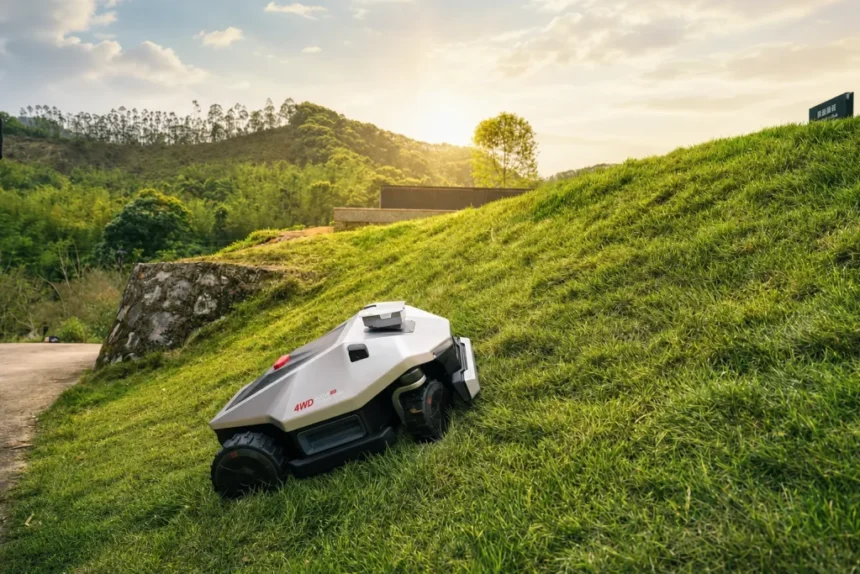
The robot mower revolution in Australia hits a snag when you ask the practical question: do you want your boundaries buried in the ground, or managed digitally in an app? On the surface, it seems straightforward. Bury a wire, define your lawn edge, forget about it for years. Except Australian backyards aren’t that forgiving. Kikuyu grass runners carpet everything relentlessly, gum trees throw roots across the surface like traps, and a spring reno to add a pool or extend a deck cuts boundary wire with brutal regularity. A wire free robot lawn mower offers an alternative — one worth examining alongside the traditional model.
The Boundary Wire Reality: Decades of Proven Complaints
Boundary-wire systems dominated the market for good reason: they work reliably on flat, manicured lawns in stable conditions. The installer buries perimeter cable, the mower follows it like a train on tracks, and you mow predictably for years. But Australia has three specific problems that break this formula.
Problem 1: Kikuyu Runners Bury the Wire
Kikuyu grass spreads via aggressive stoloniferous runners — horizontal shoots that root and spread laterally. On an established Australian lawn with Kikuyu, the runners creep outward constantly, especially through summer. Within a season or two, new growth has completely covered a buried boundary wire. The signal weakens or vanishes. The mower loses its edge reference. You’re either digging up wire to re-expose it, retracing the perimeter repeatedly, or accepting sloppy boundaries. It’s not a one-time problem; it’s an annual maintenance cycle.
Problem 2: Eucalypt Roots and Ground Disturbance
Australian backyards with mature gum trees aren’t just shaded; they’re laced with subsurface roots. These roots heave soil, break through the surface, and mechanically damage buried wire over time. A mower navigating over root-disrupted ground also stresses the wire system. Repairs mean excavation, replacement, and lost mowing days.
Problem 3: Reno Season Cuts the Wire
Australian properties see regular renovations — adding a deck, building a pool, landscaping a garden bed. Contractors dig, excavate, and lay concrete without knowing (or thinking about) boundary wire buried a few centimeters down. Cut wire is one of the most-cited robot mower complaints in online forums. You call the manufacturer, arrange a repair, and wait. Meanwhile, your lawn grows wild.
The Wire-Free Advantage: Adaptation Without Excavation
A wire free robot lawn mower with boundary-free setup (using app-based GPS or visual mapping) bypasses all three problems. No buried wire means no Kikuyu-burial headaches, no root damage, and no reno-disruption panic. Boundary redefinition happens in an app — it takes minutes, not excavation days. If Kikuyu creeps into your no-mow zones, you redraw them. If a pool goes in, you exclude that zone from the mowing map. It’s genuinely more flexible.
The GOKO M6 represents this approach: its CyberNav™ Fusion navigation combines RTK satellite positioning, visual SLAM (recognizing lawn features via cameras), IMU sensors, and wheel odometry. The system builds a digital map of your property rather than relying on physical boundary markers. For Australian conditions with Kikuyu pressure, tree cover, and frequent property modifications, this model handles disruption more gracefully than buried-wire systems. Details on how this compares across your specific property are available at gokorobo.com.
Trade-Offs: Wire-Free Isn’t Universally Superior
Wire-free systems aren’t without compromise. Initial deployment requires clear sky view for GPS positioning (less reliable under dense tree canopy), and the app-based boundary definition requires user engagement — you’re drawing zones, not just burying wire and forgetting. Some users prefer the “set and forget” philosophy of buried wire, even if maintenance is higher long-term.
Additionally, wire-free systems are typically more expensive upfront. You’re paying for advanced positioning technology, multiple sensors, and software infrastructure. Established boundary-wire systems remain cost-competitive for properties that don’t face Kikuyu pressure, have stable ground conditions, and aren’t undergoing renovation.
Long-Term Cost Analysis: The Australian Reality
Boundary Wire: First 5 Years
- Installation: moderate time/cost
- Kikuyu management: annual re-exposure or signal troubleshooting
- Reno damage: repair costs (wire replacement, service call)
- Root damage: occasional ground-level fixes
- Total: moderate upfront, escalating maintenance
Wire-Free: First 5 Years
- Installation: minimal (app-based setup)
- Kikuyu adaptation: software zone redefinition (free)
- Reno flexibility: app adjustment, no repair cost
- Root interference: handled via VSLAM and sensor redundancy
- Total: higher upfront, minimal ongoing maintenance
Over a decade, the wire-free model likely saves money and frustration if your property faces Kikuyu, frequent renovation, or tree cover. On a stable, flat, Kikuyu-free block, buried wire remains competitive.
FAQ
If I choose wire-free, can I still add boundaries later?
Yes — boundary zones are entirely digital and adjustable anytime via the app. You’re never locked into a fixed configuration.
Does Kikuyu eventually overrun a wire-free mower’s boundaries?
No — the mower defines edges via GPS and vision, not physical wire. Kikuyu growth is handled by adjusting no-mow zones in the app.
Is a wire-free system vulnerable to GPS outages?
Modern systems use sensor fusion (RTK + VSLAM + IMU + odometry) so that no single signal failure breaks navigation. It’s designed for redundancy.
What if I sell my property? Does the boundary wire transfer?
No — the wire stays with the property but is often considered sunk cost. Wire-free systems transfer via app account or are reset for the new owner.
The Bottom Line
For Australian properties facing Kikuyu invasion, tree-root pressure, and renovation disruption, a wire free robot lawn mower with boundary-free setup offers genuine long-term advantage. The flexibility to redefine zones digitally, adapt to property changes, and avoid buried-wire maintenance saves frustration and repair costs over years. For stable, flat, manicured properties without these pressures, traditional boundary-wire systems remain viable. Check your property’s specific conditions — Kikuyu prevalence, tree density, renovation frequency — and weigh upfront cost against 5–10-year maintenance burden. For detailed wire-free capability specs, visit gokorobo.com.