Key Highlights
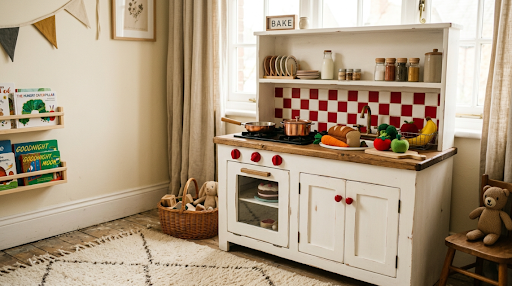
- A play kitchen gives young children a simple way to enjoy imaginative play and pretend play every day.
- Through kitchen play, children copy real-life tasks like cooking, serving, and cleaning.
- A wooden play kitchen or other kitchen set can support fine motor skills, language, and social growth.
- The best age often sits within the 3-8 range, with different benefits at each stage.
- Smart accessories and the right size can make a play kitchen easier to use at home.
Introduction
A play kitchen can do much more than keep your child busy. In early childhood, imaginative play and pretend play help children copy the world they see every day. That is why kitchen role play stays so popular. It feels familiar, open-ended, and easy to return to, whether your child is “making dinner” or serving tea to the family.
Why Play Kitchens Inspire Imaginative and Role Play
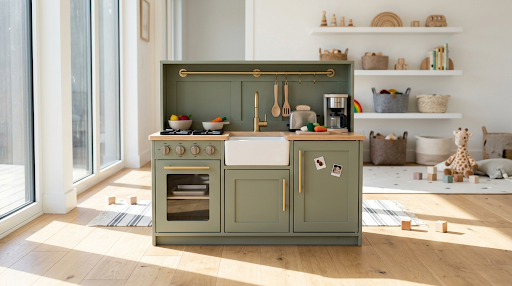
Young children are drawn to play kitchen because it mirrors real life. They see cooking, washing, and serving at home, then turn those moments into pretend play and dramatic play.
That simple copying supports skill building too. As children open doors, move items, and talk through a made-up meal, they practise movement, words, and social thinking. The next sections show how that happens in everyday play.
Understanding the Magic of Pretend Cooking
Pretend cooking works because it feels real without any pressure. A child can place pretend food in a pan, turn clickable knobs, and announce that lunch is ready. That small routine gives kitchen play a clear purpose.
During this kind of play kitchen use, children often talk more. They name ingredients, ask for plates, and explain what they are making. That back-and-forth supports language development in a natural way.
It also gives them control over the story. One day they run a café. The next day they cook for grandparents. Because the scene keeps changing, the same toy can stay interesting for a long time.
Real-World Scenarios Through Kitchen Play
Kitchen play helps children act out real-world scenarios they already know. They may “wash up”, put food away, or prepare a simple meal for friends. That makes the play experience feel familiar and useful.
This is also symbolic play. A wooden spoon becomes a mixing tool. An empty shelf becomes an oven. Children learn that one object can stand in for another, which is a key part of early thinking.
It supports everyday life skill practice as well. Even simple routines like tidying kitchen items after play can help children understand roles, responsibility, and what happens in a real kitchen.
Ideal Age Groups for Enjoying a Play Kitchen
A play kitchen is generally best suited to an age range of about 3-8 years. That is the sweet spot given in the product information, and it makes sense because children in those years enjoy copying daily routines.
Still, the best age depends on how your child plays. Some young children prefer simple opening and closing actions first, while older children build bigger stories. Here is how those age groups often use it.
Toddlers — Early Discovery and Sensory Exploration
For toddlers in the younger part of the age group, the appeal is often hands-on discovery. They like opening a door, moving a shelf, or picking up play food. Those simple actions keep pretend play active without needing a long story.
This stage supports sensory exploration too. Outdoor play kitchens can add sand and water play, giving children a more tactile session. That change in texture can make the toy feel fresh again.
Small movements matter here. Turning knobs or placing kitchen items on shelves can help fine motor skills. Even when the play looks simple, toddlers are still learning through repetition and touch.
Preschoolers — Creativity and Social Skills in Action
With preschoolers, a pretend kitchen often becomes a social space. One child cooks, another serves, and someone else orders lunch. That shared game gives social skills a real workout.
Their creativity grows because the same kitchen can become many things. It might be a bakery in the morning and a family dinner scene in the afternoon. That variety keeps the play open rather than fixed.
Language skills also get stronger during these games. Children explain the menu, give instructions, and respond to others. In one simple role-play, they practise speaking, listening, and taking turns.
Essential Features to Look for in a Play Kitchen
When choosing a kitchen set, start with your child’s age and how they like to play. A good play kitchen set should feel easy to use, not too complicated, and suited to everyday role play.
Look closely at storage space, moving parts, and overall size. Realistic features such as functional doors, movable shelves, and lifelike accessories can improve the experience. Material and room size matter too, which is why both come next.
Safety, Durability, and Child-Friendly Materials
Safety should come first. The compiled product details state that the materials are non-toxic, non-flammable, and child-friendly. That gives you a clear starting point when comparing a wooden kitchen with plastic play kitchens.
Durability matters as well, especially if the toy will be used every day. Timber models, including solid wood styles, can feel sturdy, while plastic kitchens may suit families wanting a lighter option. The better choice depends on your home and how often the toy will be moved.
Useful features to check include:
- Non-toxic and child-friendly materials
- Non-flammable construction
- Strong doors, shelves, and interactive parts
- A design suited to your child’s age and regular use
Space Considerations for Australian Homes
Before buying, measure your available space. A standard play kitchen needs enough room for the unit itself and for your child to stand, turn, and move items during kitchen play. If it feels cramped, the toy may be used less.
In many Australian homes, the best spot is often a living room corner, a playroom wall, or a covered outdoor area. If space is tight, choose a simpler design with useful storage space rather than a wider setup.
| Home area | What to check |
| Living room corner | Leave room in front for opening doors and easy movement |
| Small flat or apartment | Choose a compact unit with shelves to reduce clutter |
| Outdoor area | Pick an outdoor play kitchen if you want sand and water play |
| Shared family space | Use built-in storage space to keep kitchen items organised |
Accessories That Boost Imaginative Play
The most useful kitchen accessories are the ones that give children something clear to do. Play food, cups, plates, pans, and simple kitchen tools help a pretend kitchen feel complete. When a child can “cut”, “cook”, and “serve”, the game becomes easier to start.
Try building play around one theme at a time. For example, set out play kitchen food for breakfast one day, then switch to tea parties or dinner service the next. That small change keeps the toy fresh without needing lots of extra pieces.
Conclusion
In conclusion, a play kitchen does much more than entertain; it fosters creativity, imagination, and valuable life skills in children. Through pretend cooking and role play, kids explore real-world scenarios, enhancing their social interactions and problem-solving abilities. By engaging with various accessories and features, they delve into a world of learning that extends beyond just playtime. Choosing the right play kitchen—considering safety, durability, and space—ensures your child reaps maximum benefits from this enriching experience.
Frequently Asked Questions
Can a play kitchen really help my child’s development?
Yes. A play kitchen can support imaginative play and pretend play while helping with language development, social skills, and everyday life skill practice. Children learn by copying real routines like cooking, serving, and tidying, which makes the play feel natural and useful.
How much space is needed for a standard play kitchen at home?
A standard play kitchen needs enough available space for the kitchen set and for your child to move in front of it. A living room corner often works well. If space is limited, choose a compact design with built-in storage space.
Are there specific benefits to choosing an Australian-made play kitchen?
The provided information does not list specific benefits tied only to an Australian-made model. What it does show is the value of safe, child-friendly materials and sturdy options such as a wooden kitchen or a solid wood play kitchen set with realistic features.