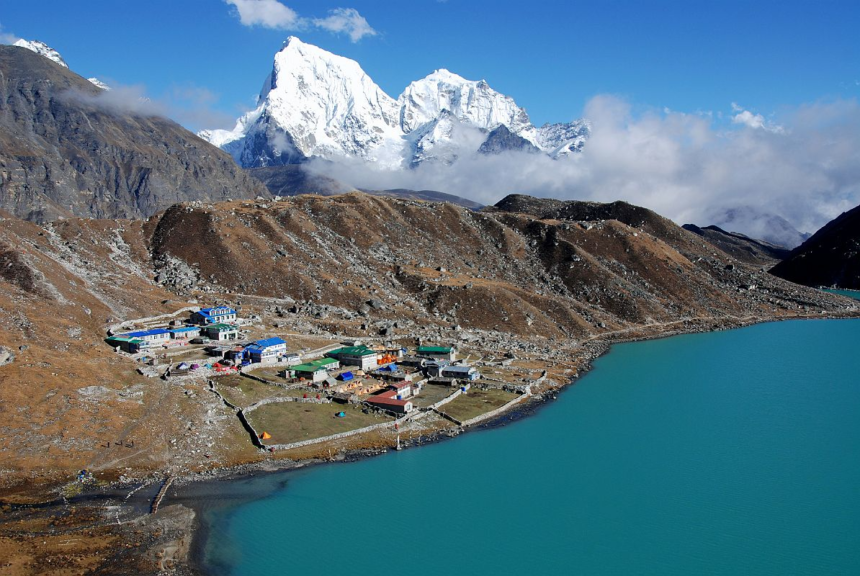
Setting foot on the trekking adventure to Everest base camp is a dream of many adventure seekers. Nestled in the Himalayas at an elevation of 5364m/17598 ft. with jaw dropping views of landscapes and amazing majestic peak. Starting from small airfield of Lukla, the days required for Everest base camp trekking is 12-14 days. The bone chilling 35 minutes flight to Lukla from Kathmandu is adventure in itself. Besides being gateway for Everest base camp trekking, Gokyo Lake trekking, mountaineering, peak climbing and other adventure at Everest region, Lukla airport holds immense significance for the local communities.
The ultimate guide and some to Everest Base camp trekking is described as follow. Weather you a seasoned trekker or first time explorer this comprehensive guide may come handy for commencing the Everest base camp trek and be in wonderland of Everest region.
Planning your trek
Pick the right time for your trek:
The optimal season for this trekking is during March to May and late September to November. Do pick the itinerary suitable for you. Do not choose rush itinerary. The itinerary of Everest base camp trekking is 12-14 days. You need to have some extra days as back up from that of Itinerary. This makes you stress free as the weather Himalayas are difficult to predict and trekkers often face problems as delayed flight, flight cancellation for day and other weather related issue. While on trek sudden rainfall and snow storm may arise so having extra day then that of itinerary becomes very handy. Acclimatization on trail is very crucial as this helps in avoiding altitude sickness. The journey from Kathmandu to Lukla takes you from 1,300m to 2,860m just in a 35 minutes. Which is a change of 1500m in only in one day alone! Be slow and get acclimatized properly.
Reaching Lukla
The trek usually starts from a small airfield at Lukla. The runway of Lukla airport is so small that you can view entire runway from a cockpit of small twin otter plane. Actually the Lukla airport is the gateway for people, daily supplies and touristic logistics, the airport is very important place for local people of Everest region. Delays and cancellation is real in this part of world as, delays like few hours are normal. Like other part of world 15 minutes to an hour delays are considered but trust me this part is different and uncanny. Generally delays happen due to weather issue only. However in such cases the alternatives are always available, taking charted helicopter which fly in condition where aircraft cannot are always in service.
Sometimes the flight can be diverted and the person has to go to Ramechhap, Manthali. This might cause some inconvenience as you have to wake up early morning and hop on the available jeep. The windy, twisting and turning roads will take around 4 hour to reach Manthali. The hours might change due to traffic condition on the roads
Permits
You will be needing few permits in order to trek in the world famous trail of Everest base camp. The permits can be obtained either at Kathmandu or Lukla. Permits required are Sagarmatha national park entry permit as well as local community fee at Lukla. The community fee is used for betterment of trail as well as place. The National park entry fee cost you around $35 and $20 approx. for local community fees. Actually the accommodation charge that we pay for night is also given to local community and is not kept by many local tea houses.
Guides and porters
If you are independent hiker then that’s fine however we suggest you to have guide for safety reasons. Among all the trekkers more than 97% of then hire guide and porters and rest of them are highly skilled and know the region well. If you are looking online then search local company. Look for a company that is at least on the first couple page of Google. As local companies in Nepal do not have enough resources or finances to compete with large international travel companies on the first page of Google. Avoid third party booking agencies and online service providers, as it is likely the local travel companies pay at least 15%-20% commission to these third-party websites. Look for a company legal document page to make sure they are registered and appropriately licensed by the Nepal government. Have a meeting with your guide before departure so you will get to know him and his experience. Once done with guide you do not need to worry about the porter because guide will fix the porter for the trek. The guide choose the porter who gets along with him and obeys his decision. So it is suggested to leave the decision of selecting the porter to your guide.
Foods and Accommodation
During the trek you will have taste of both local and international cuisine. Local cuisines like dal bhat tarkari (lentil soup, rice, and vegetables), momo (dumplings), and tsampa (roasted barley flour). These hearty meals, especially dal, bhat, and tarkari, provide the necessary nourishment and nutrition for trekking. Every tea house on the route also serve western foods like Pasta, Pancake, Pizza, Burgers, Omelets and more. These dish might vary in taste as food are prepared by locals with locally available ingredients. Usually you will dine in communal dining areas, so you will get a chance to interact and know fellow travelers.
You will have different types of accommodation to choose from basic guest house with sharing washroom to attached bath rooms with standard rooms. If you seek for luxury then places like Rivendell, Yeti Mountain home are place to look for. From place called Dingboche there aren’t any place with luxury accommodation.
Essential to pack
You must have boots that is water resistance, reliable and comfortable. Do not buy gears that is unnecessary. Having trekking poles can help you a lot. Do not forget head lamp, gloves, and have as many socks as possible, because you need to change your shocks daily. Do use moisture wicking layers for hike in terms of body wear. Have wind and water proof jackets. Pack thermal and jackets for staying at accommodation
Do not rely on hotel amenities during the trek. Having your own helps you a lot. Do pack your own serum, moisturizer, sunscreens, hand/ body wipes, shaving gel, tooth paste/brush, deodorant, hairpins, hair spray, body spray etc. and others.