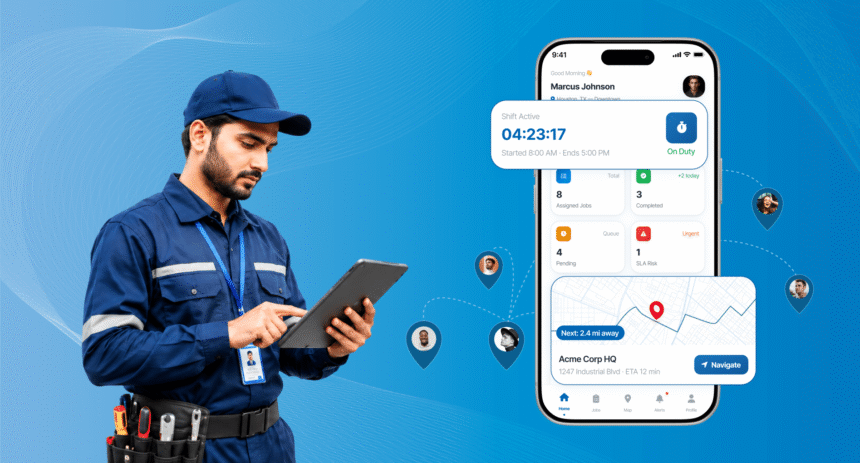
Field technicians spend most of their working day away from the office, yet they constantly depend on information managed by office-based teams. Job instructions, customer details, schedule changes, service histories, forms, and completion updates all need to move between the field and the back office. When this communication relies on calls, paper documents, or scattered messages, productivity can suffer.
A field service mobile app gives technicians a practical way to access and update important job information while working remotely. By connecting employees with the information they need throughout the day, mobile technology can reduce administrative friction and create a more efficient field workflow.
Give Technicians Information Before They Arrive
Preparation can significantly influence the outcome of a service visit. A technician who arrives without enough information may need to contact the office, search for previous records, or spend extra time understanding the problem.
A field service mobile app can make essential job details accessible before the technician reaches the customer.
Information may include appointment instructions, customer details, previous service notes, equipment information, task requirements, and other relevant records.
Reduce Dependence on Office Calls
Without convenient access to information, technicians often call dispatchers for clarification. A few calls may seem harmless, but repeated requests across an entire workforce can consume considerable time.
Providing technicians with organized job information helps them resolve routine questions independently.
Dispatch teams can then focus on exceptions, urgent changes, and operational coordination instead of repeatedly supplying information that technicians could access themselves.
Keep Daily Assignments Organized
A technician’s schedule can change throughout the working day. An urgent request may appear, an appointment may be cancelled, or another employee may become unavailable.
A field service mobile app helps technicians stay informed when assignments change.
Rather than relying exclusively on phone conversations or text messages, workers can follow a clearer digital workflow for their daily activities.
Create Clearer Priorities
When technicians understand which job comes next and what each assignment requires, they can organize their time more effectively.
Clear priorities are especially important during busy periods when several appointments compete for attention.
A structured mobile workflow can reduce uncertainty and help employees move from one assignment to another with fewer unnecessary interruptions.
Capture Job Information at the Source
Paper forms create a delay between completing work and making the information available to the rest of the organization.
Technicians may write notes during the day and enter them into another system later. This duplicates effort and increases the possibility of missing or inaccurate information.
Using a field service mobile app allows workers to record relevant details closer to the moment the work occurs.
Improve the Quality of Service Records
Information is generally easier to document accurately while the details are still fresh.
Technicians can record observations, completion information, job status, and other relevant data during or immediately after an appointment.
Better records can help office teams understand what happened during a visit and provide useful context if additional work becomes necessary.
Simplify Administrative Tasks in the Field
Technicians are hired primarily to complete skilled field work, not to spend large portions of their day managing paperwork.
Yet administrative activities are unavoidable. Job reports, forms, status updates, and documentation all contribute to an accurate service record.
A field service mobile app can organize these activities within the technician’s regular workflow.
Instead of carrying multiple paper documents or remembering to complete administrative tasks at the end of the day, technicians can handle required updates as work progresses.
Strengthen Communication With Dispatchers
Communication between technicians and dispatch teams needs to work in both directions.
Dispatchers need to understand what is happening in the field, while technicians need to know when plans change.
A field service mobile app creates a more structured channel for operational information. Status updates from technicians can provide dispatchers with greater visibility, while updated assignments can help field employees respond to changing priorities.
Reduce Communication Gaps
Problems often occur when office and field teams work with different information.
For example, a dispatcher may update an appointment without knowing that a technician has already encountered a delay. Similarly, a technician may continue following an outdated schedule because a change was communicated through an easily missed channel.
A connected mobile workflow can reduce these information gaps.
Help Technicians Deliver Consistent Service
Customers expect technicians to arrive prepared and understand the reason for the visit.
When employees can access relevant information before and during an appointment, they can provide a more informed experience.
A field service mobile app supports this consistency by giving technicians access to structured job information wherever their work takes them.
Better preparation can also reduce situations where customers need to repeat information they have already provided.
Support Work in Challenging Environments
Field technicians do not always work in locations with ideal connectivity. Basements, remote areas, industrial sites, and other environments may have unreliable network access.
Mobile workflows designed around real field conditions can help employees continue completing essential tasks even when connectivity becomes challenging.
Once communication is available again, relevant information can be synchronized according to the organization’s workflow.
This flexibility is important because field technology should support technicians rather than create another obstacle.
Turn Field Activity Into Operational Insight
Information collected through a field service mobile app can provide managers with a clearer picture of daily operations.
Job durations, completion information, technician updates, and recurring service issues can all contribute to better decision-making.
Identify Opportunities for Improvement
Managers can review operational patterns to understand where technicians encounter delays or where processes create unnecessary administrative work.
These insights can support better training, scheduling, resource allocation, and workflow design.
As a result, mobile technology becomes more than a communication tool. It becomes part of a broader effort to improve field performance.
Conclusion
Field technicians need timely information, clear assignments, efficient documentation processes, and dependable communication with the office. When these activities depend on disconnected tools or paper-based processes, valuable working time can disappear into administration.
A field service mobile app brings essential parts of the technician workflow into a more accessible digital environment. It can help employees prepare for appointments, follow changing schedules, capture accurate information, and communicate more effectively with dispatch teams.
For growing field operations, a field service mobile app can create a stronger connection between office planning and work performed on site. That connection helps technicians stay productive while giving the wider organization better visibility into what is happening beyond the office.