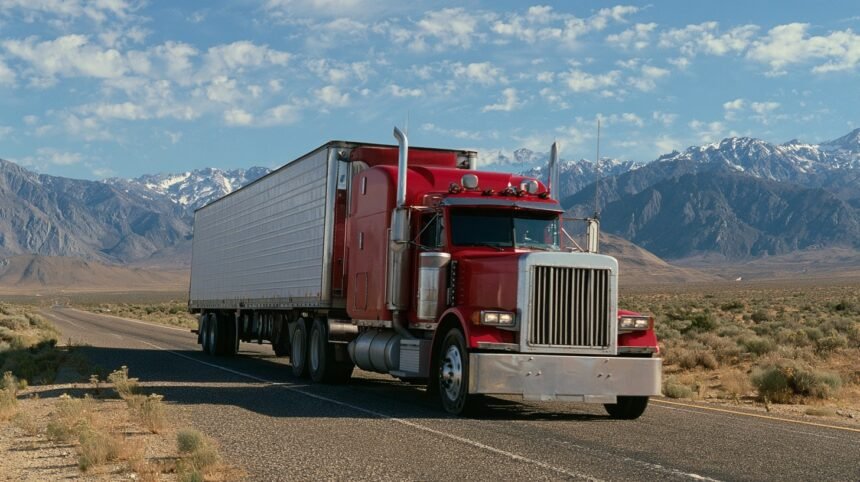
A new mainstream diesel Class 8 tractor runs roughly $160,000 to $205,000. On the used side, the average retail price sat near $64,000 in late 2026, with most buyable trucks landing between about $25,000 and $100,000. One catch most listings bury: the trailer is almost always sold separately. If you’re a prospective owner-operator or a small fleet weighing new against used, the price tag is only the first of three numbers that matter. The other two are the road-ready cost (what you spend before the truck earns a dollar) and the cost of the first 100,000 miles. Keep all three in view and the buying decision gets a lot clearer.
Does “Semi Truck” Mean the Tractor or the Whole 18-Wheeler?
People say “semi truck” and picture the full 18-wheeler, but a dealer price almost always covers the tractor only: the powered unit with the engine, cab, and fifth wheel. The semitrailer, the box or flatbed that carries freight, is a separate purchase. That distinction changes your budget by tens of thousands of dollars.
As an October 2026 inventory snapshot, new dry van trailers were advertised around $40,900 to $45,808, new flatbeds around $39,998 to $78,248, and new refrigerated (reefer) trailers around $59,900 to $106,717. Spec, axle setup, materials, and refrigeration equipment drive the spread. Treat the combined figures below as planning ranges, not appraisals.
| Purchase | Approximate cost |
| New tractor only | 160,000–205,000 |
| New tractor plus dry van | 200,000–250,000+ |
| New tractor plus reefer | 220,000–310,000+ |
| Typical used tractor | 25,000–100,000 |
| Late-model, low-mileage used tractor | 80,000–160,000+ |
How Much Does a New Semi Truck Cost in 2026?
Most mainstream aerodynamic models land between $160,000 and $205,000. A November 2026 analysis of public listings found model medians running from $160,949 for a Mack Anthem up to $195,040 for a Kenworth T680. Individual listings included a Volvo VNL at $164,287 and Peterbilt 579s around $176,000 to $200,500.
Premium and vocational builds push higher, roughly $205,000 to $275,000 and beyond. Long-hood classics make the point: Kenworth W900 listings carried a median of $248,885. Big sleepers, heavy-duty vocational specs, and loaded factory option sheets all add cost.
Day cabs, built for local and regional runs, generally cost less than sleeper tractors within the same make and drivetrain, since a sleeper adds living space, HVAC, weight, and auxiliary equipment. Electric and other specialized trucks sit in their own pricing category and shouldn’t be compared one-to-one with diesel.
One warning on any advertised figure: it’s an asking price, not a delivered price. Federal excise tax, warranties, delivery, and dealer charges may or may not be baked in. Always get written confirmation of what the number includes.
How Much Does a Used Semi Truck Cost?
ACT Research put the average retail selling price of a used Class 8 truck at $64,007 in September 2026, up 12% year over year. NADA’s 2025 dealership data landed close, at $64,163. Those are market averages, not valuations for one specific truck.
The real market is wider than any average suggests. It runs from sub-$10,000 project trucks to late-model units above $150,000. Rough price bands by age and condition:
- High-mileage older units: often under $25,000, frequently needing work
- Typical fleet trade-ins: 25,000–100,000
- Late-model, low-mileage: 80,000–160,000+
Mileage alone won’t tell you if a truck is a bargain or a trap. A documented, fleet-maintained 500,000-mile tractor can be a smarter buy than a neglected 350,000-mile one with no records. Cheap up front and expensive to own are not the same thing.
What Changes the Price of a Semi Truck?
Two trucks from the same model year can differ by tens of thousands of dollars. Here’s what moves the number:
- Cab type: day cab versus sleeper, compared within the same make and drivetrain.
- Engine and transmission: horsepower, torque, and manual versus automated.
- Axle ratio and application: the spec has to match the lane and load.
- Mileage, engine hours, and idle time: mileage is a start, not the whole story. Check engine hours, idle percentage, and duty cycle. A recent model year isn’t automatically low-use, some newer listings already show more than 500,000 miles.
- Warranty status: verify the exact expiration, mileage limit, covered components, deductibles, and whether it transfers.
- Maintenance history: FMCSA requires carriers to keep records of inspections, repairs, and maintenance, so a complete file is both a due-diligence tool and a value driver.
- Emissions and operating territory: California’s Clean Truck Check applies to most diesel heavy-duty vehicles over 14,000 pounds operating on California roads, including out-of-state trucks. Confirm compliance before you buy if you’ll run there.
- Brand and resale value: some nameplates hold value better.
Buy the specification for the work you’ll actually do, not the badge and not the lowest sticker.
What Does It Cost to Put the Truck on the Road?
Your road-ready cost is what you spend before the truck can legally and reliably earn revenue. A simple way to budget it:
Road-ready cost = purchase price + applicable tax + title/registration + initial insurance + inspection + immediate repairs and tires + trailer cost + working-capital reserve.
Two federal taxes catch buyers off guard. The IRS imposes a 12% federal excise tax on the first retail sale of qualifying heavy tractors and trailers. On a fully taxable $180,000 tractor with FET excluded, that’s $21,600 added. Separately, the Heavy Highway Vehicle Use Tax (Form 2290) applies to taxable vehicles of 55,000 pounds or more. For the July 2026 to June 2027 period, the IRS example shows a full-period tax of $550 for an 80,000-pound vehicle.
Beyond those, plan for costs that vary by state and operation and shouldn’t be lumped into one universal fee:
- State sales or use tax, title, and registration
- IRP apportioned plates and IFTA registration
- Permits and operating authority
- Insurance deposits
- Dealer documentation and delivery charges
- Initial tires, brakes, batteries, and immediate repairs
- ELD and communications equipment
- Working capital to cover downtime
Financing and Monthly Payment Examples
Instead of one “average payment,” here are two labeled illustrations. These are math, not loan offers.
Example A, new tractor: $180,000 price, 20% down, $144,000 financed at 8% APR over 60 months, approximately $2,920 per month.
Example B, used tractor at the current average: $64,007 price, 20% down, about $51,206 financed at 10% APR over 48 months, approximately $1,299 per month.
Your actual terms hinge on credit, time in business, CDL and industry experience, truck age and mileage, down payment, and lender underwriting. Don’t fixate on the monthly payment alone. Get an equipment quote and an insurance quote together, because insurance is a real fixed cost: FMCSA sets a $750,000 minimum public-liability requirement for nonhazardous for-hire property carriers running vehicles of at least 10,001 pounds.
How to Inspect a Used Semi Before Buying
A fresh DOT sticker or a seller’s inspection is not a substitute for your own evaluation. Work through this before you negotiate the final price:
- Match the VIN on the truck, title, sales agreement, and maintenance records.
- Check title and lien status.
- Get an independent pre-purchase inspection.
- Download the ECM report and compare recorded mileage and hours.
- Scan active and inactive fault codes.
- Inspect blow-by, fluids, leaks, frame, suspension, brakes, tires, wheel ends, and drivetrain.
- Review DPF, DEF, EGR, and aftertreatment history.
- Obtain the latest annual inspection report. FMCSA requires each unit, including each piece of a combination, to pass a periodic inspection at least once every 12 months.
- Check open recalls by VIN using NHTSA’s lookup tools.
- Price every immediate repair before you settle on a number.
Buyers in the South Puget Sound area can arrange this kind of independent evaluation through a heavy-duty facility such as Torpedo Truck Repair, rather than relying exclusively on an inspection supplied by the seller.
Purchase Price Versus Total Cost of Ownership
The cheapest truck to buy is rarely the cheapest to run. ATRI reported the average cost of operating a for-hire truck hit $2.336 per mile in 2025, a record, with repair and maintenance up 8.6% on the year. At 100,000 miles, the major benchmarks look like this:
| Expense | Cost at 100,000 miles |
| Total carrier operating cost | $233,600 |
| Fuel ($0.482/mi) | $48,200 |
| Truck and trailer payments ($0.404/mi) | $40,400 |
| Repairs and maintenance ($0.215/mi) | $21,500 |
| Insurance ($0.106/mi) | $10,600 |
That ATRI total includes driver compensation, so read it as an industry benchmark, not an owner-operator’s budget. The lesson stands either way: fuel and maintenance can dwarf a modest difference in purchase price. EPA notes that properly specified SmartWay tractors and trailers used together can deliver roughly 15% to 20% fuel savings, which over 100,000 miles easily outweighs a few thousand dollars at the dealer.
Operators around Fife and Tacoma can also ask a shop such as Torpedo Truck Repair to estimate baseline service and likely near-term repairs, then add that figure to the truck’s road-ready cost.
Is It Better to Buy New or Used?
Neither answer is universal. Weigh it against how you’ll run.
| New may fit when… | Used may fit when… |
| Uptime and warranty are priorities | Lower fixed costs are essential |
| The work requires a newer model year | You have a strong repair reserve |
| You’ll keep the truck long term | A documented, fleet-maintained unit is available |
| Fuel efficiency matters at high mileage | The truck has been independently inspected |
Frequently Asked Questions
How much does a used semi truck cost?
The used Class 8 average sat near $64,000 in late 2026 (ACT reported $64,007 in September, NADA $64,163 for 2025). Most buyable trucks fall between $25,000 and $100,000, with late-model low-mileage units often $80,000 to $160,000 or more. Condition and records matter more than any average.
Does the price of a semi truck include the trailer?
Usually not. Dealer prices cover the tractor only. A new dry van typically runs about $40,900 to $45,808 and a reefer $59,900 to $106,717, so budget the trailer as a separate line item.
How much are the down payment and monthly payment on a semi truck?
Around 20% down is common. As illustrations: a $180,000 new truck financed at 8% over 60 months runs about $2,920 a month, while a $64,007 used truck at 10% over 48 months runs about $1,299. Actual terms depend on credit, experience, and the truck itself.
Is $50,000 enough to buy a reliable used semi truck?
It can be, but it’s below the current average, so expect higher mileage and fewer warranty miles. Spend part of the budget on an independent inspection and a repair reserve. A documented 500,000-mile truck with records often beats a cheaper unit with no history.
The right question isn’t simply “How much is the truck?” It’s what the truck will cost to buy, prepare, and operate over the miles it’s expected to earn.