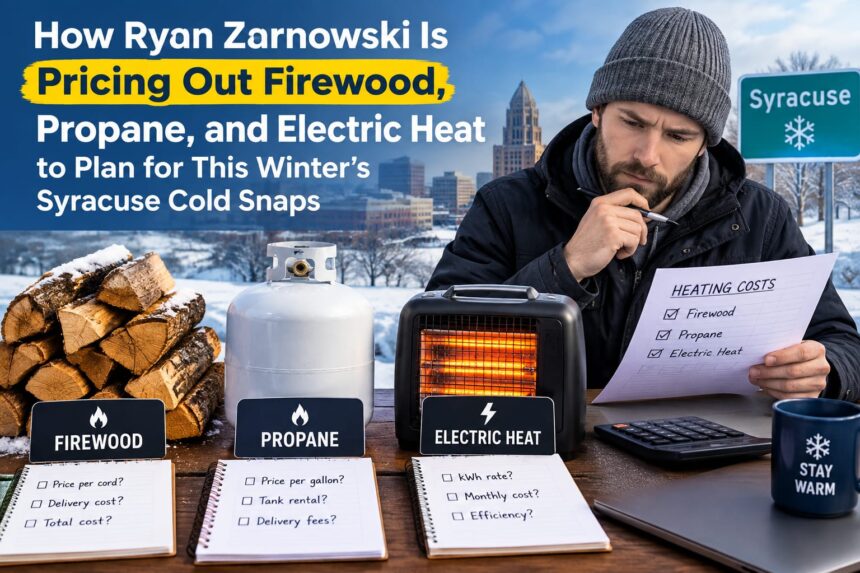
Winter around Syracuse can turn a normal heating bill into a much bigger household expense. Ryan Zarnowski is looking at firewood, propane, and electric heat to understand what each option could mean for the family budget. Comparing them before colder weather arrives makes it easier to prepare for weeks when the heating system has to work much harder.
Start With the House, Not the Fuel Price
Heating costs depend heavily on the house itself, so comparing advertised fuel prices only tells part of the story. The size of the home, insulation, windows, drafts, and preferred indoor temperature all affect how much energy the family uses. A larger or poorly insulated home can make an inexpensive heating source costly because it requires more fuel.
Past utility bills can provide a useful starting point when estimating winter needs. Looking at several cold months shows how much energy the house actually used, rather than relying entirely on averages for other homes. Those records also make it easier to spot unusually expensive periods and prepare for similar cold snaps.
Figure Out the Real Cost of Firewood
Firewood can look inexpensive at first, especially when comparing its price with a large propane delivery or a high electric bill. The calculation becomes more useful when you consider the usable heat from the wood along with the purchase price. Wood species, moisture level, and how efficiently the stove burns can all change a load’s value.
Seasoned hardwood generally provides a better starting point for comparing prices because wet wood can burn poorly and produce less useful heat. Buyers should also confirm how much wood they are actually purchasing rather than judging a load by appearance. Delivery charges can increase the final cost if the supplier is located far from the property.
Firewood also comes with work that does not appear on the receipt. Someone has to stack it, keep it dry, carry it indoors, remove ash, and maintain the stove and chimney. Those chores may be perfectly reasonable for one household and inconvenient for another, so price is not the only consideration.
Look Beyond the Propane Delivery Price
If you have used propane for a few winters, previous bills can give you a good idea of how many gallons you go through when the weather turns cold. Compare that amount with the current price per gallon to get a rough idea of what upcoming deliveries could cost. Your own records are usually more helpful than relying on general estimates that may not match your home.
How you get your propane can also change the total. Owning a tank may give you different options than renting one from a supplier, and each company can have its own rules about deliveries and minimum orders. Check for extra charges so you know what you are actually paying by the time the propane reaches your tank.
It is also worth leaving some breathing room in the budget since the price you pay early in the season may not be the price you see later. A long stretch of freezing weather can mean ordering sooner than planned or buying more propane than usual. Having a little extra money set aside makes those winter deliveries easier to handle.
Calculate What Electric Heat Really Uses
Electric heat may appear simpler because there is no fuel delivery to schedule or woodpile to manage. To estimate the cost, the household needs to know how much electricity the heating equipment consumes and what the utility charges for that power. The type of electric heating system makes a considerable difference.
Electric resistance heaters and heat pumps use electricity differently. A heat pump moves heat rather than creating all of it through electrical resistance, which can change its energy requirements. Performance can also vary with outdoor temperatures and the particular equipment installed in the home.
For Ryan Zarnowski Syracuse winter planning, the most useful comparison comes from looking at what the home’s actual equipment is likely to consume during colder periods. You can then compare that figure with local electricity rates and previous winter bills. Real household numbers are more helpful than assuming every electric heating system will cost the same amount to operate.
Plan for the Coldest Weeks
A typical winter month may not tell you much about what happens when freezing temperatures stick around for days. The furnace or other heating system may run almost constantly, which means propane or firewood can disappear much faster than usual. Leave some extra room in the winter budget for those stretches when the house needs more heat.
If you rely on fuel deliveries, watch your supply instead of waiting until it’s almost gone. A propane tank or woodpile can empty surprisingly quickly during a cold spell, and bad weather could make the next delivery harder to schedule. Checking your supply regularly gives you time to order before you run short.
Electric heat works a little differently because you may not see the full cost until the next utility bill arrives. Several freezing days can push electricity use much higher without making the extra expense obvious right away. Checking your usage during the month can warn you what the next bill is likely to look like.
Consider Using More Than One Heat Source
Having more than one way to heat the house can be useful during a Syracuse winter. You might burn firewood on especially cold evenings and let the main heating system handle the rest of the week. What works best will depend on the equipment you already have and how much time your family spends at home.
A second heat source can also give you more choices when prices change. If propane becomes expensive, for example, you may decide to use the wood stove more often for a while. Whatever you use, follow the manufacturer’s instructions and make sure the equipment is operated safely.
Keep track of the bills to see whether switching between heat sources is actually saving money. Buying, stacking, and carrying firewood may not be worth the effort if your propane or electric bill barely changes. After a few months, your heating records should give you a much clearer picture of which combination makes sense for your household.
Build Heating Into the Winter Budget
Once you calculate expected costs, heating can become a planned household expense instead of an unpleasant surprise. Setting money aside before the coldest months spreads the burden across a longer period. It also leaves more room for other winter expenses that may arrive at the same time.
The estimate should include more than fuel or electricity. Chimney cleaning, equipment servicing, filters, repairs, and delivery charges can all add to the cost of keeping a home warm. Including these smaller expenses produces a budget that more closely reflects what winter actually costs.
Final Thoughts
There is more to comparing heating options than finding the lowest price for firewood, propane, or electricity. Ryan Zarnowski can look at what the family used in past winters, what each heating source costs now, and how much extra they might need during a long cold spell. Having those numbers figured out ahead of time can make the next Syracuse cold snap much easier on the household budget.