Humid summers, periodic heavy rain, and vented crawlspaces create a tough environment for wood framing in North Alabama. When moisture lingers under a house, subfloors and joists quietly weaken until the problem shows up inside: bouncy rooms, cupped hardwoods, and doorways that suddenly rub. Acting early protects finishes above and structure below, but the first step is recognizing what is actually failing and why. This guide focuses on Huntsville area crawlspaces, the patterns that lead to subfloor damage, and the practical steps that help homeowners evaluate risk and prepare for durable repairs.
-
Floor Symptoms That Point to Subfloor Trouble
Inside the home, a few specific changes often trace back to the subfloor and joists. A “spongy” feel underfoot or noticeable deflection when someone walks often signals softened subfloor panels or undersized framing. Persistent squeaks near bearing walls can mean fasteners have loosened as wood fibers swelled and shrank. Cupped or wavy hardwood, cracking grout at bathroom thresholds, and gaps opening at shoe molding are common when crawlspace humidity pushes moisture into the subfloor. In hallways, doors that start sticking and baseboards separating from flooring can reflect joists settling over damp soils or deteriorated sill plates.
Real-world examples help connect the dots. If tile is cracking around a second-floor bathroom but the subfloor feels firm elsewhere, a slow plumbing leak may have rotted the panel around the toilet flange. If a living room with hardwoods suddenly feels uneven in midsummer and the crawlspace has open vents, high humidity may be swelling the subfloor and telegraphing through the boards. For Huntsville-specific context on crawlspace and subfloor concerns, local homeowners often consult resources like https://www.valleycrawlspaces.com/huntsville-al/ while they document symptoms and plan next steps.
-
What’s Happening Under the House in North Alabama
In a vented crawlspace, warm outdoor air meets cooler framing and ductwork. That temperature difference condenses moisture on joists, rim joists, and subfloor panels, feeding surface mold and long-term rot. Clay-rich soils that hold water against foundation walls keep the air damp, and poorly graded yards or short downspouts send stormwater back under the home. Over time, fasteners corrode, OSB edges swell, and joists relax under load, creating uneven floors above.
Moisture is not the only culprit. Termite damage can hollow sill plates and rim joists, causing beams to drop and floors to slope. Notches and bore holes for plumbing or wiring cut too close to the bottom of a joist reduce its strength. Long spans without adequate beams lead to bounce even if the wood is dry. In bathrooms, recurring leaks at shower pans or supply lines saturate subflooring around penetrations, where vinyl or tile finishes can hide softening wood until weight finally reveals it.
-
Quick Checks You Can Do Safely Before Booking Repairs
Start indoors. Walk the same path heel to toe and note where the floor deflects. Roll a short marble near suspect areas to see if it consistently drifts to one side, which can indicate joists settling or a compromised sill plate. Around bathrooms and kitchens, press gently along fixtures and under mats; hollow sounds or give beneath rigid finishes suggest subfloor decay. Use a straightedge across cupped hardwood to confirm that moisture is affecting the surface uniformly, not just a single loose board.
From the crawlspace entry, use a bright headlamp to scan without crawling deep if access is tight. Look for fungal growth on joists, rust-stained nails or joist hangers, darkened subfloor around drain lines, and insulation batts sagging from absorbed moisture. Probe suspect wood with an awl; fibers that crumble or accept the tip easily have likely lost strength. If you own a pin moisture meter, compare readings in shaded center bays to those near vents or ductwork to spot the dampest zones. Always wear a respirator, gloves, and eye protection, and avoid disturbing suspected asbestos insulation or wildlife.
-
What a Thorough Subfloor Repair Typically Involves
Responsible repair begins with measurement and stabilization. Pros map floor elevations with a laser level to locate dips, then install temporary jack posts to relieve sagging beams without abruptly lifting finishes. They open targeted sections from above or below to assess the subfloor, then decide which structural members to reinforce and which to replace. Common solutions include sistering intact joists with new treated lumber, adding solid blocking to reduce twist, and replacing only the damaged subfloor panel when decay is localized.
When rot runs, solutions scale up. Severely deteriorated OSB or plywood may be replaced with new tongue-and-groove panels, glued and screwed to tight nailing patterns. Contractors cut out crushed or insect-damaged sill plates along foundation walls in short sections and replace them while safely supporting loads. We upgrade corroded or missing joist hangers and correct plumbing or wiring notches outside code guidelines. Just as important, we address underlying causes: drainage improvements, sealed vapor barriers, and, when appropriate, converting a vented crawlspace to a sealed, dehumidified space to keep framing dry.
Moisture Control That Keeps Repairs From Failing Again
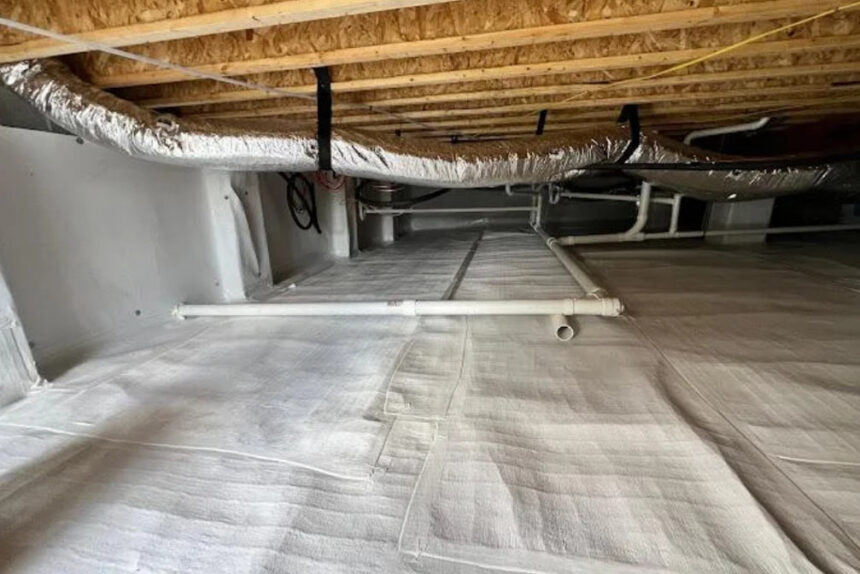
Long-lasting fixes combine structural work with moisture management. A quality vapor barrier covers 100 percent of exposed soil, laps up foundation walls, and is sealed at seams and piers to block ground moisture. Closing crawlspace vents and adding a dedicated dehumidifier, or bringing the space into the home’s conditioned envelope, stabilizes relative humidity so subfloor panels stop cycling through swelling and shrinkage. Outside, clean gutters, downspout extensions that move water well away from footings, and regrading low spots help keep the crawlspace dry after storms.
Targeted waterproofing may also be warranted. In areas with chronic seepage, a perimeter drain to a sump pump can lower the local water table under the house. HVAC lines should be insulated to prevent condensation drips on framing, and bathroom exhaust fans must terminate outdoors, not into the crawl. After repairs, place a hygrometer in the crawlspace and check it seasonally. Annual inspections to confirm vapor barrier integrity, verify dehumidifier operation, and catch plumbing drips early will protect the investment in rebuilt subfloors and reinforced joists.
Subfloor failure rarely happens overnight. It develops as humidity and small leaks slowly weaken wood, and the first signs show up as soft spots, cupped floors, and hairline cracks. Document what you see, take safe, simple measurements, and address moisture at the same time as structure. In Huntsville’s climate, pairing sound carpentry with effective crawlspace drying pays off with quieter floors, tighter doors, and framing that holds its shape year-round. When the symptoms match what you have read here, timely attention can keep a focused repair from becoming a whole-house overhaul.