When arguments keep breaking out at work, most people assume the real problem is personality. One manager is too controlling. One employee is too sensitive. One department never communicates well with another. Sometimes that is true, but often the deeper issue is simpler. People are trying to solve shared problems without a shared scoreboard.
That is why performance metrics matter more than many teams realize. Good metrics do not just help leaders track output. They reduce friction. They give people something neutral to point to when emotions start rising. In the same way a household under pressure can benefit from a clear plan, whether that means grocery limits, bill calendars, or exploring options like credit card debt negotiation, a workplace often becomes calmer when expectations are visible and progress is measurable.
The interesting part is that metrics are not only a management tool. They are a relationship tool. They can lower defensiveness, shorten pointless debates, and shift a conversation from blame to diagnosis. Instead of arguing about who “cares more” or who “dropped the ball,” teams can ask better questions. What target did we miss? Where did the process slow down? What changed this week compared with last week? Those questions are less personal, which makes them more useful.
 Arguments usually grow in places where the work is fuzzy
Many workplace conflicts are not really about attitude. They are about ambiguity. If one team believes fast turnaround matters most, while another team believes accuracy matters most, conflict is almost guaranteed. Both sides may be trying hard. Both may think they are protecting the business. Without agreed measures, each side starts defending its own version of success.
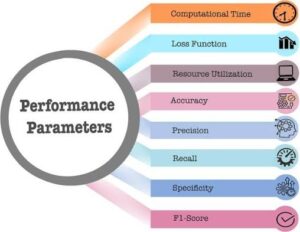
This is where performance metrics earn their keep. A clear metric turns an invisible expectation into a visible standard. Response time, error rate, resolution rate, backlog size, first contact completion, and customer retention are all examples of signals that tell people what the work actually requires. The National Institute of Standards and Technology points to operational results such as defect levels, service errors, response times, cost, productivity, and cycle time as useful ways to track process effectiveness and efficiency. NIST guidance on performance results shows how these measures help organizations evaluate how work is really performing.
Once people can see the same facts, the tone of the discussion often changes. The shipping team is no longer “careless.” The handoff process is taking too long. Customer service is no longer “dropping the ball.” First response times spiked after ticket volume increased. Finance is no longer “blocking everything.” Approval cycle time jumped because requests arrived incomplete. Metrics help teams name the process problem instead of attacking the people inside the process.
The best metrics do more than report damage
A lot of teams use numbers only after something goes wrong. Quarterly complaints go up. Revenue drops. Turnover rises. A project misses its deadline. Those are useful signals, but they are late signals. By the time they appear, the argument has already started.
A smarter approach is to use both lagging and leading indicators. OSHA explains that lagging indicators show events that already happened, while leading indicators are proactive measures that reveal whether prevention efforts are working. OSHA also notes that leading indicators can improve productivity, strengthen outcomes, and reduce costs tied to incidents. Their explanation of leading indicators in organizational performance is aimed at safety, but the logic applies far beyond safety teams.
This matters because arguments often begin before a major failure, during the period when people sense trouble but cannot prove it. One person says workload is becoming unmanageable. Another says everyone just needs to focus. One supervisor says training is too rushed. Another says the problem is accountability. If nobody is tracking early signs, both sides end up arguing from instinct.
Leading metrics make those early signs visible. They can include training completion rates, average handoff time, number of reopened cases, percentage of tasks needing rework, or time taken to respond to internal requests. These numbers do not settle every dispute, but they give the team a better starting point. Instead of debating whose impression is correct, they can review what the indicators suggest and act before frustration hardens into conflict.
Metrics can protect trust, not just performance
People often worry that metrics create a cold environment. They imagine a workplace where every move is monitored and every conversation becomes a spreadsheet. That can happen if metrics are used badly. But well designed metrics do the opposite. They reduce the feeling that decisions are arbitrary.
Trust suffers when employees think standards change depending on who is being judged. Trust also suffers when feedback is vague. “Do better” is irritating because it offers no path forward. “Reduce average follow up time from 48 hours to 24 hours” is far more respectful. It tells a person what success looks like and gives them a fair chance to reach it.
This is especially important in teams with cross functional tension. Sales, operations, compliance, customer support, and finance often collide because their pressures are different. Metrics create a common language that is more durable than mood. If everyone agrees that quality, turnaround, cost, and customer outcome all matter, then discussions become more balanced. People can weigh tradeoffs openly instead of defending territory.
A good metric starts with the question behind the conflict
One mistake companies make is measuring what is easy instead of what is meaningful. That creates more arguments, not fewer. If you only count volume, people may rush and create rework. If you only count quality, turnaround may collapse. If you only count speed, customer trust can suffer.
A better starting point is to ask, “What argument do we keep having?” If the same dispute appears every week, there is probably a missing measure underneath it. Maybe nobody agrees on what “fast” means. Maybe “high quality” has never been defined. Maybe one department is judged by total output while another is judged by exceptions avoided.
From there, the metric should be simple enough to understand, relevant enough to matter, and specific enough to guide action. Teams do not need fifty numbers. They need a handful that reflect the actual work and connect clearly to outcomes. Too many metrics can create noise. Too few can hide bottlenecks. The sweet spot is a small set that helps people see cause and effect.
The real win is calmer, smarter conversations
The biggest benefit of performance metrics is not the chart on the dashboard. It is the quality of the conversation that follows. When numbers are credible and shared, meetings become less theatrical. Less energy goes into defending egos. More energy goes into fixing systems.
That shift is powerful. It encourages curiosity over accusation. It helps managers coach instead of scold. It helps employees raise concerns without sounding dramatic. It helps teams separate a one time mistake from a repeatable process flaw.
In the end, metrics reduce arguments because they replace emotional guesswork with shared evidence. They do not remove human feeling from work, and they should not. But they can keep feeling from taking over. When people know what matters, how it is measured, and where performance stands, they spend less time fighting over opinions and more time improving results. That is not just better management. It is a better way for people to work together.