Tree removal is one of the few home projects that brings heavy equipment, rigging gear, and high-consequence decisions into a residential yard. A thoughtful plan does more than speed up the work; it prevents lawn ruts, cracked pavers, broken irrigation heads, and avoidable cleanup. If you are scheduling a professional crew, the most effective protection starts days before they arrive and continues through stump grinding and site restoration. This guide focuses on practical steps Madison-area homeowners can take to prepare access paths, mark underground lines, control chip piles and sawdust, and manage the tradeoffs between keeping wood and having everything hauled away.
-
Marking Utilities, Clearing Access, and Setting the Drop Zone Before Removal Day
Walk the access path a crew will use from the street to the tree. Measure narrow gates, note tight corners, and move grills, planters, and patio furniture so a mini skid steer, log cart, or wheelbarrow can pass without clipping posts. Flag sprinkler heads and drip emitters with landscape flags, and unplug low-voltage landscape lighting to reduce trip hazards. If you expect the chipper and truck to stage at the curb, ask neighbors to keep a clear spot, and park your own vehicles away from overhead limbs that may be lowered.
Stump grinding disturbs soil, so request a public utility locate through 811 when grinding is planned and mark private lines such as irrigation and landscape lighting yourself. Identify a “drop zone” on turf or plywood mats where you can lower small sections without striking garden beds, air conditioners, or fencing. For Madison area readers, the Tree Wise Men near Madison page is a straightforward regional point of contact for confirming access and timing. Keep pets indoors that day, and let household members know which gates will be in use.
-
What Happens During Tree Removal: Equipment Paths, Rigging, and Safety Boundaries
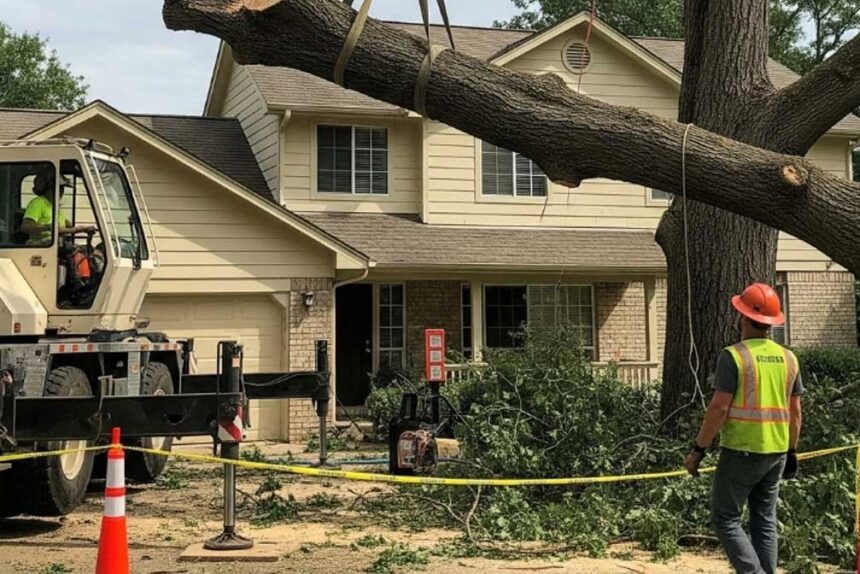
Most removals rely on either an aerial lift or a climber using ropes, harnesses, and rigging blocks to dismantle the canopy in manageable sections. Rope systems and a ground-based friction device allow crews to lower limbs under control into a designated landing spot, protecting sheds, decks, and playsets. Crews set a no-go perimeter around the work zone; resist the urge to step in for photos or grab small branches. Communication is key: a quick pre-work huddle clarifies where limbs will swing, where sawdust will fall, and how loads will exit the yard.
Expect repeated trips along the same route as logs move from the drop zone to the chipper or truck. Ask about turf protection mats on soft ground and whether a smaller loader is available for tight side yards. A common mistake is underestimating how far debris spreads during bucking, which means cutting logs to length. Tarps placed over nearby garden beds and patio furniture catch twigs and bark, and plywood leaned against fragile items such as window wells helps absorb incidental scuffs.
-
Preventing Lawn Ruts and Hardscape Damage With Mats, Tarps, and Chip Management
Ground conditions change method and impact. Saturated soil multiplies rutting from wheel loads, while firm or frozen turf resists damage better. If the schedule is flexible, consider a cooler, drier window. When timing cannot move, interlocking ground protection mats distribute weight and prevent tire gouges in lawns, and rubber edge guards can shield paver steps and retaining wall caps from bumped logs. On the street, chipper placement may affect visibility; confirm where cones and signage will go and check neighborhood guidelines for temporary equipment staging.
Chips accumulate fast. A single medium canopy can generate several cubic yards of mulch, more than most homeowners want to keep. Decide ahead of time if you want a small chip pile for garden paths and erosion control or if all chips should be hauled. If you keep some, ask the crew to dump on plywood so you can move the pile later without sod burn. Avoid mounding chips against tree trunks or home foundations; wood mulch against bark invites decay, and piled against siding can attract pests. One practical scenario: keep one wheelbarrow-accessible pile for pathways, and request haul-off for the rest to keep the yard usable.
-
Stump Grinding Prep and Aftercare: Depth, Backfill, and Reseeding
Stump grinding has its own checklist. Confirm the grind diameter beyond the stump to chase key lateral roots, especially when replanting turf. In confined spaces, you may need a smaller grinder to pass through a narrow gate; confirm gate width in advance. Rake gravel away from the stump to keep stones from becoming projectiles, and ask about temporary plywood shields to protect windows and nearby vehicles. Reconfirm utility locates on workday morning and reflag any private lines uncovered during prep.
After grinding, fill the cavity with a mix of soil and chips. That blend settles significantly as fines wash through and chips decompose, so plan to top it off more than once. For a lawn finish, remove a portion of the woodier grindings, backfill with screened topsoil, regrade to match surrounding contours, and seed or sod. Water young turf consistently until established, then monitor for seasonal settling and add soil as needed. If planting a new tree, choose a fresh location away from the decaying root mass so the new root system can anchor in undisturbed soil; deeper grinding can remove more old roots, but it also increases backfill volume and stabilization time.
-
Wood, Brush, and Chips: Keep, Haul, or Reuse?
Decide in advance what stays and what goes. Keeping logs cut to firewood lengths reduces haul-off costs but requires space for stacking and time for seasoning. Some pieces may be suitable for milling into slabs or garden edging; others are best chipped on site for reuse as pathway mulch. Brush is typically chipped; ask the crew to place a small, manageable pile only where it will not smother turf. Municipal compost sites, community gardens, and neighbors may welcome clean chips, but coordinate before the truck arrives so the material doesn’t linger in your driveway.
Bringing It All Together for a Low Impact Removal
Tree removal can be efficient and low impact when homeowners handle a few specific tasks: clear and measure access, flag irrigation and private lines, plan the drop zone, and decide on chip and wood disposition ahead of time. On the day of the work, stay outside the safety perimeter, keep pets secured, and use mats, shields, and tarps to protect turf and hardscape. After stump grinding, expect settling and schedule backfill, topsoil, and reseeding. With clear communication and a solid prep list, crews can focus on safe rigging and clean cuts while your lawn, beds, and structures stay protected.