Introduction
A well-maintained deck adds beauty, comfort, and value to any property. Whether it serves as a place for family gatherings, outdoor dining, or quiet relaxation, a deck is constantly exposed to changing weather conditions, heavy foot traffic, and natural wear. Over time, these factors can cause fading, peeling, cracking, and surface damage that affect both appearance and durability. Investing in deck painting is one of the most effective ways to restore your outdoor space while providing long-lasting protection against the elements.
Painting a deck is much more than simply changing its color. It creates a protective barrier that shields the wood from moisture, sunlight, dirt, and everyday use. A properly painted deck enhances curb appeal, extends the lifespan of the structure, and reduces the need for costly repairs. Whether your deck is newly built or has been part of your home for many years, choosing the right painting process can make a significant difference in its performance and appearance.
Why Deck Painting Is Important
Outdoor wooden structures experience constant exposure to harsh environmental conditions. Rain, intense sunlight, changing temperatures, and humidity gradually weaken the surface of the wood. Without proper protection, moisture can penetrate the material, causing swelling, warping, mold growth, and even wood rot. Regular deck painting helps prevent these issues by sealing the surface and creating a durable layer that resists water and UV damage.
A freshly painted deck also improves safety. Old paint that is peeling or cracked may create uneven surfaces that increase the risk of slips and splinters. Painting restores a smooth finish while making the deck easier to clean and maintain. In addition, modern exterior paints are formulated to withstand outdoor conditions for years, providing reliable protection while maintaining an attractive appearance.
Preparing the Deck Before Painting
Preparation is the foundation of a successful painting project. Even the highest-quality paint cannot deliver good results if the surface has not been cleaned and repaired properly. The first step is removing furniture, decorative items, and any obstacles from the deck to create a clear working area.
The deck should then be thoroughly cleaned to remove dirt, mildew, grease, leaves, and old debris. A specialized deck cleaner or pressure washer can be used carefully to prepare the surface without damaging the wood. After cleaning, the deck must be allowed to dry completely before painting begins.
Next, inspect the structure for loose boards, protruding nails, cracks, or damaged sections. These issues should be repaired before painting to ensure a smooth and long-lasting finish. Sanding rough areas helps remove loose paint and creates a surface that allows the new coating to adhere properly.
Choosing the Right Paint
Selecting the appropriate paint is essential for durability and visual appeal. Exterior paints designed specifically for decks provide better resistance against moisture, sunlight, and heavy foot traffic than standard interior products. High-quality acrylic latex paints are often preferred because they offer flexibility, excellent adhesion, and resistance to peeling.
Color selection also plays an important role. Neutral shades create a timeless appearance, while darker colors provide a modern and elegant finish. Lighter colors can make smaller outdoor spaces appear larger and brighter. Homeowners should choose colors that complement the exterior design of the property while considering maintenance requirements.
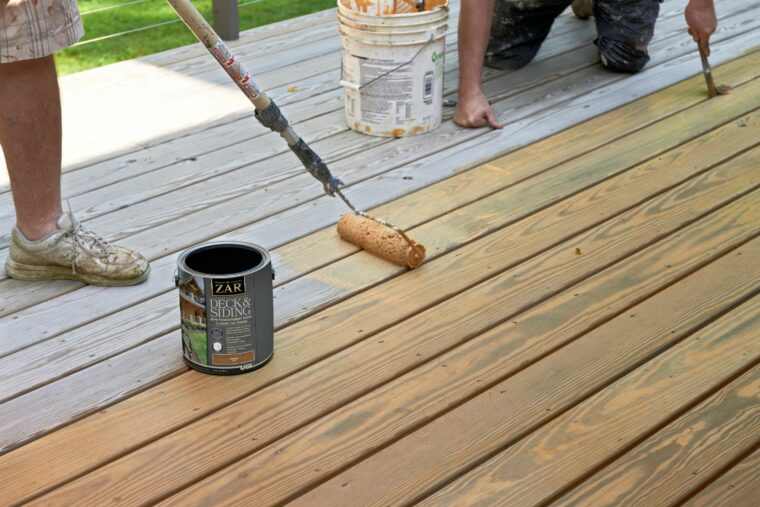
After preparation is complete, painting can begin. Primer is recommended for bare wood or surfaces with extensive repairs because it improves adhesion and helps create an even finish. Once the primer has dried, the paint can be applied using brushes, rollers, or paint sprayers, depending on the size and design of the deck.
Multiple thin coats generally provide better durability than one thick coat. Each layer should dry completely before the next coat is applied. Careful attention should be given to corners, railings, stairs, and edges to ensure complete coverage and consistent protection.
Weather conditions also influence the success of the project. Painting should be completed during dry conditions with moderate temperatures to allow the coating to cure properly.
Common Mistakes to Avoid
Many deck painting projects fail because of avoidable mistakes. Painting over dirty or damp wood can prevent proper adhesion, leading to premature peeling. Skipping sanding or repairs may result in uneven surfaces that reduce the quality of the finish.
Using interior paint instead of exterior-grade products is another common error. Interior coatings are not designed to withstand changing weather conditions and may deteriorate quickly. Applying paint too thickly or ignoring drying times can also affect durability and appearance.
Proper planning, quality materials, and careful application help achieve professional results that last for years.Although some homeowners choose to paint their decks themselves, professional painters bring valuable experience and specialized equipment to the project. They understand how to prepare different types of wood, select suitable products, and apply coatings evenly for maximum durability.
Professional services also save time while reducing the likelihood of mistakes. Experienced painters can identify hidden structural problems before they become serious, ensuring the deck remains both attractive and safe. Their knowledge of weather conditions, drying times, and application techniques contributes to a higher-quality finish.
Conclusion
Routine maintenance helps preserve the appearance and durability of a painted deck. Sweeping away leaves, dirt, and debris prevents moisture buildup that can damage the paint. Washing the surface periodically with mild cleaning solutions removes stains and keeps the deck looking fresh.Inspecting the deck regularly allows homeowners to identify minor issues before they require expensive repairs. Small chips or scratches should be touched up promptly to prevent moisture from reaching the wood beneath the paint.
Seasonal inspections are also recommended to check for loose boards, damaged railings, or signs of wear. Consistent maintenance extends the life of the paint and protects the overall structure.A beautifully painted deck enhances the appearance, value, and functionality of any outdoor living space. With proper preparation, high-quality materials, and regular maintenance, deck painting provides long-lasting protection against weather, moisture, and everyday wear. Whether you complete the project yourself or hire experienced professionals, investing in a well-painted deck is an effective way to preserve your outdoor area while creating a welcoming environment for family and guests for years to come.