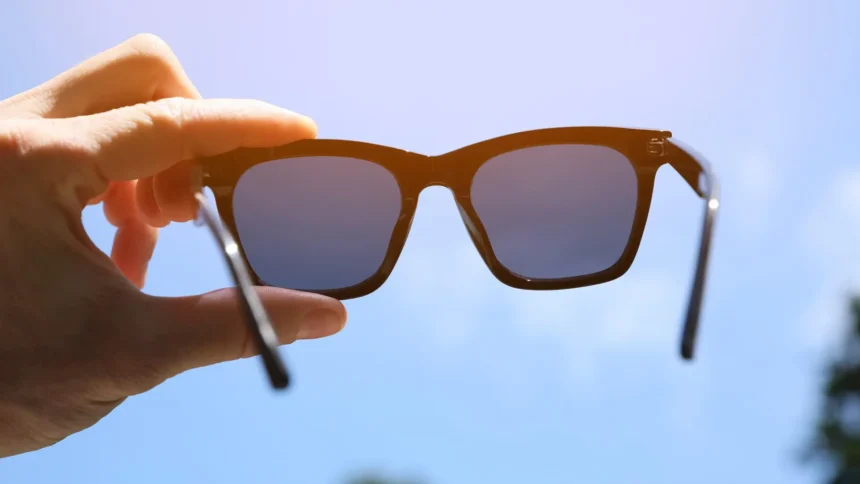
Most consumers purchase sunglasses for the logo stamped on the temple arm, completely ignoring the fact that they are strapping cheap, tinted plastic over their most delicate sensory organs. The reality is simple. Sunglasses are medical radiation shields masquerading as fashion accessories. If your lenses lack 100% UV protection, you aren’t just wasting money. You are actively accelerating ocular damage. Darkness does not equal protection. Shading your eyes without UV-blocking technology causes your pupils to dilate, letting in higher doses of harmful ultraviolet rays than if you were wearing nothing at all.
The Comprehensive Overview: Engineering Over Aesthetics
Marketing departments are exceptionally good at selling a lifestyle. They peddle the illusion of summer freedom and outdoor adventure. The actual physical product, however, is a barrier against environmental hazards. Consumers happily drop hundreds of dollars on a designer frame but refuse to investigate the optical quality of the lenses housed within it.
The industry knows this. The global prescription sunglass market was valued at a staggering $7.2 billion in 2024 and is projected to hit $9.9 billion by 2030. That kind of cash flow isn’t driven entirely by health-conscious consumers. It is driven by fast fashion and trend cycles. Manufacturers mass-produce frames using injection-molded plastics, slap a dark tint on a polycarbonate sheet, and ship them to retail shelves at astronomical markups.
You are paying for the brand equity. The actual material cost of standard lenses is incredibly low. CR-39, a basic plastic polymer, dominates the market because it is cheap, easy to tint, and offers decent optical clarity. Polyurethane and polycarbonate are reserved for higher impact resistance. Yet, consumers rarely read the spec sheet. They just want to know if the frame suits their face shape.
What Is Ultraviolet Radiation Actually Doing to Your Eyes?
You slather SPF 50 on your face to prevent premature aging and skin cancer. You probably don’t give a second thought to the cellular damage happening inside your eyes.
Ultraviolet radiation degrades tissue. Period. UVA rays penetrate deep into the eye, reaching the lens and retina. UVB rays are mostly absorbed by the cornea and lens, but they are highly energetic and cause immediate surface damage. Prolonged exposure leads to a terrifying roster of ocular diseases. Macular degeneration. Cataracts. Pterygium—a fleshy growth on the white of the eye often dubbed “surfer’s eye.” And photokeratitis, which is quite literally a sunburn on your cornea.
The data exposes a massive gap in consumer awareness. According to clinical statistics, 47% of sunglass wearers never bother to check the UV label before swiping their credit cards. They assume that if it is sold in a store, it must be safe. That assumption is medically dangerous. Furthermore, 53% of people operate under the false belief that darker lenses provide better protection.
A dark tint without a UV400 filter is the worst thing you can put on your face.
How to Identify Legitimate Protective Eyewear?
Finding real protection requires ignoring the marketing copy and looking at the raw specifications. A premium price tag guarantees absolutely nothing about the optical integrity of the lens.
- Look for UV400: This is the only metric that matters for radiation. UV400 means the lens blocks light rays with wavelengths up to 400 nanometers, effectively filtering out 99-100% of UVA and UVB rays.
- Check the visible light transmission (VLT): This dictates how much visible light passes through the lens. A VLT of 10-20% is ideal for bright, sunny conditions.
- Demand optical clarity: Cheap lenses warp your peripheral vision. Look through the lens at a straight line, like a door frame. Move the glasses side to side. If the line bends, the lens is garbage.
- Evaluate the frame wrap: Light bounces. A flat, trendy frame allows UV rays to leak in from the top, bottom, and sides. This is why sports sunglasses feature wrap-around designs—they physically block peripheral radiation scatter.
Polarization is constantly conflated with UV protection. They are entirely different mechanisms. Polarization filters out horizontal light waves. It kills the blinding glare reflecting off water, snow, and asphalt. It does absolutely zero to stop UV radiation. You can have non-polarized lenses with perfect UV protection, and polarized lenses with terrible UV protection. Do not confuse a comfort feature with a medical necessity.
What Are the Hidden Risk Factors for UV Damage?
The sun is a constant variable. Your body’s reaction to it is not. Certain biological factors and chemical inputs drastically alter your vulnerability to radiation damage, yet eyewear brands intentionally avoid discussing this because it complicates the sales funnel.
Eye color dictates risk. Just as pale skin burns faster than dark skin, light-colored eyes lack the melanin necessary to naturally filter out harsh light. People with blue, green, or hazel eyes are biologically predisposed to a higher risk of ocular melanoma and macular degeneration.
Pharmaceuticals act as aggressive multipliers for sun damage. The Oklahoma Academy of Ophthalmology notes a severe lack of public knowledge here. Their surveys reveal that 86% of people are unaware that common birth control and estrogen pills increase vulnerability to the sun. Even over-the-counter anti-inflammatory drugs like ibuprofen and naproxen sodium carry photosensitivity risks. You pop a pain reliever for a headache, walk outside without proper eyewear, and silently amplify the radiation damage to your retinas.
Surgical history rewrites the rules of sun exposure entirely. Your natural crystalline lens provides a baseline level of UV filtration. When that is removed, your internal defenses are stripped. Patients who have undergone cataract surgery face heavily elevated risks of UV damage because older artificial intraocular lenses absorb far less ultraviolet light than the biological tissue they replaced.
How Do Different Lens Colors Actually Function?
Color is not just an aesthetic choice. It is a specific tool engineered for specific environments. Buying sunglasses because the blue mirrored finish matches your jacket is a fundamentally flawed approach to gear acquisition. You select the tint based on the visual data you need to process.
- Gray Lenses: Transmit all colors evenly. Best for general use and true color perception. Reduces overall brightness without distorting the visual field.
- Brown and Amber Lenses: Block blue light, which causes haze and reduces sharpness. Massively enhance contrast against green and blue backgrounds. The optimal choice for shallow-water fishing, golf, and trail running.
- Rose and Vermilion Lenses: Heighten contrast in low-light and flat-light conditions. Sharpen the visual edges of objects against white backgrounds. Standard issue for skiing and snowboarding.
- Yellow Lenses: Extreme blue-light filtration. Increases depth perception in overcast, foggy, or low-light environments. Useless in bright, direct sunlight.
Brands often manipulate these colors with flash-mirror coatings to make them look aggressive on the shelf. The mirror coating reduces glare by reflecting light away from the eye, but it is the base tint underneath that actually processes the color spectrum. If you are serious about optimizing your performance in harsh environments, you need to align your lens tint with your terrain.
Q&A: Cutting Through the Eyewear Industry Noise
Consumers are drowning in technical jargon designed to justify arbitrary price hikes. Here are the direct answers to the most manipulated questions in the eyewear market.
Q: Do expensive sunglasses offer better UV protection than cheap ones?
A: No. UV-blocking technology is incredibly cheap to manufacture. A $15 pair of pharmacy glasses with a certified UV400 sticker provides the exact same radiation protection as a $400 designer pair. You are paying for frame materials, optical clarity, hinge durability, and brand prestige.
Q: Are glass lenses superior to plastic lenses?
A: Optically, yes. Glass provides the absolute highest level of scratch resistance and visual clarity. Functionally, it depends on the use case. Glass is heavy and shatters upon high-velocity impact. If you drop a glass lens on concrete, it fragments. Polycarbonate plastic is lighter and highly impact-resistant, making it the only logical choice for athletic or tactical use.
Q: Can you repair scratched lenses?
A: No. The internet is full of “hacks” involving toothpaste or baking soda to buff out scratches. These methods simply strip away the anti-reflective and UV coatings, ruining the lens entirely. Once a lens is deeply scratched, its optical integrity is compromised.
Q: Why do my eyes feel tired even when wearing sunglasses?
A: You are likely dealing with optical distortion or inadequate glare reduction. Cheap, stamped plastic lenses warp light, forcing your eye muscles to constantly adjust to process the image. Alternatively, if you are on the water without polarized lenses, the sheer volume of reflected light is causing intense eye fatigue.
How to Build a Genuine Sun Protection Arsenal?
Relying on a single pair of sunglasses for driving, beach days, and aggressive outdoor sports is a tactical error. You do not wear hiking boots to a formal dinner. Your protective equipment must match the threat level of your environment.
Building a rotation requires isolating your use cases:
- The Daily Driver: A high-quality, polarized, lightweight frame with gray or brown lenses. Suitable for driving and urban environments.
- The High-Output Shield: A wrap-around frame utilizing impact-resistant polycarbonate lenses. Essential for cycling, running, or any activity where debris and peripheral light scatter are active threats.
- The Low-Light Tool: Amber or yellow-tinted lenses for overcast days, dawn patrols, and heavy fog.
Proper maintenance dictates the lifespan of the optic. Wiping salt spray or dust off a lens with your cotton t-shirt is essentially taking sandpaper to a precision instrument. Micro-abrasions destroy the mirrored finish and anti-reflective coatings instantly. Always rinse the lens with fresh water before applying a microfiber cloth.
Keep your gear secured in a hard case. Leaving sunglasses on the dashboard of a hot car warps the acetate frames and degrades the lens coatings through extreme thermal expansion. Equipment failure is almost always the result of user negligence. For tips on managing the rest of your seasonal kit, read our guide on spring wardrobe essentials.
Why Does the Eyewear Market Function Like a Monopoly?
The illusion of choice is the greatest marketing trick ever pulled on the consumer public. When you walk into a retail store, you see dozens of supposedly competing brands fighting for shelf space. The reality is heavily consolidated. A single massive conglomerate owns almost every major brand you recognize. They manufacture the frames, they manufacture the lenses, they own the optical labs, they own the retail chains, and they even own the vision insurance companies.
This vertical integration allows them to artificially inflate prices across the board. A piece of injection-molded plastic with a basic hinge and a polycarbonate lens costs roughly $3 to $5 to produce at scale. It retails for $250. This markup is sustained by aggressive marketing campaigns that convince consumers a specific emblem on the temple arm signifies luxury or superior performance.
Independent brands are fighting back by offering direct-to-consumer models, cutting out the retail markup. They use the same Mazzucchelli acetate and CR-39 lenses from the same factories, but sell the finished product for a fraction of the cost. The informed consumer ignores the brand name. The informed consumer evaluates the quality of the barrel hinges, the presence of wire cores in the temples, and the verifiable optical certifications of the lenses.
The industry counts on your vanity to extract your cash. By prioritizing aesthetics over engineering, you willingly compromise your physical health and your wallet simultaneously. The medical data is unambiguous regarding UV degradation. The technical specifications of lens materials are public knowledge. Refusing to engage with the facts ensures you remain a highly profitable demographic for a corporate machine that views your ocular health as entirely secondary to their quarterly earnings reports.