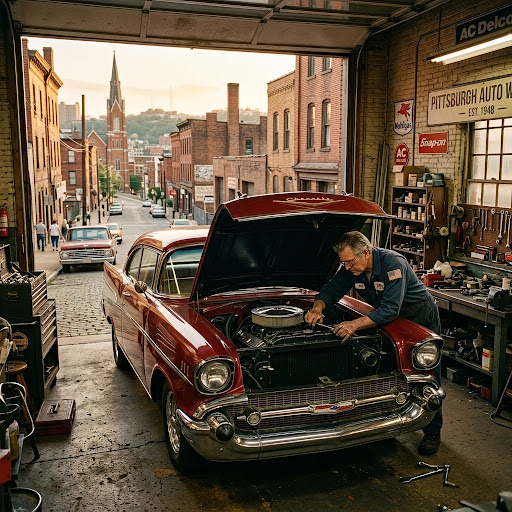
Classic cars don’t just occupy garage space—they hold stories. A 1967 Ford Mustang might carry the memory of a father’s first paycheck. A ’69 Chevrolet Camaro might represent decades of weekend passion projects. These machines deserve more than a generic repair shop. They deserve specialists who understand what’s under the hood, what’s at stake, and what it means to keep a piece of automotive history running the way it was meant to.
Pittsburgh has always had a deep-rooted love for American craftsmanship. From its steel industry legacy to its blue-collar pride, the city carries a culture that respects things built to last. It’s no surprise, then, that classic car culture thrives here—and that owners across the region are selective about who touches their prized vehicles.
That’s where the right expertise makes all the difference.
What Makes Classic Car Repair So Different from Modern Auto Service?
Repairing a classic car is nothing like servicing a modern vehicle. Today’s cars rely heavily on onboard computer systems, digital diagnostics, and standardized parts that are easy to source. Classic cars operate on entirely different principles—mechanical precision, period-correct components, and a level of craftsmanship that simply doesn’t exist in mass production anymore.
Technicians working on vintage vehicles need to understand carburetors, points-style ignition systems, drum brakes, and body-on-frame construction. They need to know how metal behaves over decades, how original paint responds to restoration work, and how to source or fabricate parts that haven’t been manufactured in 40 years.
This kind of knowledge takes years to develop. It can’t be learned from a software update.
The Services Classic Car Owners Actually Need
Owning a classic car comes with a unique set of maintenance and restoration challenges. Here’s what dedicated classic car service looks like in practice:
Engine Rebuilding and Performance Tuning
Original engines are the heart of any classic vehicle. Whether it’s a small-block V8 or a straight-six inline engine, rebuilding requires meticulous attention to tolerances, clearances, and original specifications. Performance tuning takes it a step further—optimizing the engine for either road use or show-quality presentation without compromising authenticity.
Bodywork and Rust Remediation
Time is the enemy of sheet metal. Rust doesn’t just affect appearance—it compromises structural integrity. Skilled classic car technicians can identify rust before it spreads, cut out affected panels, and weld in new metal that matches the original contours. The goal is always to preserve as much original material as possible.
Electrical System Restoration
Older wiring systems were never designed to last forever. Cloth-wrapped wiring harnesses degrade, grounds fail, and connections corrode over decades. Rewiring a classic car requires knowledge of vintage electrical systems while also accommodating modern safety and lighting requirements where needed.
Suspension, Steering, and Brake Overhauls
Original suspension components wear out. Bushings harden and crack, ball joints loosen, and drum brake hardware becomes unreliable with age. Restoring these systems to factory specification—or upgrading them for improved safety—keeps classic cars drivable and reliable on modern roads.
Cosmetic Restoration and Detailing
From paint correction on original finishes to full-scale color-matched resprays, cosmetic restoration brings a classic car back to its former glory. Interior restoration—seats, carpets, dashboards, and trim—completes the transformation.
Why Pittsburgh Is the Right Place for Classic Car Culture
Pittsburgh’s geography and history have created an ideal environment for classic car enthusiasts. The city’s four seasons mean that many collectors store their vehicles through the winter months, making spring preparation and mechanical check-ups a regular part of the ownership calendar.
The region also has a strong network of car clubs, shows, and events that keep the culture active year-round. From local cruise nights to regional concours events, Pittsburgh’s classic car community is engaged, knowledgeable, and deeply passionate about preservation.
That community deserves a service provider who matches their commitment.
What Sets Dedicated Classic Car Specialists Apart
Not every auto repair shop is equipped to handle vintage vehicles. General repair shops may lack the tools, knowledge, or parts-sourcing capabilities required for authentic restoration work. The difference between a specialist and a generalist often becomes clear the moment a technician opens the hood.
Specialists bring several advantages that matter deeply to classic car owners:
- Period-correct knowledge: Understanding how vehicles were originally built allows technicians to restore them the right way—not just the convenient way.
- Parts sourcing expertise: Finding original or high-quality reproduction parts requires established relationships with suppliers that general shops simply don’t have.
- Attention to detail: Classic car owners notice everything. A specialist understands that precision and presentation are non-negotiable.
- Respect for the vehicle’s history: Every modification, every repair decision, and every product used should honor what the vehicle represents.
These qualities aren’t common. When you find them, they’re worth holding onto.
Bringing Pittsburgh’s Classic Cars Back to Life
Heritage Auto Repair and Development of Pittsburgh stands as a trusted destination for classic car owners who refuse to settle for anything less than expert-level service, delivering restoration, mechanical repair, and performance development with the kind of craftsmanship that honors the legacy of every vehicle that comes through their doors.
The team understands that a classic car isn’t just transportation—it’s a commitment. Every repair decision, every part selection, and every hour of labor reflects a respect for automotive history that only a true specialist can offer.
Pittsburgh’s classic car owners have options. The ones who care most about their vehicles know exactly where to go.
Frequently Asked Questions
What types of classic cars does Heritage Auto Repair and Development of Pittsburgh service?
The shop services a wide range of classic and vintage vehicles, including American muscle cars, European classics, and collector trucks from various eras. Each vehicle is approached with the specific knowledge its make, model, and year requires.
Is it better to restore a classic car fully or preserve its original condition?
This depends on the owner’s goals. A full restoration brings a vehicle back to showroom condition, while a preservation approach maintains the original patina and components. Both are valid paths, and the right choice depends on how the car will be used and what its history means to the owner.
How long does a classic car restoration typically take?
Timelines vary significantly based on the scope of work. A mechanical overhaul may take a few weeks, while a full rotisserie restoration can take several months. Honest communication about timelines is a hallmark of reputable classic car specialists.
Can classic cars be made safer for daily or regular driving without losing authenticity?
Yes. Many classic cars can be upgraded with modern braking components, radial tires, and improved lighting while retaining their original appearance. These modifications improve safety and drivability without compromising the vehicle’s character.