While most gardeners can judge when there’s a need for water in their lawn, not many can also determine exactly how many gallons or litres of water their sprinklers and hoses are using weekly. If you were not there to guide the water right in front of you, when there is a lack of water it would be just guesswork. Too much watering, increased runoff can be unattended, and bills can creep up on you each month if you’re not paying attention.
This article discusses the methods used to measure garden water consumption, how to keep track of your irrigations, and to use these data to make sense of watering lawns and gardens more efficiently and effectively.
Why Measuring Garden Water Usage Matters
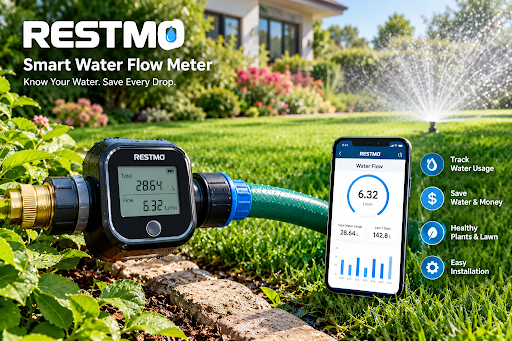
The key to irrigation management is determining how much water is going to your lawn and beds. Mounted between a spigot and a hose or irrigation line, this water flow meter measures the amount of water moving through the hose or irrigation line when it is used; thus it provides a measurement rather than an estimate. You can compare zones, monitor seasonal changes and detect issues early with that number.
Water conservation also is provided through measurement. In cooler months when evaporation decreases many lawns are being watered much more than is required. Others go into one corner and others into another corner. These imbalances can be recorded so that run durations can be adjusted rather than all watered the same.
How Hose and Irrigation Flow Can Be Measured
There are a couple different levels of how one can measure outdoor water flow with a level that can be from free to fairly advanced.
The easiest to undertake is the bucket test. Measure the time it takes to fill a container with a known capacity with a hose or sprinkler head, and calculate the flow rate (gallons or liters per minute.
If you have a specific amount of time you spend with the water, you can get a ballpark figure for a session by multiplying. Simple, but the single use, difficult to replay on an extended platform.
The inline devices are more consistent. Hose-end, drip system and digital flow sensors capture total volume and optionally current rate of flow. Simple hose watering suits mechanical models which require no power. Digital versions can show the daily totals, and they can hold readings for a number of weeks, aiding in chart comparisons of a week’s worth of weather versus a week’s worth.
Select one of these methods and write the readings in a notebook or spreadsheet. Record the time, location, time interval and volume. A few weeks later, patterns start to emerge which no single reading would be able to depict.
Using Measurements to Improve Outdoor Watering Efficiency
With data comes action. The first step is to determine watering needs for your lawn. In many turf grasses, this may be approximately 1″ of water per week; however, this will vary by climate, soil and season. Therefore for every square foot of lawn you have you will need about 0.62 gallons per inch for your system.So for the lawn area you have you should multiply by about 0.62 gallons/inch, and then compare to what your system is able to produce.
Several adjustments typically follow from the numbers:
Water heartily and infrequently: Deep watering promotes deep root growth and lawns and plants benefit from this ability as they become more tolerant of periods of dry weather.In contrast to the shallow watering which is common, deep watering will actively stimulate downward root growth, resulting in greater tolerance of dry periods.
Water early in the morning: Cooler temperatures and a lower wind speed results in less evaporation and spray drift, allowing more water to reach the ground.
Identify zones according to the requirements of the vegetation: Similar requirements are typically not found in every vegetable bed, shrub and lawn. Different zones allow you to apply to each zone a different volume.
Look for any leakage or run-off water: If there was an increase in measured use and no changes in schedule, then this may indicate a misaligned sprinkler head, a loose fitting or a leaking hose.
Run off can also be caused before water has a chance to infiltrate due to sloped or compacted soil. Using two shorter sessions one after the other, with a break in between, allows the soil time to absorb more.
Powering Garden Irrigation Equipment Safely
In modern irrigation, electrical pumps, timers, controllers and sensors are common with, for example, booster pumps for rain barrels, digital timers, controllers and sensor displays. An outdoor extension cord is the typical method to get electricity to a socket where it is not near the watering area.
Select one that is engineered for use outdoors and is jacketed to protect against moisture, sun and abrasion and wire-wound with a wire gauge that lends strength to the carrying capacity of the pump or the device. Careful habits are needed with water and electricity. To prevent the risk of plug you should not have plug connections touching any earth except in a covered connection box.
Connect to an outlet/outlet with a GFCI and never run a cord through water areas or across a trail where sprinklers are running straight into the water. Unroll the cord completely when using so it won’t overheat, and check the cord for cracks or bare wires before each season. Your irrigation system works while you take care of safety — and proper system setup is essential.
Practical Habits for Water Conservation
Assessment is best combined with some consistent habits. Mulch plants around beds to decrease evaporation and weed growth. Use rain water for container plants and plant borders.
Don’t start or stop your activities due to a set schedule, but rather adjust according to the rain; after the rain has fallen: don’t rush tasks based on an artificially fixed schedule – think about implementing a rain sensor or soil moisture probe that can make the decision for you.
Review your records on a monthly basis. If more is used with no differences in weather— Investigate! When you find that you can add one to your savings even when you adjust your schedule and the lawn doesn’t show signs of being all that stressed, you’ve got absolute savings on your hands.
These small reductions in water usage are important over a season’s time. Maintenance is important as well. Clear clogged sprinkler nozzles, replace old hose washers and inspect drip line emitters for clogs. A system that gets watering evenly loses less water and provides more meaning to the numbers as they actually represent what is being received by plants.
Conclusion
The first step in optimizing the amount of water used in your garden is to understand the amount of water used. Certain irrigation systems can measure the flow of water and record the watering times and adjust the durations to meet plants’ needs, helping to maintain healthy lawns and beds while conserving water.
Upgrade pump and timer safety, adopt good practices such as mulching and rainwater collection – and your garden watering is more reliable, more economical and more environmentally-friendly.