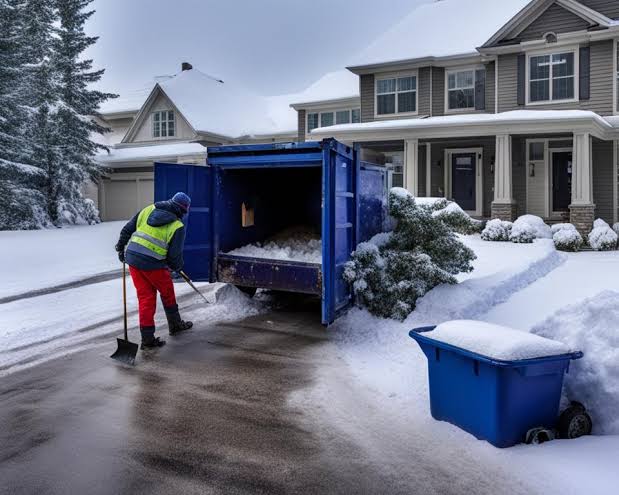
Most homeowners assume a dumpster rental is a warm-weather event. The cleanouts and renovations that need one are often planned for spring and summer, and the idea of loading a roll-off in January seems like something to avoid. But winter is when basements get cleared, interior remodels happen, and a surprising number of projects come due, and in snow-belt regions a container in the driveway between November and March is routine. It simply requires a few adjustments that a summer rental does not.
Cold weather changes four things about a dumpster rental: where the container can sit, how the driver reaches it, what happens to the debris once it is loaded, and how much usable daylight the project has. This guide covers each one, with the practical fixes that keep a winter rental from turning into a frozen problem, and ends with the projects that are actually better done in the cold.
Placement on Snow and Ice
A container has to be set on a surface that will hold it and that the truck can reach. In winter both are in question.
- Clear the spot before delivery. The container’s footprint, plus the truck’s approach and the area where it tilts the container down, should be shoveled or plowed to the pavement. A container set on packed snow will shift as the snow melts and may end up tilted or sunk into a frozen rut by pickup.
- Salt or sand the approach. A delivery truck backing a loaded trailer up an icy driveway is a hazard for the driver and for the property. Treating the surface the morning of delivery matters.
- Think about where the snow will go. A container that occupies the spot where the driveway is normally plowed to has nowhere for the next storm’s snow to be pushed. Place it where plowing can continue around it, and tell the plow service where it is.
- Mark it. After a heavy overnight snowfall, a dark container at the end of a driveway can be hard to see from the street. Reflective tape or a marker stake at the corners prevents a neighbor or a plow from finding it the hard way.
- Protect the surface. Freeze-thaw cycles make asphalt and pavers more vulnerable to the weight of a loaded container. Plywood under the contact points is cheap insurance, and a provider whose equipment keeps steel off the driveway removes the concern.
Plow Access and the Driver’s Visit
The delivery and pickup are the two moments when weather most often disrupts a winter rental.
A provider cannot deliver during a storm or to a driveway that has not been cleared, and a pickup scheduled for the morning after a snowfall may slip if the roads or the driveway are not passable. Building a day of slack into the schedule on both ends avoids most of the frustration. A homeowner who needs the container gone by a specific date should plan for pickup a day or two earlier than strictly necessary.
On the day itself, the driveway should be cleared to the container and the street end should be open. A container buried behind a plow berm cannot be picked up until the berm is removed, and the provider is not responsible for removing it.
Frozen Loads
This is the problem that catches winter renters by surprise. Debris that goes into a container wet, or that absorbs snow and rain while sitting in it, freezes into a solid block. Wet carpet, waterlogged drywall, soaked insulation, and bagged household trash with any moisture content all freeze, and a frozen load has three consequences.
- It is heavier. Water weight that would have drained or evaporated in summer stays in the load as ice, and the container is weighed at the facility with the ice included. A load that would have been under the weight allowance in July can exceed it in January.
- It may not tip. Debris frozen to the container floor and walls does not slide out when the container is tilted at the facility. Some facilities charge for the extra handling, and some providers pass that charge on.
- It can delay pickup. A container that cannot be emptied cannot be returned to service, and a provider may wait for a thaw.
The fixes are simple. Keep wet material out of the container where possible, or let it dry indoors first. Cover the container with a tarp between loading sessions so snow and sleet do not accumulate inside; most providers allow this and some supply covers. Load heavy, wet items last and near the top rather than packing them against the floor. And flag any load that is likely to be wet, such as a flooded-basement cleanout, with the provider at booking so the weight and handling are understood in advance.
Shorter Days and the Rental Window
A three-day rental in July includes roughly forty-five hours of daylight. The same three days in December include closer to twenty-seven. For an exterior project, or for a cleanout where the loading happens outdoors, that is a real reduction in working time, and it argues for either a longer rental or a tighter plan.
Staging makes the biggest difference. Sorting and boxing indoors during the evenings, then loading the container in daylight, converts the short days into loading days rather than sorting days. For projects where the work is indoors, such as a basement remodel, daylight matters less and the standard window is usually fine.
A provider with flexible rental extensions makes winter easier. Weather delays and short days are both reasons a project runs long, and a daily extension rate that can be invoked with a phone call is worth more in January than in June.
The Projects That Suit Winter
Some projects are better in the cold, and the lighter demand for containers in winter can mean faster delivery and more scheduling flexibility.
- Basement and attic cleanouts. Indoor work, no daylight dependency, and often the result of a New Year’s resolution or a holiday visit that revealed how much has accumulated.
- Interior remodels. Kitchens and bathrooms are gutted year-round, and contractors are often more available in winter. The debris is dry and loads cleanly.
- Estate and move-out cleanouts. These happen on their own schedule, and winter is as common as any season.
- Post-holiday purges. Replaced furniture, outgrown items, and the general turnover that follows the holidays.
- Storm-damage interior cleanup. Burst pipes and ice-dam leaks produce water-damaged drywall, flooring, and belongings that have to go, and the sooner they are out, the less damage follows. These loads are wet and heavy, which is exactly the case to flag at booking.
Exterior projects such as roofing, deck removal, and fence replacement are usually better left for a thaw, both because the work itself is harder in the cold and because frozen ground complicates footings and placement.
In the Southern Tier of New York, where winter rentals are a normal part of the calendar, Morse Hauling & Junk Removal offers year-round dumpster rental on a flat rate that covers delivery, a multi-day window, pickup, and a set disposal allowance, with additional days available at a daily rate for projects that run long, same-day or next-day delivery when scheduling allows, driveway placement without surface damage, and the request that heavy or wet loads be mentioned at booking so any weight overage is quoted in advance. The company is fully insured and serves Elmira, Horseheads, Elmira Heights, Corning, Ithaca, and nearby towns. Whatever provider a homeowner uses in a snow climate, the features that matter are a rental window that can be extended easily, a delivery schedule that accommodates weather, and a willingness to talk through a wet load before it is loaded.
A Winter Rental Checklist
- Choose a placement spot that leaves room for plowing and is visible from the street.
- Shovel or plow the footprint and the truck’s approach to pavement before delivery; salt or sand the approach.
- Lay plywood under the contact points on asphalt or pavers.
- Mark the container corners with reflective tape or stakes.
- Tell the plow service where the container is.
- Keep a tarp over the container between loading sessions.
- Stage and sort indoors; load in daylight.
- Keep wet material out or let it dry first; load wet items last and high.
- Flag any expected wet or heavy load with the provider at booking.
- Build a day of slack into both delivery and pickup.
Key Takeaways
- Winter changes placement, access, debris behavior, and daylight; each has a simple fix.
- Clear and treat the surface before delivery, leave room for plowing, mark the container, and protect the driveway.
- Wet debris freezes into a heavier, harder-to-tip load; keep it out, tarp the container, and flag wet loads at booking.
- Short days favor indoor staging and a provider with easy rental extensions.
- Basement cleanouts, interior remodels, estate cleanouts, and water-damage cleanup suit winter; exterior demolition does not.
Frequently Asked Questions
Can a dumpster be delivered in the snow?
Yes, if the driveway and the truck’s approach have been cleared to pavement and treated. Deliveries during active storms are usually rescheduled, so build slack into the dates.
Will a dumpster damage my driveway in winter?
Freeze-thaw cycles make asphalt and pavers more vulnerable to a loaded container’s weight. Plywood under the contact points, or a provider whose equipment keeps steel off the surface, prevents damage.
What happens if the debris freezes in the dumpster?
The load weighs more because the ice is included, and it may not tip cleanly at the facility. Keeping wet material out, tarping the container, and loading wet items last reduce the problem.
Should I cover my dumpster in winter?
Yes, between loading sessions. A tarp keeps snow and sleet out of the load, which keeps the weight down and prevents freezing. Confirm with the provider that a cover is allowed.
Is dumpster rental cheaper in winter?
Rates are usually the same, but demand is lighter, which often means faster delivery and more flexible scheduling. The savings come from availability rather than price.
What if my project runs long because of weather?
Most providers offer daily extensions on request. Choose a provider that makes extending easy, and call before the scheduled pickup rather than after.
Conclusion
A winter dumpster rental is not a different product; it is the same container in a less forgiving setting. The homeowner who clears the spot, protects the surface, keeps the load dry, stages indoors, and builds a day of slack into the schedule will find the rental goes as smoothly in February as in June, and often with better availability. The projects that suit the season are indoor ones, and in a snow climate there is no shortage of those.