Introduction
Before “listing on the market”, products must meet high standards. From metal components to plastic components, textiles to electronic products, the quality and safety of a company are always crucial. Even a minor defect can cause product failure, high costs, and dissatisfied customers.
Hence, the need for Material Testing by www.ots-techniks.com. Testing for manufacturers provides insight into the performance of materials under various conditions. It also helps companies meet industry standards and enhance the quality of their products.
(Modern industries rely on reliable testing methods for reliability. Companies like OTS Technik offer cutting-edge solutions and products that play a crucial role in quality control and research in numerous sectors.
The importance of the Material Test.
Materials react differently under stress, heat, moisture, and/or chemicals. Engineers can gain insight into these behaviours through testing before manufacturing.
The purpose of the testing is basically:
Improving product quality
Meeting safety requirements
Reducing manufacturing risks
Increasing product lifespan
Monitoring for compliance with standards
Educating and training personnel for the Research and Development function
Manufacturers can face recalls and product failures if effective testing has not been used.
Destructive Testing
Destructive – testing by applying forces until break or change of shape. This method offers valuable information, but the sample will not be available for subsequent use.
Typical destructive tests are:
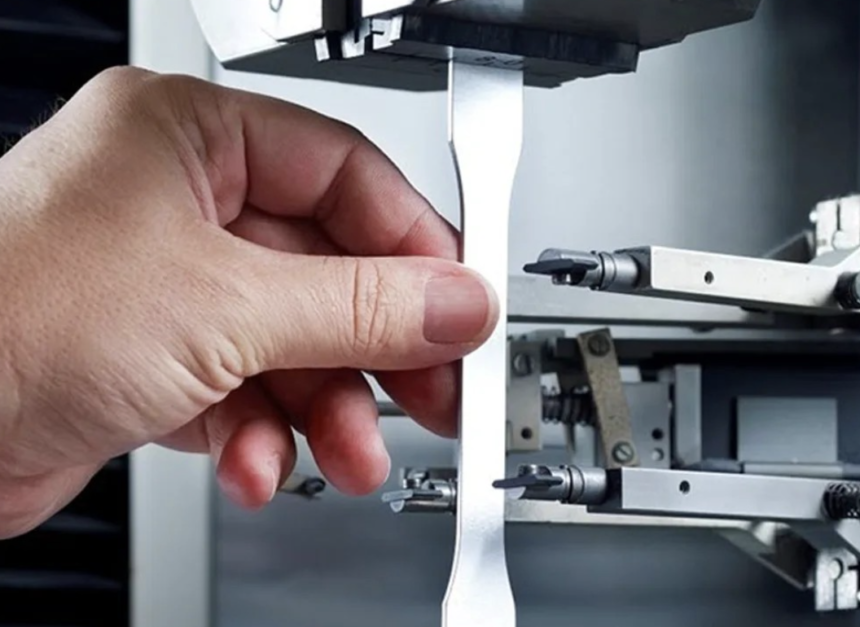
Tensile Testing
Tensile testing is used to determine a material’s tensile properties. Engineers use this test for metals, plastics, and composite materials.
It helps determine:
Yield strength
Ultimate strength
Elongation
Breaking point
Compression Testing
Compression testing is a process of measuring the behaviour of materials under compression. It is used as a technique in the manufacture of construction materials and in packaging.
Impact Testing
Impact testing measures the amount of energy a material can absorb before it fails. They are used in industries to assess toughness and resistance to sudden forces.
Non-Destructive Testing
Non-Destructive Testing is a testing method which does not harm the sample being tested. This approach does not waste time and money, as the tested components can still be reused.
Ultrasonic Testing
Ultrasonic waves can be used to detect defects and cracks within an object. It’s employed in the aerospace, automotive and manufacturing sectors.
X-Ray Testing
An X-ray inspection is used to see things the naked eye cannot. This is the method manufacturers use to inspect and quality-assure welds.
Magnetic Particle Testing
This method detects surface defects in magnetic materials. Identifies cracks that might not be discernible by the naked eye.
Mechanical Testing
Mechanical testing of properties deals with the physical properties of materials.
Typical mechanically conducted tests involve:
Hardness testing
Fatigue testing
Bend testing
Shear testing
Torsion testing
These tests provide the numbers needed for product design and engineering calculations.
Thermal Testing
In many materials, temperatures are likely to change during use. Thermal testing is a method for determining the characteristics of products under thermal stress.
Examples include:
Heat Resistance Testing
This approach lets you know whether materials can withstand high temperatures.
Thermal Shock Testing
Thermal shock testing is a process in which temperature can be rapidly varied on materials. It is used by engineers to test out durability and performance.
Temperature Cycling Tests
The long-term behaviour is predicted by repeatedly heating and cooling the items.
Environmental Testing
Product performance may be influenced by the environment. Environmental testing is a type of testing in which the real-life environment is simulated.
Common tests include:
Humidity testing
Salt spray testing
Corrosion testing
Weather resistance testing
UV ageing tests
The procedures play a crucial role in the automotive, electronic, and outdoor goods sectors.
Chemical Testing
Chemical testing involves the study of the reactivity of materials to chemicals or erosive materials.
These are the elements that manufacturers assess with the assistance of chemical testing:
Corrosion resistance
Chemical stability
Material composition
Surface treatment quality
Chemical analysis is used in a variety of industries, including healthcare, aerospace, and electronics.
Electrical Testing
Electronic components and devices have to be tested electrically.
Typical tests include:
Insulation resistance testing
Dielectric strength testing
Conductivity testing
Current leakage tests
These tests are provided to ensure the safety and reliability of performance.
Selecting the Appropriate Approach to Testing
There are several factors to consider when selecting the proper method.
For example, Janera Science uses distinct analytical methods, including HPLC, LAL, ICP-MS, and USP testing, to evaluate specific quality parameters in research-grade peptides.
Material Type
Each material will have its own solution. All materials, such as metals, plastics, rubber and composites have varying responses.
Industry Standards
The manufacturer must adhere to standards set by ASTM, ISO, and other organisations.
Product Application
You would perform various tests on a material intended for use in medical devices, as opposed to one intended for use in construction.
Budget and Time
There are some quicker, cheaper ways. Non-destructive methods may decrease costs as the products are not damaged.
Required Data
Engineers should first determine what information they need before deciding on a testing method.
Importance of Material Testing for Certain Industries
In many sectors, material testing is a vital part and parcel of the sector.
These include:
Automotive manufacturing
Aerospace engineering
Electronics production
Construction and infrastructure
Medical devices
Consumer products
Energy and renewable technologies: Renewable energy, Conventional sources and utilisation.
Industry, in any form, relies on the proper test for safety and quality.
Conclusion
Selection of the proper test method is very important for assured product performance and reliability. Each test method provides important information, and different methods are used to test specific materials.
Every process is designed to improve the quality and safety of products, from tensile testing and thermal analysis to non-destructive inspection to corrosion testing.
With the industries’ growing requirements, professional solutions from companies like OTS Technik enable manufacturers to achieve higher performance and to trust in their products. Material Testing is a critical process in today’s engineering and product development.