Coming face to face with a bull shark is a rare kind of thrill. Fiji offers the best place on earth to do it. This guide explores why, what the dive involves, and what makes bull sharks so special. It also covers safety, season, and the conservation story behind it all.
The Bull Shark: A Predator Like No Other
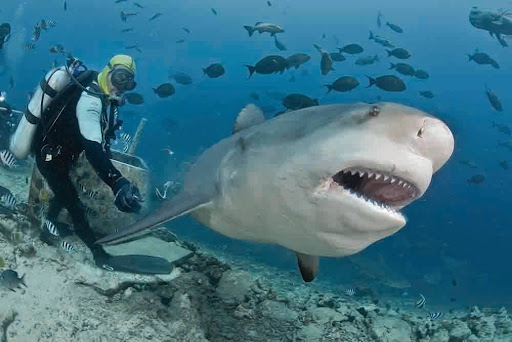
The bull shark is one of the ocean’s most powerful animals. It has a thick, muscular body and a blunt, rounded snout. That build gives it a stocky, unmistakable shape.
These sharks usually grow two to three meters long. Females tend to be larger than males. Up close, their size and bulk are humbling.
Bull sharks have a bold, confident nature. They move slowly and calmly, with little fear. Watching one cruise past feels both intense and strangely peaceful.
Why Fiji Is the Bull Shark Capital
Fiji draws bull shark lovers from across the globe. Nowhere else offers such reliable, close encounters. The numbers here are simply staggering.
The action happens in Beqa Lagoon, off Viti Levu’s south coast. A protected marine reserve sits within this sheltered lagoon. Bull sharks gather here in remarkable density.
On a strong day, divers see dozens of bulls at once. Some counts top forty sharks on a single dive. Few places on the planet can match that.
A guided trip makes this dream easy to reach. The famous bull shark dive in Fiji takes place just a short boat ride from shore. Expert teams handle every detail so you can focus on the sharks.
What Makes Bull Sharks Fascinating
Bull sharks stand out even among other sharks. They have one rare and remarkable ability. They can survive in both salt and fresh water.
This lets them swim far up rivers and into lakes. Few sharks can tolerate such change. It makes the bull shark one of the most adaptable predators alive.
They are also highly intelligent and aware. They learn patterns and recognize feeding routines. This explains why they return to the same reef day after day.
The Famous Deep Feed
The heart of this dive is the deep feed. Bull sharks dominate this part of the experience. It is where the real magic happens.
Divers descend to around 25 to 30 meters. They settle behind a low wall on the coral. Then the feeding begins, and the bulls move in.
Trained feeders offer bait in a careful, controlled way. The sharks circle and glide just overhead. The sight of so many bulls at once is unforgettable.
How the Encounter Feels
Divers often describe the same powerful moment. The water ahead seems to fill with movement. Then the first bull shark swings into view.
It holds its line, unhurried and calm. More follow until the scene is full of sharks. The sheer presence of the animals takes your breath away.
There is a strange stillness to it all. The bulls show no aggression toward divers. They move with the quiet confidence of animals that fear nothing.
Staying Safe With Bull Sharks
This dive sounds intense, but it is well controlled. Operators run strict safety systems. Trained divers guard the group at all times.
You receive a full briefing before entering the water. It explains where to kneel and how to behave. Staying still and following the rules keeps everyone safe.
Safety divers carry metal rods to guide sharks gently. Feeders wear protective gear during the feed. Divers stay in fixed positions, never reaching out.
Who Can Join the Dive
This is a dive for certified scuba divers. It is not designed for total beginners. Some experience at depth is important.
Most operators require valid certification to take part. Divers with fewer logged dives get extra supervision. The deep feed favors those comfortable at depth.
Newer divers still have a path in. They can warm up on calm reef dives first. Then they can join the bull shark dive with confidence.
The Conservation Story
The bull shark dive is more than a thrill. It plays a real role in protecting sharks. That story is worth knowing.
A conservation fee is built into each dive. This money supports the local village and reserve. Local communities now value sharks as a living asset.
This model helped change Fiji’s view of sharks. The economic case supported a national shark sanctuary. Today, these waters protect the very animals divers come to see.
Every diver becomes part of that effort. Seeing a bull shark alive builds respect and awareness. Sharks here are worth far more swimming than caught.
Tips for the Best Experience
A little preparation goes a long way. These tips come from real dive experience. They help you make the most of the encounter.
Keep these points in mind:
- Book early, as places fill fast
- Wear a dark, full-body wetsuit
- Avoid shiny or bright-colored gear
- Stay low and still behind the wall
- Watch the blue for incoming bulls
- Use nitrox for longer time at depth
Calm behavior is your best tool. Sudden moves can unsettle the dive. Trust the team, and the bulls will deliver a show.
Best Time to Dive With Bull Sharks
Bull sharks live in Beqa Lagoon year-round. They are resident animals, not seasonal visitors. This makes the dive possible in any month.
The dry season, from April to November, offers calmer seas. Conditions tend to be clearer and easier then. Many divers prefer this window.
One detail matters for bull lovers. Bull sharks thin out during mating season. This usually runs from November to early January.
Frequently Asked Questions
Where is the best bull shark dive in Fiji?
Beqa Lagoon, off Viti Levu’s south coast, is the top spot. A protected reserve there draws bull sharks in big numbers. It is widely called the world’s best bull shark dive.
Are bull sharks dangerous to divers?
On this dive, encounters are calm and controlled. The sharks show little interest in divers. Strict safety rules and trained guides keep everyone protected.
How many bull sharks will I see?
Numbers vary with conditions each day. On strong days, divers see dozens at once. Some dives feature more than forty bulls.
Do I need diving experience?
Yes, you need scuba certification. The deep feed favors divers comfortable at depth. Beginners can build skills on reef dives first.
When is the best time to go?
Bull sharks are resident year-round in Beqa Lagoon. The dry season, April to November, brings calmer seas. Bulls thin out from November to early January during mating.
Is the dive done in a cage?
No. The bull shark dive is completely cage-free. Divers kneel behind a low wall instead. Trained safety divers watch the group closely.
Final Thoughts
A bull shark dive in Fiji is a true bucket-list adventure. You meet one of the ocean’s boldest predators up close and calm. With expert teams, clear water, and a strong conservation story, it is both thrilling and meaningful. Plan ahead, respect the rules, and prepare for an encounter you will never forget.