Most homeowners don’t think about insulation until something goes wrong—a sky-high energy bill, a drafty room that never quite warms up, or moisture creeping into places it shouldn’t. By that point, the damage is already done. The good news? One upgrade can solve all of these problems at once.
Spray foam insulation has become one of the most effective ways to protect and improve a property. Unlike traditional insulation materials that simply slow heat transfer, spray foam creates an airtight seal that keeps conditioned air in and outdoor elements out. The result is a home that’s more comfortable, more energy-efficient, and more resilient year-round.
What Makes Spray Foam Insulation Different From Traditional Options?
Fiberglass batts and blown-in insulation have been the standard for decades. They work—but only up to a point. These materials can shift, settle, and leave gaps over time, which means your heating and cooling systems work harder than they need to.
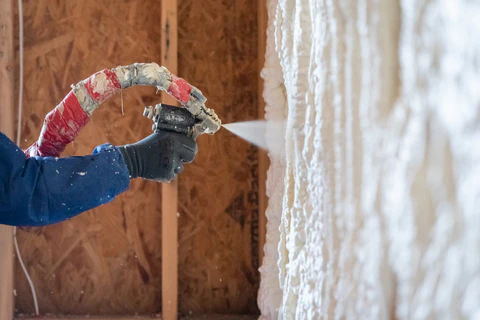
Spray foam, by contrast, expands on contact. It fills every crack, corner, and cavity it touches, forming a continuous barrier against air movement and moisture. There are two main types:
- Open-cell spray foam is lighter and more flexible, making it ideal for interior walls and soundproofing applications.
- Closed-cell spray foam is denser and water-resistant, offering a higher R-value per inch—making it the preferred choice for exterior walls, roofs, and areas prone to moisture.
Both types outperform traditional insulation in airtightness, which is one of the most critical factors in a building’s overall energy efficiency.
How Poor Insulation Costs You More Than You Realize
Energy loss through walls, attics, and crawl spaces is one of the most common—and most overlooked—sources of household waste. According to the U.S. Department of Energy, heating and cooling account for nearly half of a typical home’s energy consumption. A significant portion of that energy escapes through poorly insulated or uninsulated areas.
The financial impact adds up fast. Drafts force your HVAC system to run longer cycles. Moisture infiltration leads to mold, rot, and structural damage. And older insulation that has settled or deteriorated simply can’t perform the job it was installed to do.
Spray foam addresses these problems at the source. Sealing air leaks and reducing thermal bridging, it reduces the load on your HVAC system and keeps indoor temperatures stable—even during extreme weather.
The Comfort Benefits That Go Beyond the Energy Bill
Efficiency numbers are compelling, but what homeowners notice first is how much more comfortable their living spaces become after spray foam insulation is installed.
Rooms that were previously too hot in summer or too cold in winter maintain a far more consistent temperature. Humidity levels become easier to control. Outside noise—traffic, wind, neighbors—is noticeably reduced thanks to the density of the foam barrier.
For allergy sufferers, the airtight seal also limits the infiltration of pollen, dust, and other airborne particles. It’s a benefit that rarely makes the highlight reel but makes a real difference in daily quality of life.
Crawl spaces and attics that were previously open to the elements become fully conditioned and protected zones. Pipes are less vulnerable to freezing. Pest entry points are eliminated. The entire building envelope becomes more secure.
Is Spray Foam Insulation Right for Every Property?
Spray foam works across a wide range of property types—residential homes, commercial buildings, agricultural structures, and new construction projects alike. That said, the best approach depends on the specific characteristics of your building.
Older homes with irregular framing or hard-to-reach cavities benefit enormously from spray foam’s expanding nature. New construction can incorporate it from the start, setting a higher performance baseline than standard builds. Commercial properties with large roof spans or metal construction often see the greatest efficiency gains, since those structures are particularly susceptible to thermal bridging.
The key is a thorough assessment before installation. Understanding where air leaks exist, what the existing insulation situation looks like, and what the property’s climate conditions are will determine which type of spray foam—and which application approach—will deliver the best results.
What to Expect From a Professional Spray Foam Installation
This is not a DIY project. Spray foam requires specialized equipment, precise mixing ratios, and trained applicators who understand how the material behaves in different conditions. Done correctly, the results are exceptional. Done poorly, the foam can off-gas, fail to adhere properly, or create moisture problems rather than solve them.
A professional installation typically begins with a walkthrough to identify problem areas, followed by surface preparation and careful masking of areas that shouldn’t receive foam. The application itself is relatively quick, though curing time varies depending on the product and conditions. Most installations can be completed in a single day, with full curing within 24 hours.
After installation, the difference is immediately apparent. The building feels tighter. Temperature regulation improves. And the long-term performance of the insulation requires virtually no maintenance—spray foam doesn’t sag, settle, or degrade the way older materials do.
Why Choosing the Right Spray Foam Company Matters
The quality of a spray foam installation depends almost entirely on the team performing it. Materials, technique, and experience all factor into the outcome, which is why selecting a knowledgeable, reputable contractor is the most important step in the entire process.
Go Green Spray Foam Professionals LLC brings property owners a rare combination of technical expertise, proven results, and a genuine commitment to energy efficiency that sets them apart from general contractors who offer insulation as just another line item. With a focused specialty in spray foam services, the team delivers installations that perform exactly as promised—reducing energy costs, improving comfort, and protecting properties for the long term.
Their approach is hands-on and thorough. Every project starts with a proper evaluation, and every installation is carried out with the precision the material demands. For homeowners and building managers who want results they can actually feel, that level of care makes all the difference.
The Long-Term Value of Getting It Right
Spray foam insulation is one of the few home improvements that pays for itself over time. The upfront investment is typically higher than traditional insulation options, but the energy savings, reduced maintenance costs, and extended lifespan of the installation more than compensate for the difference.
Beyond the financial return, there’s real value in knowing your home is properly protected—from the weather, from moisture, from air quality issues, and from the inefficiency of a building that’s constantly working against itself.
For homeowners ready to stop paying for energy that disappears through the walls, spray foam insulation isn’t just a smart choice. It’s the right one.
Meta description
Discover how professional spray foam insulation improves comfort, cuts energy costs, and protects your property year-round with Go Green Spray Foam Professionals LLC.