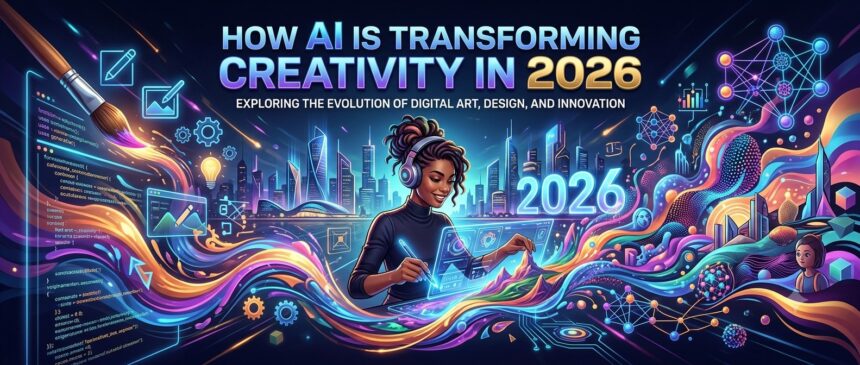
Creative work has entered a new phase where artificial intelligence supports ideas without replacing human imagination. Across design, writing, filmmaking, music, advertising, and digital marketing, AI-powered tools help reduce repetitive tasks while giving creators more time to focus on originality. Consequently, professionals and beginners can complete projects faster and experiment with fresh concepts that once required large teams or expensive software. Businesses also rely on intelligent systems to personalize content for different audiences and improve production efficiency. AI Is Transforming Creativity reflects a major shift where technology and human creativity work together to produce engaging, practical, and high-quality digital experiences.
This article explains AI powered creative tools, industry trends, business benefits, research findings, future opportunities, practical challenges, and emerging innovations shaping creativity.
Creativity Is Becoming Faster Without Losing the Human Touch
Artificial intelligence has changed the creative process from the first brainstorming session to the final publication. Instead of spending hours on repetitive editing or organizing content, creators can focus on storytelling, artistic direction, and audience engagement. Likewise, AI assists with generating outlines, refining visuals, suggesting improvements, and simplifying workflows.
Creative professionals now combine human judgment with intelligent automation to achieve better results. Although technology can generate ideas within seconds, emotional storytelling, cultural awareness, and personal experiences still remain essential elements that machines cannot fully replace.
Several industries are already benefiting from this partnership:
- Digital marketing campaigns
- Graphic and product design
- Video production
- Music composition
- Animation
- Advertising
- Social media content
- Game development
As a result, creative teams can complete larger projects while maintaining consistent quality.
Why Businesses Are Investing More in AI Creativity
Organizations are no longer viewing artificial intelligence as only a productivity tool. Instead, it has become an important part of modern content strategies.
Marketing teams use AI to personalize campaigns for different customer groups. Designers receive multiple layout suggestions within minutes. Likewise, writers obtain content recommendations that help maintain consistency across websites, newsletters, and promotional materials.
This growing adoption also supports businesses with:
- Faster campaign production
- Better audience targeting
- Lower production costs
- Consistent branding
- Improved creative collaboration
- Higher content output
Consequently, companies of every size can compete more effectively in digital markets without dramatically increasing creative budgets.
Content Creation Continues to Reach New Levels
The demand for online content keeps increasing every year. Websites, social platforms, streaming services, and businesses publish enormous amounts of digital material every day. Consequently, AI assists creators by reducing production time while maintaining quality standards.
Writing assistants help organize articles, suggest headlines, improve grammar, and simplify editing. Similarly, image-generation tools convert simple text prompts into professional illustrations that previously required extensive manual work.
Video production has also experienced remarkable improvements. Modern AI software can generate animations, improve voice quality, remove backgrounds, and automate subtitles within minutes. Meanwhile, creators experimenting with AI character video production can build engaging visual stories more efficiently while still adding their own creative direction.
Human Creativity Still Makes Every Project Unique
Artificial intelligence can generate ideas quickly, but originality still depends on human decision-making. Every successful campaign requires emotional depth, cultural awareness, and creative judgment that technology alone cannot consistently provide.
Creative professionals continue making important decisions about:
- Storytelling style
- Brand personality
- Audience emotions
- Visual identity
- Ethical communication
- Final creative approval
Despite impressive technological progress, audiences still connect more deeply with authentic stories created through human experiences.
Therefore, the strongest creative projects combine machine efficiency with human imagination instead of replacing one with the other.
Research Shows AI Adoption Is Accelerating
Industry reports indicate that artificial intelligence has become one of the fastest-growing technologies within creative industries.
Some notable findings include:
- According to McKinsey, generative AI could contribute trillions of dollars annually to the global economy through productivity improvements.
- Adobe reports that creative professionals increasingly use AI-assisted editing to reduce repetitive production tasks.
- PwC estimates artificial intelligence will contribute significantly to global economic growth over the coming decade as adoption expands across industries.
Similarly, many businesses report shorter production timelines while maintaining creative quality, making AI-assisted workflows increasingly valuable for both small companies and global organizations.
New Creative Careers Are Emerging Alongside AI
Artificial intelligence is not reducing the need for creative professionals. Instead, it is creating new opportunities that require strategic thinking, originality, and strong communication skills. Consequently, many organizations now seek professionals who can combine creative ideas with AI-powered workflows.
Several new career paths are becoming more common:
- AI content strategist
- Prompt designer
- Creative automation specialist
- AI-assisted video editor
- Brand experience consultant
- Digital storytelling specialist
Similarly, designers, writers, marketers, and filmmakers continue expanding their skills instead of replacing existing expertise. This balanced approach helps businesses produce engaging content while maintaining originality.
Personalization Is Becoming a Creative Advantage
Modern audiences expect content that matches their interests, preferences, and browsing behavior. Artificial intelligence helps creators produce personalized experiences without sacrificing quality.
Marketing campaigns can now adjust visuals, headlines, and recommendations for different customer groups. Likewise, educational platforms deliver customized learning materials based on individual progress, while entertainment services recommend content that closely matches viewing habits.
Even though automation supports personalization, creative professionals still guide the tone, message, and emotional direction. As a result, personalized experiences feel more natural and relevant instead of appearing completely machine-generated.
Responsible Innovation Will Shape the Next Generation of Creativity
As artificial intelligence becomes more capable, responsible development remains essential. Businesses, developers, and creators continue discussing copyright, transparency, privacy, and responsible content generation.
Creative teams are increasingly following practices that support ethical AI usage:
- Verify generated information before publication.
- Respect copyright and intellectual property.
- Clearly review AI-assisted creative work.
- Protect personal and business data.
- Maintain transparency whenever appropriate.
Similarly, organizations that combine innovation with responsible practices are more likely to earn long-term audience trust.
Creative Communities Continue to Inspire Better Results
Artificial intelligence works best when paired with collaboration. Designers exchange prompts, writers refine generated drafts, and editors improve AI-generated visuals before publication. Consequently, teamwork remains one of the strongest drivers of creative success.
Communities also share practical workflows, productivity tips, and creative inspiration that help newcomers build confidence. Although AI can generate countless ideas, meaningful collaboration still produces more engaging and memorable results.
Platforms including Secrets AI demonstrate how intelligent conversations can encourage creative thinking, brainstorming, and imaginative storytelling while respecting user preferences. Likewise, many creators use these interactions as inspiration before developing original projects.
Innovation Is Expanding Beyond Traditional Content
Artificial intelligence is influencing much more than articles and graphic design. Businesses now integrate intelligent systems into customer experiences, entertainment, education, and digital communication.
For example, interactive storytelling continues gaining popularity because audiences prefer personalized experiences over static content. In comparison to earlier digital tools, today’s AI systems respond more naturally and adapt to different creative goals.
In another area, developers continue experimenting with an AI companion to support storytelling, conversational experiences, and fictional character development. Human creativity still guides every meaningful narrative, ensuring that emotional depth remains central to the final experience.
Meanwhile, platforms like Secrets AI continue demonstrating how conversational technology can inspire fresh ideas while supporting responsible digital creativity across different creative projects.
What the Future Holds for Creative Professionals
The next few years are expected to bring even smarter creative tools capable of producing higher-quality visuals, more natural conversations, and improved multilingual content. However, technology alone will not define successful creative work.
Professionals who continue learning, adapting, and refining their creative abilities will remain highly valuable. Consequently, originality, critical thinking, and storytelling will become even more important as artificial intelligence handles repetitive production tasks.
Creative success will increasingly depend on balancing efficiency with authenticity. Businesses that encourage innovation while maintaining human oversight will likely produce stronger customer experiences and more memorable digital content.
Additionally, Secrets AI reflects how intelligent platforms continue adapting to changing user expectations while supporting imaginative communication and creative inspiration within responsible digital environments.
Conclusion
Artificial intelligence continues changing how creative work is planned, produced, and shared across industries. AI Is Transforming Creativity in 2026 highlights that technology now supports writers, designers, marketers, filmmakers, and businesses without replacing human imagination. Similarly, intelligent tools reduce repetitive work, improve productivity, and encourage faster experimentation while people remain responsible for emotion, storytelling, and originality.
Despite ongoing technological progress, creativity still depends on ideas, experiences, and thoughtful decision-making. Consequently, the strongest results come from combining human talent with intelligent assistance instead of relying entirely on automation.