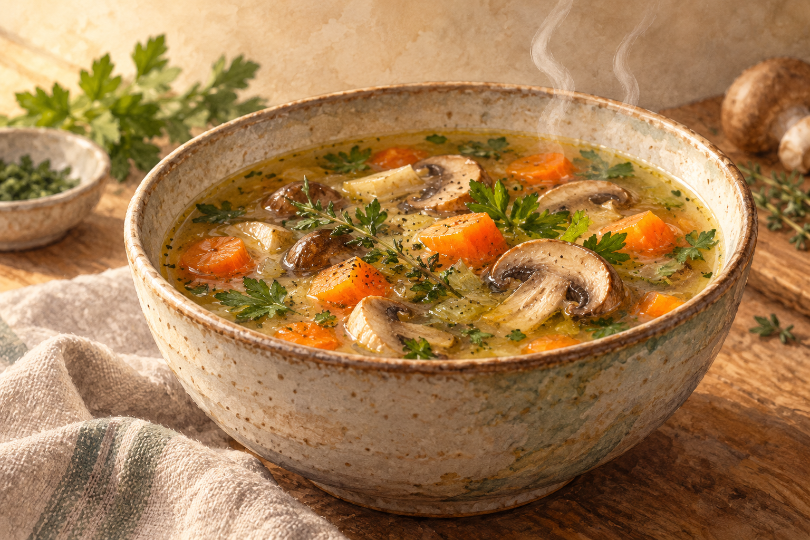
A bowl of soup disappears behind a cloud of steam. The opening frame showed mushrooms, herbs, and a bright slice of carrot; the moving version mostly shows vapor. The atmosphere communicates warmth, but the food has stopped communicating what the viewer might actually want to eat.
Food motion needs a hierarchy. The dish should remain the main subject, with steam, reflections, and camera movement helping the viewer notice it. When an effect covers the ingredients or changes their appearance, a more dramatic clip can become a less useful food picture. The review should begin with the serving itself.
Find the Ingredient That the Atmosphere Is Hiding
Start from a clear photograph of the prepared dish, made or supplied with permission. Identify the visible feature that distinguishes it from a generic bowl or plate. That could be the cut surface of a pastry, a particular garnish, or the texture of a sauce. The motion concept should preserve a useful view of that feature rather than treating every part of the photograph as equally expendable.
In a hypothetical soup promotion, the mushrooms might be the reason the dish is recognizable. Steam passing briefly over the background is different from a dense plume repeatedly hiding the mushrooms. Mark where the important ingredient sits in the source image. That gives the reviewer a specific region to watch instead of relying on whether the whole clip feels appetizing.
MakeShot’s image-based AI Video Generator route can turn a chosen food photograph into a motion candidate. Request a restrained atmospheric action around the existing composition. The source remains a reference, not a guarantee that the generator will preserve every ingredient. Compare the candidate with the photograph before treating it as a presentation of that particular dish.
Check for changes that are easy to overlook at normal speed. A garnish may multiply, a spoon may melt into the bowl, or a cut surface may acquire a different filling. These are not merely stylistic differences if the image is meant to show a real serving. A background concept has more freedom than a menu picture, and the intended use should determine what can be accepted.
Reduce the Movement That Competes With the Serving
Give the clip one main atmospheric action to begin with. A thin wisp of steam can be evaluated more clearly than steam combined with a rotating bowl, a moving spoon, and a camera orbit. If the simple candidate is already difficult to read, adding more events will make it harder to identify the cause. Reduce the competing movement before changing the food composition.
MakeShot lets the creator describe the desired movement in the prompt. Use that space to locate the action, such as light steam rising behind the far edge of the bowl. Avoid assuming that words like delicious or premium specify where the steam should go. They describe an impression, while the review needs a visible relationship between the effect and the food.
A fixed viewpoint can make this first inspection easier. If the camera also circles the dish, ingredients may disappear because of the changing angle rather than the steam. Once the serving remains readable in a simple version, the team can decide whether a camera move adds anything. The order matters because it keeps the reason for a failed candidate visible.
Consider whether the proposed atmosphere belongs with the food. Heavy steam may suggest a very hot serving, while condensation can suggest something chilled. Neither effect should be added merely because it looks attractive. The creative brief should agree with the actual presentation. A cold dessert does not become a better product image when an unrelated warm-food effect makes it more dramatic.
There is a useful stopping point before motion begins to look like a preparation demonstration. A spoon stirring the soup may imply texture, thickness, or an action that was never recorded. If those qualities matter to the customer, use appropriate real footage. An imagined atmospheric treatment can support a mood without pretending to demonstrate how the actual dish behaves under handling.
Watch the Dish Through a Complete Steam Cycle
Review the entire candidate with the original photograph nearby. Follow the distinguishing ingredient as the effect moves past it. Does it return with the same recognizable outline? Does a reflection conceal it for most of the shot? The goal is not to eliminate every passing obstruction, but to ensure that the viewer gets a useful look at the food rather than a fleeting glimpse.
An AI Video Generator revision should respond to what the review found. If the steam is too dense, reduce that effect. If the dish changes shape, a different source composition or a simpler request may be needed. Do not keep asking for more realism without deciding which visible failure makes the current clip unsuitable.
MakeShot can produce another concept, but the approval decision should remain tied to the actual serving. A chef, photographer, or menu editor may notice a changed ingredient that a general visual reviewer misses. Ask the person responsible for the food to compare the source and candidate. Their task is to identify whether the clip still represents the intended dish, not to endorse the generation technology.
Test the clip at the size where it will be displayed. Fine herbs that remain visible in a large preview can disappear on a small card. Steam that looks delicate at full size may become a bright blur over the bowl. A closer source composition or a still photograph may work better for that placement. The decision should follow the display’s ability to show the serving clearly.
Keep appetite and accuracy as separate review questions. A candidate can be attractive but show the wrong filling, while an accurate candidate can be poorly lit. Fixing one does not establish the other. If a generated effect repeatedly changes a defining ingredient, stop trying to rescue it through styling and return to a photograph or recorded clip that shows the food correctly.
For an illustrative recipe story rather than a real menu item, there may be more room for interpretation. Make that choice at the brief stage. The team should not quietly change a product picture into a fictional serving because the generated version looks better. Matching the image’s role to the article or promotion prevents an aesthetic preference from changing what is being represented.
Choose the Clip That Still Shows the Meal
MakeShot can help food creators explore restrained motion around a clear source image. It fits atmospheric concepts better than claims about taste, temperature, texture, or preparation that require real evidence. The useful candidate keeps the defining ingredients visible and leaves the serving recognizable throughout the shot.
If the steam repeatedly hides the mushrooms, choose less steam. If the motion keeps changing the dish, keep the photograph. The audience should be able to recognize the soup before deciding whether the moving image makes it appealing.