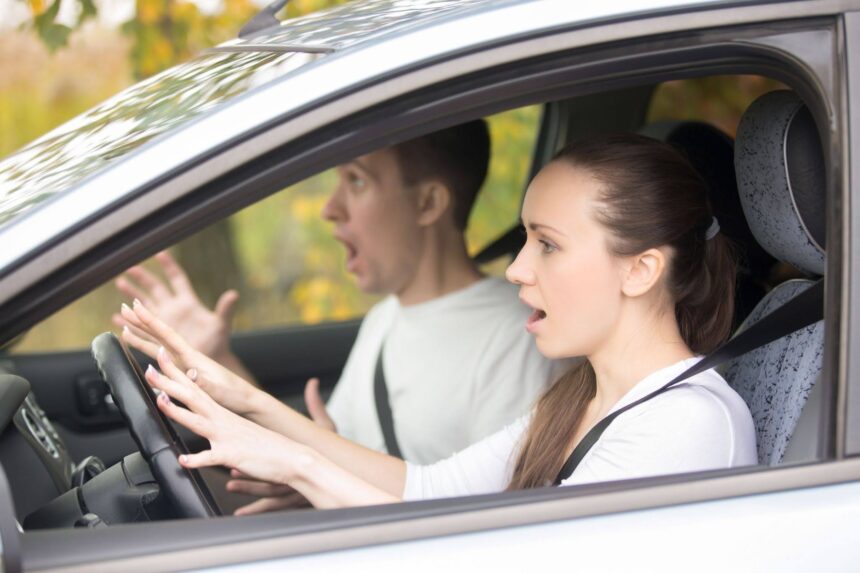
Every second matters when a driver encounters an unexpected hazard. A child runs into the street, a vehicle suddenly stops ahead, or debris falls into the lane. In these moments, the driver has only an instant to decide how to react. Should they slam on the brakes? Should they steer around the obstacle? Or should they attempt both?
Many people assume there is one “correct” answer. In reality, emergency driving decisions are far more complex. The choice between braking and a driver swerve depends on the information available, the surrounding environment, vehicle speed, visibility, and how quickly the driver recognizes the threat.
Understanding why drivers choose one response over another is an essential part of accident reconstruction and human factors analysis. Rather than relying on assumptions or hindsight, investigators must evaluate how drivers typically respond in comparable situations using peer-reviewed research.
The Decision Starts With Recognition
Before a driver brakes or swerves, something much more important has to happen.
The driver must recognize that a hazard exists.
Recognition is often overlooked because it leaves no physical evidence. Tire marks show when braking began. Vehicle data may reveal steering inputs. However, neither tells investigators when the driver first realized the situation required action.
For example, a stopped vehicle may be visible hundreds of feet ahead. That does not necessarily mean the driver immediately understood it was stationary.
Similarly, a pedestrian walking along a dark roadway may technically be illuminated by headlights while still blending into the background.
Recognition occurs only when the driver interprets the available information as requiring an immediate response.
Until that point, neither braking nor steering begins.
Why Braking Is the Most Common Emergency Response
When faced with danger, most drivers instinctively apply the brakes.
This response has several advantages.
Braking reduces vehicle speed, giving drivers additional time to evaluate changing conditions. Lower speeds also reduce impact forces if a collision becomes unavoidable.
Unlike steering, braking allows drivers to remain within their lane while maintaining vehicle stability.
Years of driving experience reinforce this behavior. Drivers routinely stop for traffic lights, congestion, intersections, and changing traffic conditions. Emergency braking simply becomes an extension of a familiar driving habit.
Because of this, many drivers brake first even when another maneuver might theoretically avoid the collision.
Human behavior does not always mirror the mathematically optimal solution.
When a Driver Swerve Becomes Necessary
Certain situations leave braking alone insufficient.
If an object completely blocks the travel lane, reducing speed may not eliminate the conflict before impact.
In these cases, a driver swerve may become the preferred response.
Common examples include:
- A stalled vehicle occupying the roadway
- Large cargo falling from another vehicle
- Animals entering the roadway
- Pedestrians suddenly emerging from behind parked vehicles
- Vehicles unexpectedly crossing into the driver’s lane
Steering around the hazard can sometimes avoid the collision altogether.
However, choosing to swerve introduces additional complexity.
Drivers must quickly determine whether another lane is clear, whether roadside obstacles exist, and whether the vehicle can safely complete the maneuver without losing control.
These judgments occur almost instantly under considerable pressure.
Speed Changes the Available Options
Vehicle speed dramatically influences emergency response.
At neighborhood speeds, braking alone often provides enough distance to stop safely.
As speed increases, stopping distance grows rapidly.
A vehicle traveling approximately 70 mph covers more than 100 feet every second.
If hazard recognition is delayed by just one second, over 100 feet of roadway disappears before any response begins.
At highway speeds, drivers often have fewer options.
Braking alone may no longer prevent impact, making steering a more attractive alternative if an escape path exists.
This is why researchers evaluate both perception-response time and available stopping distance together rather than independently.
Drivers Do Not Always Brake as Hard as Possible
One of the biggest misconceptions in crash analysis is that drivers immediately apply maximum braking force during emergencies.
Research consistently shows otherwise.
Many drivers initially apply moderate brake pressure before increasing force.
Others hesitate while deciding whether to steer.
Some divide attention between braking and scanning adjacent lanes for an escape route.
These differences reflect normal human decision-making rather than poor driving.
The vehicle may be capable of maximum deceleration, but the driver may not immediately use all of it.
This distinction becomes important when evaluating avoidability.
Why Expectation Influences Response
Drivers respond more quickly to situations they regularly encounter.
Routine hazards include:
- Vehicles merging into traffic
- Congestion approaching intersections
- Slow-moving traffic near construction zones
Because these situations occur frequently, drivers remain mentally prepared for them.
Unexpected hazards are different.
Examples include:
- A stopped vehicle in a high-speed interstate lane
- Cargo falling directly into traffic
- A pedestrian crossing a rural highway at night
- A disabled vehicle immediately beyond a curve
These events violate driver expectations.
Recognition often takes longer because drivers must first understand what they are seeing before choosing whether to brake or perform a driver swerve.
Road Conditions Affect Every Decision
Roadway conditions also influence emergency response choices.
Drivers consider factors such as:
- Rain
- Snow
- Ice
- Loose gravel
- Standing water
- Narrow shoulders
- Road curvature
On slippery pavement, aggressive steering increases the likelihood of losing control.
In these situations, braking while maintaining lane position may feel safer.
Conversely, when stopping distance becomes insufficient because of reduced traction, steering around the hazard may become the only practical option.
Neither strategy is universally correct.
The safest response depends entirely on the circumstances facing the driver.
Nighttime Driving Makes Recognition Harder
Nighttime crashes frequently involve questions about why drivers failed to avoid a hazard.
Visibility alone rarely provides the answer.
Recognition depends on numerous human factors, including:
- Contrast
- Headlight performance
- Ambient lighting
- Clothing color
- Object size
- Rain
- Oncoming glare
- Background complexity
A pedestrian may technically fall inside the headlight beam while remaining difficult to identify as a person requiring emergency action.
Only after recognition occurs can braking or a driver swerve begin.
This distinction explains why investigators separate physical visibility from hazard recognition during reconstruction.
Many Drivers Combine Braking and Steering
Emergency responses rarely involve only one action.
Drivers frequently combine braking and steering throughout the event.
Examples include:
- Braking before steering
- Steering while braking
- Steering first before braking
- Alternating between braking and steering as conditions change
Modern vehicles equipped with anti-lock braking systems (ABS) and electronic stability control allow drivers to maintain greater steering control during hard braking.
Even so, human decision-making remains the primary factor influencing the response sequence.
Human Variability Cannot Be Ignored
Not every attentive driver behaves the same way.
Some naturally favor braking.
Others instinctively perform a driver swerve when they perceive an available escape path.
Response differences occur because drivers vary in:
- Experience
- Hazard perception
- Confidence
- Risk tolerance
- Familiarity with emergency maneuvers
- Available visual information
This variability explains why using one universal reaction time or assuming every driver responds identically oversimplifies real-world behavior.
Instead, investigators compare the subject driver’s actions with research involving comparable drivers under similar conditions.
Looking Beyond the Physical Evidence
Traditional reconstruction focuses on measurable evidence, including:
- Tire marks
- Vehicle damage
- Event data recorder information
- Vehicle trajectories
- Rest positions
These measurements accurately describe vehicle movement.
However, they do not explain why the driver chose braking instead of a driver swerve, or vice versa.
Human factors analysis fills this gap by examining:
- Perception-response time
- Hazard recognition
- Driver expectation
- Recognition distance
- Visibility conditions
- Steering behavior
- Braking behavior
- Published research involving comparable scenarios
Together, these elements provide a much more complete understanding of the crash.
Research Provides Better Answers Than Assumptions
Crash investigations often include questions such as:
- Should the driver have braked sooner?
- Should they have swerved?
- Would another driver have avoided the collision?
Answering these questions requires more than intuition.
Reliable analysis asks:
- How did drivers respond in comparable situations?
- When did they recognize the hazard?
- How frequently did drivers choose braking versus steering?
- How much variation existed among attentive drivers?
Peer-reviewed research offers objective benchmarks that reduce reliance on hindsight and personal opinion.
Final Thoughts
The debate between swerving and braking has no universal answer because drivers encounter different hazards under different conditions. A response that avoids one collision may increase risk in another. Recognition, expectation, visibility, speed, road conditions, and human variability all shape the decision.
For accident reconstruction professionals, understanding these split-second choices requires looking beyond vehicle physics alone. By comparing driver behavior with published research instead of assumptions, investigators can better explain why a driver braked, performed a driver swerve, or combined both actions. This research-based approach produces more objective conclusions that are better equipped to withstand scrutiny in reports, depositions, and courtrooms.