Key Takeaways
- A quick safety check at the start of every visit can prevent many avoidable injuries.
- Caregivers need to monitor the home environment, the client’s condition, mobility needs, and personal safety.
- Factual documentation and secure handling of records support better communication across the care team.
- Caregivers should know when to pause work, report a concern, or call emergency services.
In-home care can be rewarding, personal, and unpredictable. Every home has a different layout, routine, and set of risks, so a reliable safety process helps caregivers make sound decisions without overlooking small details. Practical preparation also includes understanding professional responsibilities, keeping records secure, and considering protections such as home health aide insurance for work-related risks.
A safe visit does not require a complicated inspection. It requires attention, consistency, and clear limits. A loose rug, a dim hallway, a new medication concern, or an unfamiliar visitor may seem minor at first, but any one of these issues can affect the safety of both the client and caregiver.
Why Home Visit Safety Needs a Simple System
Unlike a care facility, a private home may change from one visit to the next. Furniture gets moved, pets roam freely, deliveries block walkways, and family members may introduce new equipment or supplies. A repeatable checklist reduces the chance that a caregiver misses an important change while focusing on daily tasks.
For example, a caregiver may notice that a rug has shifted near the client’s favorite chair. Moving or securing it before assisting the client to stand is far easier than responding to a fall afterward. Small observations often have the biggest effect on daily safety.
The Five-Minute Arrival Check
Start each visit with a brief review of the immediate environment and the client’s condition. This does not replace a care plan, but it helps identify changes that may affect the visit.
- Check the entryway, walkways, and exits for blocked paths or trip hazards.
- Look for spills, loose rugs, cords, bags, pet toys, and unstable furniture.
- Notice poor lighting, unusual temperatures, smoke, gas-like odors, or other unfamiliar smells.
- Confirm that the client appears alert, comfortable, and able to communicate as expected.
- Keep your phone, emergency contacts, and necessary supplies accessible.
Room-By-Room Hazard Review
Bathroom
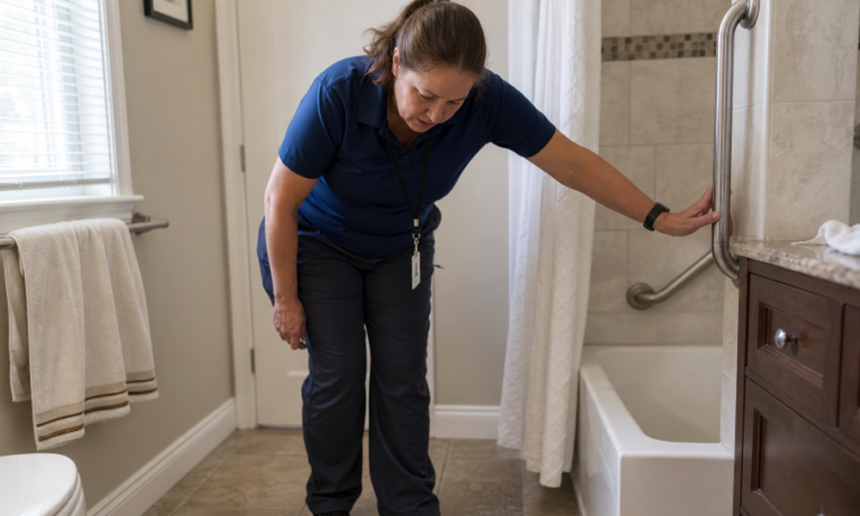
Bathrooms present frequent slip and transfer risks. Check for wet floors, adequate lighting, secure grab bars, and a clear route to the toilet or shower. Place towels, soap, and personal-care items within the client’s reach without stretching or twisting.
Bedroom
Keep the route between the bed and bathroom clear, especially for nighttime mobility. Make sure the bed height supports safe transfers under the care plan. A phone, water, glasses, a call device, and a mobility aid should be within practical reach.
Kitchen, Stairs, and Hallways
In the kitchen, watch for hot surfaces, spills, sharp tools, and open cabinet doors. Before leaving, confirm that appliances are off when appropriate. On stairs and in hallways, check handrails, lighting, floor coverings, and clutter. Shoes, boxes, bags, and cleaning products should stay out of walking paths.
Mobility, Transfers, and Fall Prevention
Follow the client’s care plan and training requirements for transfers, walking assistance, and mobility devices. Do not attempt a lift that exceeds your training, available equipment, or physical ability. Sudden dizziness, confusion, weakness, pain, or an unsteady gait are reasons to pause and assess the next step.
The CDC’s fall prevention resources offer useful materials for older adults, caregivers, and health professionals. In daily practice, prevention starts with clear paths, proper footwear, approved equipment, and the avoidance of rushed transfers.
Medication and Health Changes
Caregivers should observe and report, not diagnose or independently change treatment. Record concerns such as missed doses, unusual sleepiness, new confusion, dizziness, falls, injuries, appetite changes, or behavior changes. Do not adjust medication, offer medical advice outside your role, or make assumptions about why a symptom occurred.
When a concern arises, follow the care plan and reporting process. Notify the appropriate supervisor, care coordinator, nurse, or authorized family contact. If the client has severe symptoms, trouble breathing, loss of consciousness, or an immediate medical emergency, call emergency services.
Documentation That Helps the Care Team
Short, factual notes are more useful than vague or emotional descriptions. Record the date, time, completed tasks, important observations, actions taken, and people notified. For example, write “Client reported dizziness before standing; transfer paused; supervisor notified at 2:15 p.m.” rather than “Client seemed very unwell.”
Keep records secure and share them only with authorized people. Avoid placing client information in personal notes apps, unsecured messaging threads, or social media. Documentation should support continuity of care while respecting privacy.
Privacy and Digital Safety in the Home
Lock phones, tablets, and laptops whenever they are not in use. Use strong passwords and multi-factor authentication when available. Store paper notes away from visitors, roommates, and household members, and never photograph a client, medication list, or home interior without proper authorization.
If a device is lost, a message is sent to the wrong person, or records are exposed, report it immediately in accordance with workplace policy. Prompt reporting can help limit further disclosure and allow the organization to respond appropriately.
Personal Safety for Caregivers
Personal safety is part of quality care. Share schedules with a supervisor or trusted contact, especially for unfamiliar homes or late visits. Stay alert for aggressive pets, unsafe visitors, smoke, weapons, harassment, or signs that a situation is escalating. Leave if conditions become dangerous, then report what happened through the proper channel.
What to Do After an Incident
- Make the area safer only if doing so does not create additional danger.
- Call emergency services for serious injury, breathing problems, loss of consciousness, or immediate threats.
- Follow the client’s emergency plan and care instructions.
- Notify the supervisor, care coordinator, or authorized contact as required.
- Document objective facts while details are fresh.
A Practical Weekly Review
At the end of the week, review repeated hazards, changes in mobility or mood, tasks that fell outside the care plan, equipment needs, and whether emergency contacts remain current. This is also a good time to identify concerns that should be reviewed by a qualified health professional or care coordinator.
Home Care Context in 2026
Home-based care depends on coordination among clients, families, agencies, and public programs. Documentation, quality reporting, and oversight can affect daily operations. CMS discussed proposed 2027 home health updates in its July 2026 home health policy update, including proposals on program integrity and quality reporting. Federal guidance does not replace state rules, employer policies, or an individual client’s care plan.
Common Questions From Independent Caregivers
What should a caregiver check first?
Start with entryways, walking paths, lighting, immediate hazards, and the client’s current condition.
What if a client refuses a safety change?
Respect the client’s choice, explain the risk clearly, document the concern, and notify the appropriate person when safe care may be affected.
When should a caregiver stop a task?
Pause when a task exceeds training, equipment is unsafe, the client has new symptoms, or the environment presents an immediate danger.
Conclusion
Strong home care safety habits are built through small, consistent actions. A quick arrival check, safe mobility support, clear documentation, privacy awareness, and timely reporting can make each visit safer for clients and caregivers alike.