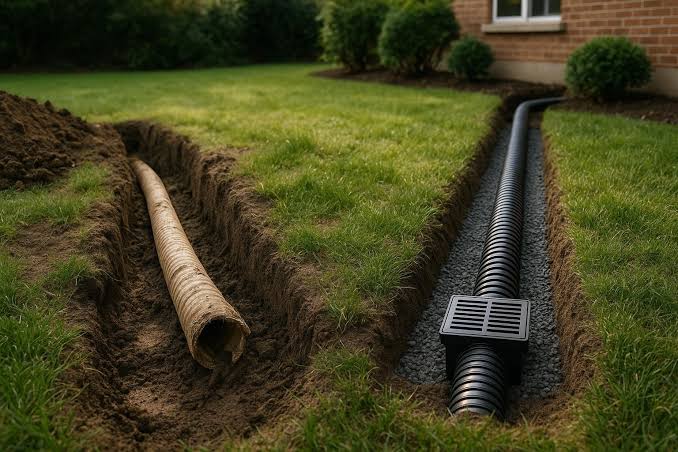
A downspout dumping straight into the sanitary sewer used to be the kind of thing nobody noticed for decades. In Baltimore County, that’s changing fast. The county’s stormwater remediation fee, tied to how much impervious surface a property has, is pushing homeowners to take a hard look at drainage connections they’ve never once thought about, because those old hookups are now showing up as a cost on the water bill instead of staying invisible underground.
Plumbers working across the county, including Drain Guys, say tracing these old connections has become one of the more common service calls they get once a homeowner starts asking questions about their stormwater bill.
Why the Fee Exists in the First Place
Maryland passed a state law in 2012 requiring certain counties to institute a stormwater remediation fee, aimed at reducing pollution carried into local waterways by runoff. Roofs, driveways, and other hard surfaces don’t let rain soak into the ground the way a lawn does. Instead, that water runs off, picks up sediment and debris, and eventually reaches a stream or the bay. The fee in Baltimore County is calculated based on how much of that hard, impervious surface sits on a given property, which means a home with a large roof, a paved driveway, and a patio pays more than one with less coverage.
That fee structure is exactly why old downspout connections have become a real financial issue rather than a theoretical one. A downspout that’s still tied directly into a storm drain or, worse, into the sanitary sewer line, adds to a property’s runoff footprint in a way the county can now measure and charge for.
The Illegal Connections Nobody Remembers Installing
Here’s the part most Baltimore County homeowners don’t realize until a plumber points it out: a lot of these connections weren’t installed by the current owner. They date back decades, sometimes to before current code even existed, and they got left alone through multiple rounds of ownership because nothing about them caused a visible problem. A sump pump discharging into a sanitary line, or a downspout piped underground into the same system that carries wastewater, can sit there for years without anyone noticing.
The trouble is twofold. First, these connections add extra volume to a sewer system that wasn’t sized for it, which contributes to backups during heavy storms. Second, once a county starts tracking impervious surface and drainage compliance as part of its fee structure, an illegal tie-in stops being a hidden issue and starts being something that shows up during an inspection or a credit application.
How the Credit System Changes the Incentive
Baltimore County, like other Maryland jurisdictions under the same state mandate, offers credits against the stormwater fee for practices that reduce runoff, things like disconnecting a downspout from the storm drain system and redirecting it to a rain barrel or a planted area instead. That credit only applies if a property actually qualifies, and a home with an illegal connection running into the sanitary sewer generally doesn’t.
This is where the incentive structure gets interesting for homeowners. Fixing an old downspout or sump connection isn’t just a compliance issue anymore. It’s the difference between paying full fee and qualifying for a reduction, which turns a decades-old plumbing oversight into something with a direct dollar impact every billing cycle.
Finding where the connection actually runs is usually the hardest part, since most homeowners have no idea what’s happening underground between the downspout and the street. Drain Guys, which serves Baltimore County alongside the wider DMV region, includes a camera inspection with its standard drain cleaning work, which is a practical way to confirm exactly where an old downspout or sump line terminates before filing anything with the county.
What a Fix Actually Involves
For most homes, correcting an illegal tie-in isn’t a massive project, but it does require knowing exactly where the current connection runs, which isn’t always obvious from the surface. A few things typically need to happen:
- Tracing the downspout or sump discharge line to confirm where it actually connects underground
- Rerouting the discharge to daylight, a dry well, or an approved stormwater management feature instead of the sewer system
- Documenting the fix if the goal is to qualify for a Baltimore County stormwater fee credit
- Checking nearby fixtures for similar undocumented connections, since one illegal tie-in on an older property often isn’t the only one
A licensed plumber can trace these connections with a camera or dye test faster than most homeowners can on their own, especially on properties where the original plumbing layout was never well documented. Homeowners in Baltimore County working through this kind of tracing or reroute work can click here to find a plumber who handles this specific type of drainage correction locally.
Final Thoughts
The stormwater fee wasn’t designed to target old downspout connections specifically, but that’s effectively what’s happening across Baltimore County as the fee structure puts a real cost behind runoff that used to be free to ignore. Homeowners who trace and fix these old connections aren’t just avoiding a future problem. They’re often putting themselves in line for a credit that offsets what they’re already paying, which makes this one of the rare plumbing fixes that pays for part of itself.