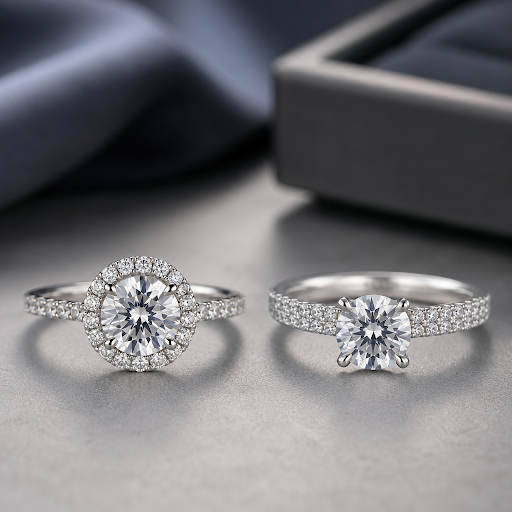
When shopping for an engagement ring or fine jewelry, the setting style you choose has a profound impact on both the visual outcome and the final price tag. Two of the most beloved and frequently compared options are the halo setting and the pavé setting. While both are celebrated for their brilliance and ability to amplify sparkle, they differ significantly in construction, craftsmanship requirements, and long-term cost. Understanding these differences before you commit to a purchase is not just smart — it’s essential.
The Fundamental Difference Between Halo and Pavé Settings
At first glance, halo and pavé settings may appear similar because both incorporate small accent diamonds surrounding a central stone. However, their structural purposes and visual effects are quite distinct. A halo setting features a single row — or occasionally a double row — of small diamonds encircling the center stone, creating a frame that makes the central gem appear larger and more luminous. A pavé setting, on the other hand, involves tiny diamonds set closely together across the band or surface of the ring, held in place by small beads or prongs, giving the metal an almost invisible, diamond-encrusted appearance.
The halo is primarily a focal-point enhancer, while pavé is a surface treatment that adds continuous sparkle along the shank or body of the ring. Many modern engagement rings actually combine both techniques — a halo around the center stone with a pavé-set band — which naturally raises the cost further.
Breaking Down the Cost Factors
Labor and Craftsmanship
One of the most significant contributors to the price difference between these two settings is the labor involved. Pavé settings are notoriously labor-intensive. Each tiny diamond must be individually set by hand, requiring a skilled bench jeweler to drill precise holes, place each stone, and secure it with delicate metal beads. A full pavé band can involve dozens — sometimes over a hundred — individual stones. This level of detail commands a premium in craftsmanship fees.
Halo settings also require skilled labor, particularly when the accent diamonds must be matched in size and cut to create a seamless frame. However, because the halo typically involves fewer stones arranged in a single geometric pattern, the setting process is generally less time-consuming than a full pavé band. That said, double halo or floral halo designs can rival pavé in complexity and cost.
Diamond Count and Quality
The number of accent diamonds used directly affects the total price. A standard round halo might use 20 to 40 small diamonds, while a pavé band can use anywhere from 50 to well over 150, depending on the ring’s width and length of coverage. Even though these accent stones are small — often ranging from 0.01 to 0.05 carats each — their cumulative weight and quality add meaningful cost to the overall piece. Higher-quality accent diamonds with better cut grades and clarity will increase the price in both settings, but the sheer volume required for pavé makes this factor more pronounced.
Long-Term Maintenance Costs
Beyond the initial purchase price, it’s important to consider the ongoing maintenance costs associated with each setting style. Pavé settings, due to their intricate construction and the vulnerability of tiny exposed stones, tend to require more frequent professional inspections and occasional re-tipping of prongs. Stones can loosen over time, especially with daily wear, and replacing a lost pavé diamond — while inexpensive per stone — can become a recurring expense if the setting is not properly maintained.
Halo settings carry their own maintenance considerations. The accent diamonds in a halo are often set in a shared prong or bezel configuration, which can be more secure than pavé in some designs. However, because the halo surrounds the center stone, any damage to the frame can affect the overall appearance dramatically. Repairs to a halo setting can be more costly per incident, even if they occur less frequently.
Which Setting Offers Better Value?
Value is subjective and depends entirely on what you prioritize. If your goal is to maximize the perceived size of a center diamond without dramatically increasing the carat weight — and therefore the cost — a halo setting delivers exceptional visual impact per dollar spent. A one-carat diamond in a halo setting can appear nearly as large as a 1.5-carat solitaire, which is a significant optical advantage.
If your priority is all-over brilliance and a ring that catches light from every angle, pavé offers unmatched continuous sparkle. It’s a style choice as much as a financial one. For those who want both, a halo-and-pavé combination ring delivers maximum visual drama — but it also represents the highest price point of the three options.
For a thorough breakdown of the pricing differences and what drives the cost of each setting style, the detailed guide on halo vs pave setting cost from Leon Diamond offers expert insight into how jewelers price these settings and what buyers should expect to pay at different quality tiers.
Matching the Setting to Her Personal Style
Cost is only one dimension of this decision. The setting you choose should also reflect the personality and aesthetic preferences of the person who will wear it every day. A halo setting tends to appeal to those who love vintage-inspired glamour, bold visual statements, and classic elegance. Pavé, by contrast, suits those who appreciate refined, modern sophistication and continuous sparkle without a single dominant focal point.
If you’re unsure which direction to go, reading about how to choose an engagement ring that fits her personal style can help you align the setting choice with her lifestyle, fashion sense, and everyday habits — all of which matter when selecting a ring she’ll wear for a lifetime.
Expert Guidance from Leon Diamond
Leon Diamond has built a reputation for transparency and craftsmanship in the fine jewelry space. Their team of expert jewelers works with clients to navigate the nuances of setting selection, helping buyers understand not just the aesthetic differences but the real-world cost implications of each choice. Whether you’re drawn to the dramatic frame of a halo or the seamless shimmer of a pavé band, Leon Diamond provides the expertise to ensure your investment is both beautiful and well-informed. Their educational resources are particularly valuable for first-time buyers who want to make confident, well-researched decisions.
Making the Final Decision
Choosing between a halo and a pavé setting ultimately comes down to three intersecting factors: budget, aesthetic preference, and lifestyle. If you’re working within a defined budget, understanding the cost breakdown of each option — including both upfront and long-term maintenance costs — will help you allocate your spending wisely. For additional context on how personalized jewelry choices affect overall value and satisfaction, this comprehensive personalized jewelry buying guide offers practical advice for navigating fine jewelry purchases with confidence.
Neither setting is inherently superior. Both halo and pavé settings represent the pinnacle of diamond craftsmanship when executed well. The right choice is the one that resonates with the wearer’s style, fits comfortably within your budget, and comes from a jeweler whose quality and transparency you trust. Take your time, ask the right questions, and let the details guide you to a ring that will be cherished for generations.