I’ve been on both sides of the CNC machining equation. I’ve been the engineer staring at a quote I didn’t understand, and I’ve been the one sitting in the shop office trying to explain why a simple-looking part costs what it costs. The gap between those two perspectives is where the real conversation about CNC machining services happens.
What Happens When You Send a File
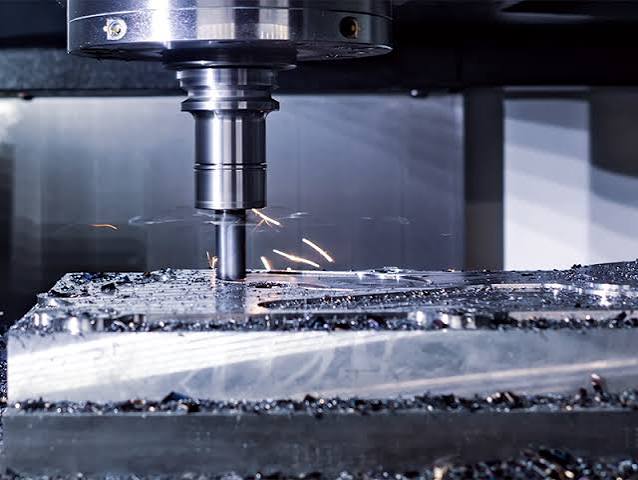
The process starts with your CAD model. That’s the easy part. A machinist or programmer converts your design into machine code—toolpaths, cutting speeds, the whole technical package. A CNC machining service will typically offer a few different processes, usually milling for flat and complex surfaces and turning for round or cylindrical parts. Some shops also have centers that combine both operations.
One thing to know: if the shop offers an instant quote, there’s usually a person behind it doing a design for manufacturability check. They’re seeking these features, such as a thin wall, sharp internal corners or features that are hard to access.
Why the Cost is Often a Surprise
The biggest frustration people have with machining quotes is the gap between what they think a part should cost and what it actually costs. That gap comes down to a few things you can’t see from a CAD file.
First, geometry matters more than size. A small part that has deep pockets or thin walls or tight radii can be more expensive than a large part with simple geometry. It may be required to be long and thin in order to reach a feature and this can slow cutting, increase the chance of breakage.
Second, tolerances add up. General tolerances are cheap. Tight tolerances on a critical feature are manageable. Tight tolerances on every surface will make the job slow and expensive. If you can relax a tolerance on a non-critical face, you’ll likely save money.
Third, quantity matters. There’s a fixed cost to program the machine and set up the job. That cost gets spread across every part in the run. Making one part is always expensive per unit; making a hundred is usually affordable; making a thousand is where the cost really drops.
The Common Misconceptions
People who haven’t spent time in a shop often assume CNC is just “push a button, get a part.” It’s not. A CNC machining service is a complex manufacturing process that relies on a skilled operator to do the final setup, choose the right tooling, and catch issues before they become problems.
Another one: all machines are the same. They’re not. Machine with three axes can only be used from three directions. A 5 axis machine machine part that can tilt and turn the part to machine complex forms in one setup. The 5-axis machine can also be more costly to operate, though capable of creating parts that can’t be done on a 3-axis or would need multiple setups.
What Makes a Good Shop
From my experience, the best shops ask questions before they quote. They’ll suggest changes that improve manufacturability. The shops that just take your file and return a number are the ones you’ll end up arguing with later.
Experience matters too. A good operator will know when a tool is going to break, how to change speeds when handling a difficult material or how to fixture a part to prevent distortion. That is something that is not written in a brochure; it is what makes a good shop a good shop and a bad shop a bad shop.
The difference between a good shop and a great one often shows up in the small things. The way they handle your first article inspection report. Whether they call you with a question or just assume and proceed. How they communicate when a deadline is going to be tight. These aren’t technical capabilities. They’re cultural ones.
I’ve worked with shops that had all the right equipment and still managed to disappoint. The parts were right, but the experience was exhausting. Constant chasing for updates. Emails that went unanswered for days.
The best ones also know when to say no. Not every design is manufacturable. Not every timeline is realistic. Not every material choice makes sense. A shop that tells you what you need to hear, not what you want to hear, is a shop that’s protecting you from yourself. That kind of honesty is rare. And it’s worth more than any discount on the quote.
What It Comes Down To
CNC machining services are a tool, not a commodity. Knowing that the machine is only hardware. It’s in the people who work there, the questions they ask, and the problem solving they do before the first chip flies. Once you find a shop that gets that, they’ll provide you with parts that will fit on the first attempt.