Exterior Security Camera Positions That Cover Every Approach to Your Home
Exterior security camera placement should start before you drill the first hole. A camera can look impressive on the wall and still miss the side gate, the patio door, or the path someone would actually use. Map the likely approach routes, reduce blind spots, account for trees and parked cars, and test the setup before you consider the layout finished.
Map every approach route before placing cameras
Exterior home security cameras work best when they are placed around movement, not around symmetry. Walk your property as if you were arriving from the street, the driveway, the side fence, and the backyard. Notice where a person would naturally step, pause, turn, or hide from the street.
Start with a simple sketch. Mark the front door, garage, driveway, side gates, patio door, basement steps, and detached structures, then trace the paths that link them. Do that before you decide on camera count. Each path shows where you need a clear view while someone is still outside and approaching the house.
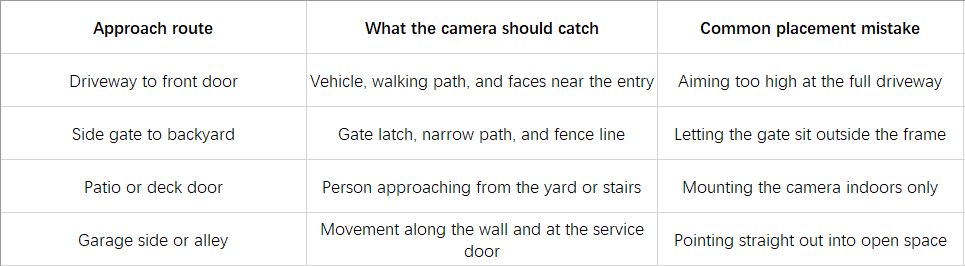
Open grass alone is rarely worth a camera. For each route on your sketch, confirm that one camera can record the approach with enough detail to show where someone came from and where they went next.
Prioritize main entry garage side and rear paths
Do not scatter cameras evenly around the house just because the corners look balanced. Exterior security camera placement should follow risk and foot traffic first. In most homes, the front approach and driveway deserve early attention because they handle visitors, delivery drivers, vehicles, and most daytime activity.
The rear patio or sliding door often comes next, especially when it is hidden from the street. Then look at the garage, side gate, basement steps, and any path from a detached shed or alley. If you can only install two cameras at first, choose the two routes a person is most likely to use rather than the two walls that look easiest to mount.
One practical order to try:
- Cover the front approach and driveway first, since arrivals show up before anyone reaches the door
- Add the rear patio or deck next, since privacy from the street can hide unwanted movement there
- Cover the side gate or narrow side yard, which often connects front and back without crossing the main entry
- Do not skip the garage and lower windows, which can create quiet access points away from the porch
This order can change for corner lots, long rural driveways, or homes with shared alleys. Pick the route you would want on camera first if something happened tonight. If you are still deciding how many cameras each route needs, the eufy security camera collection makes it easier to compare kit sizes, solar options, and hub-ready systems before you commit to the first mount.
Use overlapping views so cameras back each other up
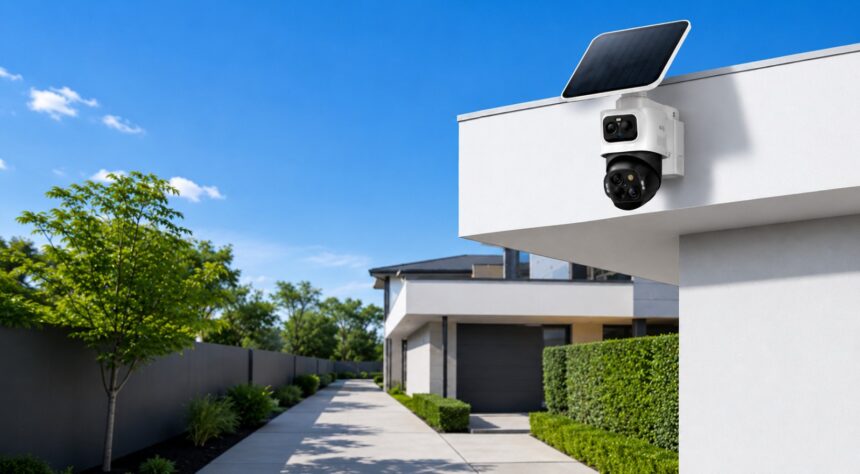
One camera looking straight out from a wall can miss what happens along that same wall. The blind spot sits below the camera and near the mounting point. That is why exterior security camera positioning often works better when cameras cover each other’s blind spots.
At a corner, aim one camera down the side of the house instead of only into the yard. If another camera sits near the opposite corner, let it see back toward the first camera’s mounting area. This creates overlap, so someone walking close to the wall is less likely to pass under one lens without appearing in another.
Overlap is most useful in side yards where fences make the path narrow, at garage corners where someone can move from the driveway to a service door, on back patios where furniture, stairs, or railings split the view, and near detached sheds or workshops where the camera may sit far from the home Wi-Fi router.
Do not overdo it. Two cameras showing the same empty lawn do not add much. Overlap should cover blind spots, not duplicate the prettiest view.
Fix sightline blockers before they hide a route
A clear view in March may not stay clear in July. Tree leaves fill in, shrubs grow across walkways, patio umbrellas move, and taller vehicles can block a camera that looked perfect during setup. Many exterior layouts fail this way, slowly rather than all at once.
Before mounting, stand where the camera will sit and look for objects that will change.
- On windy days, motion alerts often come from branches and hanging plants near the lens
- A tall privacy fence can hide a person until they are already close to the door
- A parked SUV or van can block driveway or gate coverage
- Motion near holiday lights and flags can trigger alerts that have nothing to do with a person
- Ground-level views change when snow piles build up in winter or when summer glare hits the lens
Mounting height helps, but higher is not always better. An 8 to 10 ft position often keeps the camera out of easy reach while still giving a useful face and path angle. If branches are the problem, a slightly lower position under the canopy may work better than pushing the camera higher into the leaves. Once you settle on height, check whether that spot has power, shade from summer glare, and enough protection for rain or snow. A fence corner or detached shed often leaves you choosing between solar and battery outdoor cameras instead of swapping a wall bracket. If you are still sorting through those constraints after the walk-through, the eufy outdoor security camera collection puts solar, battery, and wired outdoor models in one place.
Turn the route map into a coverage check
After you map the approach routes, test whether each camera view actually follows those routes. Aim each camera at the path a person must use, then walk the property and confirm the clips show the route clearly enough to be useful.
Aim at movement paths instead of open space
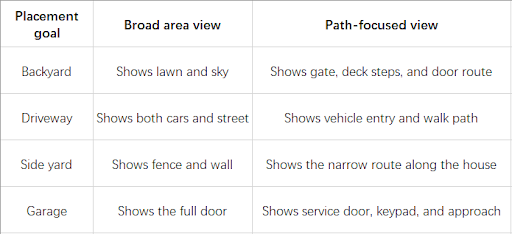
Wide views feel reassuring, but a camera aimed at the whole lawn can spread detail too thin. Aim first at the paths people must use, such as the side gate latch, deck steps, driveway walk path, or garage service door.
The best clip is not always the widest clip. It is the one that shows what happened and where the person went next. If one fixed angle cannot follow a bend around a garage, shared driveway, or backyard path, a more flexible view may reduce the number of separate mounts you need.
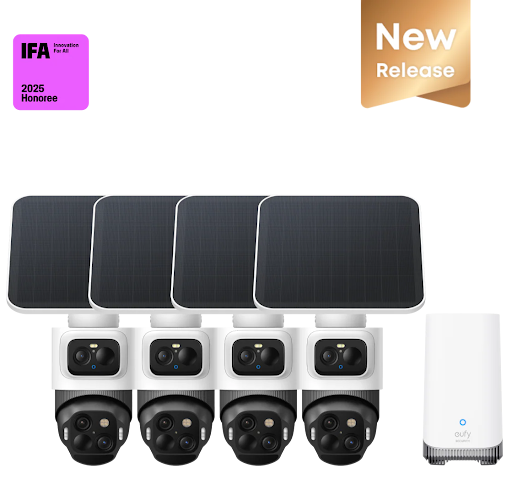
The eufyCam S4 4-Cam Kit suits yards where overlap matters at more than one corner. Each camera pairs a fixed 4K bullet view with a tracking PTZ lens, so movement spotted along a side wall or at a garage corner can stay in frame as the person moves toward a service door. SolarPlus™ panels on each unit also work well on fence lines and detached structures where running power is difficult. Radar and PIR sensors cut down false alerts from branches or passing cars when the mount sits near trees or a busy driveway edge. Pairing the kit with HomeBase™ S380 stores footage locally on 16 GB of built-in storage, expandable up to 16 TB, with no monthly fees.
That does not mean one camera should replace every other view. A flexible camera still needs a clear view of the path, a stable connection, and a mount that stays clear of branches or parked vehicles.
Walk every route to find missed coverage
Skip the live view from the couch for the final check. Walk the property the way a visitor, delivery driver, or stranger would. Come up the driveway, open the side gate, walk along the fence line, step onto the patio, and approach the garage service door.
Review the clips after each walk. Check whether recording starts early enough, whether faces and bodies are clear enough, and whether the angle is too high or wide. Also check whether motion zones need to ignore the street, trees, or sidewalk.
Repeat the test after dark. Porch lights, headlights, reflective siding, and shadows can change the value of a camera position. Small angle changes now are easier than remounting the camera after the first missed clip.
Conclusion
A solid exterior camera layout starts with approach routes, not camera count. Cover the driveway and main entry first, add the rear and side paths that are easiest to miss, overlap views where walls create blind spots, and aim at paths rather than open lawn. Once each camera passes a walk-around test in daylight and at night, the setup is much more likely to catch the moments that matter.