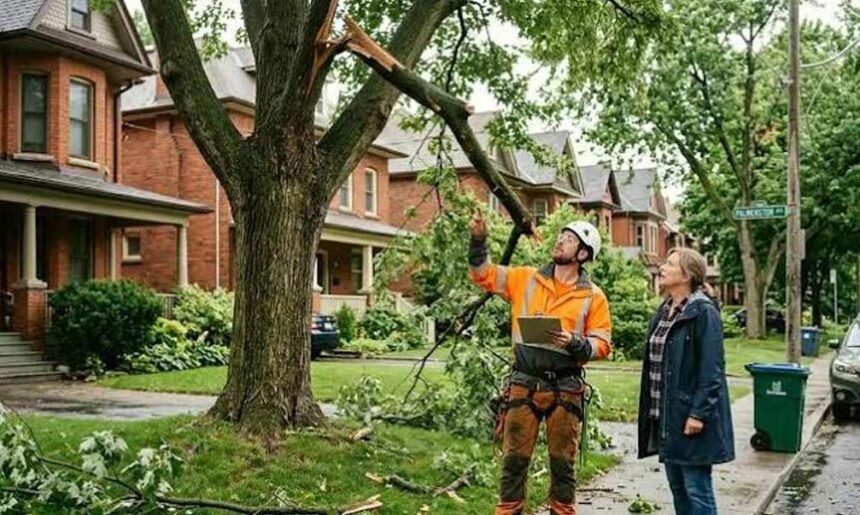
After a night of high winds, ice, or heavy snow, it is tempting to grab a saw and start cutting. But trees fail in distinct ways, and the first decisions you make often shape whether a tree recovers or becomes a hazard over time. This article explains how to assess visible damage, which defects pruning can realistically correct, and the red flags that usually point to removal. It also covers temporary stabilization options and practical steps that lower risk in future storms. The goal is not to turn you into a climber, but to help you recognize patterns such as included bark, root plate movement, and broken branch collars so your next steps are informed and safe.
-
First Inspection: What to Look for After Wind, Ice, or Heavy Snow
Start from the ground and work up. At the base, look for a shifted root plate, soil heaving on one side of the trunk, or a newly exposed root flare; any of these can indicate partial uprooting. On the trunk, scan for vertical cracks, fresh bark splits, or a separation along a V-shaped union that hints at included bark. In the canopy, note hangers (branches broken but still lodged), torn limbs with jagged fibers, and stripped branch collars where clean cuts will be needed for proper compartmentalization. If anything involves power lines, call the utility before anyone approaches. When defects are complex, or the tree overhangs a target like a roof or driveway, a qualified tree service in Lawrence, KS can perform a closer evaluation and prioritize work.
-
Damage Patterns That Smart Pruning Can Correct
Many storm injuries respond well to targeted pruning that follows ANSI A300 principles. Crown cleaning removes hangers, deadwood, and stubs that invite decay. Reduction cuts can shorten overextended limbs back to a lateral branch at least one-third the diameter of the cut stem, decreasing wind resistance without topping. Use the three-cut method on larger limbs to avoid peeling bark: an undercut, a top cut to release weight, then a final cut just outside the branch collar. Scenario: a mature silver maple loses the end of one main limb in an ice storm. If the remaining attachment is sound and there is no crack at the union, a reduction back to a suitable lateral and smoothing the torn collar can restore structure and reduce future leverage on that side of the crown.
-
Structural Failures That Usually Require Removal
Some defects exceed what pruning or hardware can safely address. A trunk split through the heartwood, especially at a union with two dominant stems and included bark, often continues to propagate under wind load. Progressive lean with soil mounding and lifted roots indicates compromised anchorage. A shear crack spiraling around the trunk or a seam accompanied by oozing sap suggests deeper structural failure. Extensive basal decay, sometimes signaled by fungal fruiting bodies near the root flare, reduces the trunk’s capacity to support weight. Scenario: a hackberry begins leaning toward a driveway after saturated spring soils and shows fresh soil upheaval on the opposite side. Even if the canopy looks intact, the root plate movement means the tree may not regain stability, and removal is usually the safer choice. Another common case is a Bradford pear that splits down the middle; its narrow,w angled, weak unions often fail again even if one half is retained.
-
Temporary Stabilization: Cabling, Bracing, and Strategic Reduction
When the main structure is sound but specific unions are questionable, supplemental support may buy time. Static steel cabling between two dominant leaders can limit independent movement at weak unions; bracing rods secured through the trunk can reinforce cracks that have not fully separated. Pairing hardware with selective reduction cuts decreases lever arms and wind loading on supported limbs. These measures have trade-offs: cables and rods require periodic inspection and can concentrate forces elsewhere in the crown if reduction is skipped. They also do not correct underlying defects like included bark. Expect subsequent maintenance and the possibility that hardware will need adjustment after the next major storm. If you prefer to retain a tree near a patio or play area, understand that stabilization reduces risk but does not eliminate it.
Planning to Reduce Future Storm Damage
Prevention starts with structure, species, and timing. Encourage a single dominant leader early and correct competing dominant stems before they form included bark. In regions with clay soils and periodic ice, lighter, properly spaced crowns catch less ice and wind; aim for crown thinning that removes rubbing and crossing branches rather than topping, which triggers weak epicormic shoots. Schedule most structural pruning during dormancy to lower disease transmission and reduce sap bleeding. Protect the root zone by keeping heavy equipment and parking off the dripline to avoid soil compaction that weakens anchorage. Maintain a wide mulch ring, but avoid volcano mulching that buries the root flare and invites decay. During drought, slow, infrequent watering at the dripline supports fine root growth that steadies the crown when the next squall hits.
Effective storm response is diagnostic, not reactive. Look for how the root plate, trunk, and canopy interact under load, and match your response to what the tree can realistically recover from. Pruning can resolve hangers, torn collars, and overextended limbs; removal is usually warranted when the trunk or anchorage is compromised. Stabilization with cabling and bracing has value when paired with reduction cuts and subsequent inspections, but it is not a permanent fix. Above all, stay clear of power lines, avoid climbing with spurs on trees you hope to keep, and bring in a qualified arborist when defects are complex or nearby structures and people are at risk. Thoughtful care today prepares the tree to meet the next storm with less risk.