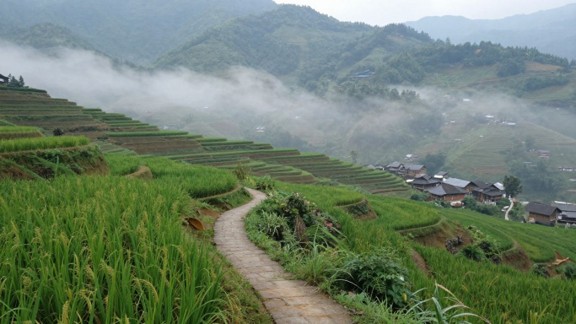
Hanoi is a natural opening for travelers interested in northern Vietnam’s living traditions. Its neighborhoods, markets, workshops, and small eateries reveal more than a quick walk through the Old Quarter. The city also makes a practical starting point for journeys into the surrounding delta and mountain provinces.
Explore historic neighborhoods beyond the Old Quarter
Beyond the Old Quarter, Hanoi becomes quieter and more residential. The French Quarter offers broad streets, old villas, shaded gardens, and public buildings, while areas around West Lake have a slower café-and-lakeside rhythm. A walk through these districts helps visitors see how historic architecture sits beside ordinary modern life.
The Long Bien area is another rewarding place for an unhurried morning. Vendors, commuters, and small repair shops create a grounded streetscape near the river. Travelers should wander without turning every home or worker into a photograph; the value lies in observing the rhythm of the neighborhood.
Visit village craft communities such as Bat Trang and Van Phuc
Bat Trang, southeast of Hanoi, is associated with ceramics, while Van Phuc is known for silk weaving. A visit is more meaningful when travelers look beyond finished souvenirs and notice the work itself: shaping clay, preparing looms, sorting threads, or displaying household pieces. Workshops may vary in how openly they welcome visitors, so a polite question is better than an assumption.
These villages can be visited as short excursions from the capital. Travelers should compare several shops, ask where an item was made, and allow time for conversation rather than rushing from one purchase to the next. Local context matters when a craft is also a source of household income and community identity.
Experience local food traditions through markets and family-run eateries
Hanoi’s food culture is easiest to understand at street markets and modest family-run eateries. Early mornings bring produce, herbs, noodles, and breakfast dishes into view, while smaller restaurants often focus on one or two carefully prepared specialties. Diners should watch how locals order, share tables when appropriate, and keep expectations flexible.
A short food walk can connect ingredients with place. Fresh herbs, rice noodles, fermented sauces, and seasonal vegetables appear in different combinations across the city and delta. The best meal is not always the most famous one; it may be the bowl served in a busy neighborhood shop with a steady local clientele.
Use Hanoi as a cultural and transport base for northern Vietnam
Hanoi works well as a pause between longer northern journeys. Travelers can use it to adjust to traffic, weather, and local routines before continuing toward Sapa, Ha Giang, Cao Bang, or Mai Chau. It is also a sensible place to keep an itinerary loose, since mountain roads and weather can change travel times.
For anyone researching places to visit in northern Vietnam, the capital provides useful contrast. City museums, craft villages, and food stalls establish a cultural foundation before the landscape becomes more rural. A few well-spaced days in Hanoi often make later village visits feel less like isolated attractions.
Discover ethnic cultures around Sapa and Lao Cai
The Sapa and Lao Cai region is shaped by steep valleys, rice terraces, and communities with distinct languages, clothing, and customs. Hmong, Dao, Tay, and other groups live across a wide area, so one village cannot stand in for an entire culture. Visitors gain more by slowing down and learning how tourism intersects with everyday life.
Meet Hmong, Dao, and Tay communities in nearby villages
Village walks near Sapa can introduce travelers to terraced farming, local architecture, textile work, and changing patterns of trade. The experience depends heavily on the route and the guide, because some paths pass through heavily visited settlements while others reach quieter communities. Visitors should listen first and avoid treating traditional clothing as a costume.
A respectful encounter may be simple. Buying a locally made item, accepting a meal only when genuinely invited, or learning a few words of greeting can create better contact than constant picture-taking. Customs differ between households, so a guide or host should be asked before entering private spaces or joining domestic activities.
Compare independent village visits with guided community tours
Independent travel gives visitors freedom to choose their pace and spend time away from busy routes. Guided community tours can provide translation, local history, and introductions that would be difficult to arrange alone. Neither approach guarantees an authentic experience; the quality of the interaction depends on preparation and conduct.
A traveler choosing independently should research transport, walking conditions, and village access in advance. Someone choosing a tour should ask how money reaches hosts, guides, and craft makers. Clear answers are a useful sign that the visit has been designed around residents rather than only around sightseeing.
Explore Bac Ha’s Sunday market and surrounding highland settlements
Bac Ha’s Sunday market is known for the movement of people, produce, animals, clothing, and household goods from surrounding highland settlements. It is a working market first, even when visitors find it visually striking. Arriving early allows travelers to see trade before the busiest visitor hours and leaves room to explore nearby villages afterward.
Market days can be lively and crowded, so a small day bag and patience are helpful. Travelers should buy goods without haggling aggressively over tiny amounts and should never interfere with livestock transactions. The surrounding roads also offer glimpses of farm life that a quick market visit alone cannot provide.
Travel responsibly in a region shaped by mass tourism
Sapa has experienced substantial tourism growth, and that growth brings both income and pressure. Visitors can reduce their impact by choosing smaller groups, staying with locally involved hosts, and avoiding performances or visits that feel staged without clear consent. They should also carry reusable water containers and avoid leaving waste on terraces or trails.
A responsible visit is not about finding a place untouched by tourism. It is about recognizing that residents have agency, businesses have costs, and cultural practices are not public property. Travelers who accept those limits usually notice more, ask better questions, and leave with a clearer understanding of the region.
Experience mountain life in Ha Giang
Ha Giang offers long mountain roads, limestone scenery, deep valleys, and communities spread across a demanding landscape. The journey is part of the experience, but remoteness also requires realistic planning. Travelers should allow extra days rather than trying to force every viewpoint and market into a rushed loop.
Visit Dong Van and Meo Vac for dramatic landscapes and local traditions
Dong Van and Meo Vac are strong bases for exploring the karst plateau. Stone houses, narrow roads, mountain passes, and small settlements appear between dramatic stretches of exposed rock. Travelers should make time for ordinary scenes, such as roadside cooking or village paths, rather than viewing the area only through famous overlooks.
The plateau’s beauty can make roads seem easier than they are. Weather, visibility, and traffic all affect the journey, particularly on steep passes. A slower route with frequent stops is safer and often produces a richer sense of how people farm and travel in this highland environment.
Learn about Hmong culture in the northern border villages
Hmong communities are present across much of Ha Giang, with local differences in dress, architecture, farming, and language. Border villages may feel especially remote, but remoteness does not make them museums. Residents are living contemporary lives, balancing agriculture, schooling, trade, and changing access to roads and services.
Travelers should ask before entering homes, courtyards, or religious spaces. A host may explain the purpose of household objects or seasonal practices, but visitors should not pressure anyone to perform or pose. A modest purchase from a maker, when the provenance is clear, can be a more respectful exchange than a casual donation.
Plan around traditional markets and seasonal festivals
Markets in Ha Giang often follow local schedules rather than a visitor’s preferred day. Checking dates before departure can shape the whole route and may determine where an overnight stay is most practical. Festivals also vary by community and calendar, so travelers should confirm details locally rather than relying on a broad regional label.
Planning around these events creates memorable encounters, but it also calls for restraint. Crowds may include ceremonies, family gatherings, or religious observances that are not performances. Visitors should stand at the edge, follow local instructions, and accept that some moments are better experienced without a camera.
Choose safe transport options for the Ha Giang Loop
The Ha Giang Loop demands careful transport choices. Experienced riders may prefer a motorbike, while others should consider a private driver, a guided ride, or a combination of buses and local transport. The right option depends on road experience, weather, confidence on steep roads, and whether the traveler can respond calmly to unexpected conditions.
Before leaving, travelers should check helmets, vehicle condition, insurance arrangements, fuel access, and communication plans. They should avoid riding after dark and build in breaks on long mountain days. Safety is not separate from cultural travel: arriving tired, rushed, or frightened leaves less attention for the people and places along the route.
Explore Tay and Nung heritage in Cao Bang and Ba Be
Cao Bang and Ba Be offer a quieter northern route built around waterfalls, limestone valleys, lakes, and village communities. Tay and Nung heritage is visible in houses, foodways, farming patterns, and local speech. The area rewards visitors who accept slower transport and fewer conveniences.
Combine Ban Gioc Waterfall with nearby rural communities
Ban Gioc Waterfall is a striking destination, but the surrounding countryside gives the visit more depth. Travelers can pair the waterfall with rural roads, small farms, and villages where daily life continues beyond the viewpoint. Early or later visits may feel calmer than arriving during the busiest part of the day.
Visitors should keep the waterfall in perspective. It is one stop within a border region shaped by agriculture, local trade, and complex geography. A respectful traveler does not block paths, climb into restricted areas, or assume that nearby residents are available as informal guides or subjects.
Stay in a Tay homestay around Ba Be Lake
A Tay homestay near Ba Be Lake can offer a close view of village routines without requiring an elaborate cultural program. Stilt houses, shared meals, and lake access create a more domestic setting than a conventional hotel. Hosts may also help arrange boats, walks, or introductions to nearby activities.
Guests should ask about meal times, bathrooms, sleeping arrangements, and house rules before settling in. Small differences in privacy and schedule can otherwise cause discomfort on both sides. The strongest homestay experience is usually reciprocal: the host provides knowledge and care, while the guest brings patience, courtesy, and fair payment.
Discover local food, farming, and river-based daily life
Food around Ba Be often reflects the resources of gardens, fields, forests, and waterways. Meals may include rice, greens, herbs, poultry, fish, and local preparations that vary from household to household. Travelers should ask what they are eating, especially when ingredients or flavors are unfamiliar, but should avoid treating every meal as a culinary test.
A walk or boat trip can reveal how water connects homes, farms, transport, and leisure. The lake is not simply a scenic backdrop; it is part of a wider local environment. Visitors should follow boat safety instructions and avoid leaving packaging, food waste, or other rubbish behind.
Allow extra travel time for remote roads and limited services
Remote roads can turn a short distance into a full day of travel. Rain, roadworks, traffic, and mountain conditions may alter plans, while cash access, mobile coverage, and medical services can be limited. Travelers should carry essentials and tell a host or driver about the next destination.
The following practical checks help keep the route comfortable without making it rigid:
- Carry enough cash for transport, meals, and small purchases.
- Download maps and save accommodation details before leaving coverage.
- Pack a light rain layer, warm clothing, and basic medication.
- Confirm the final departure time with a local host or driver.
These measures are simple, but they protect time for the experiences that matter. A flexible schedule also reduces pressure on drivers and hosts when conditions change unexpectedly.
See traditional village life in Mai Chau and the northwest
Mai Chau is accessible enough for a gentle introduction to northern village life while still feeling distinct from Hanoi. Its valley, stilt houses, rice fields, and surrounding hills create an inviting setting for slower travel. The northwest becomes more rewarding when visitors look beyond a single overnight stop.
Stay in a stilt-house homestay in Mai Chau
A stilt-house homestay lets travelers notice details that disappear during a quick day trip. Raised floors, shared dining areas, woven furnishings, and views across fields shape the experience. Hosts may offer meals or local walks, but a quiet evening at the house can be just as valuable as a scheduled activity.
Travelers should keep noise low and ask before moving through private areas. Shoes, bathroom arrangements, and sleeping spaces may differ from what guests expect, so a friendly question prevents awkwardness. Staying longer than one night can also make the relationship feel less transactional.
Learn about White Thai music, weaving, and village customs
White Thai cultural traditions are expressed through music, weaving, food, family life, and village ceremonies. A demonstration can be informative when residents choose its format and receive fair payment. Travelers should listen for local explanations rather than reducing a complex identity to a few decorative motifs.
Textiles deserve particular care. Visitors can ask who made an item, where the materials came from, and whether the piece was produced locally. These questions help distinguish a meaningful purchase from a generic souvenir while showing respect for the labor involved.
Add Pu Luong for quieter rice-terrace landscapes
Pu Luong is a useful addition for travelers seeking more time among hills, fields, and small settlements. The landscape changes with planting and harvest cycles, so its appearance is never fixed. Walks can pass through villages and terraces, but travelers should remain on permitted paths and avoid entering fields without invitation.
The area is best approached with modest expectations. Quiet does not mean empty, and a scenic trail still crosses working land. A local guide can explain paths, farming seasons, and etiquette while helping visitors avoid accidental disruption.
Balance cultural visits with hiking and nature activities
Hiking gives cultural visits a natural pace. A morning walk, an afternoon meal, and a relaxed conversation with a host often work better than a packed schedule of attractions. Travelers should choose routes that match fitness, weather, and footwear rather than treating every trail as a simple stroll.
Nature activities also require restraint. Streams, forests, and terraces are shared environments, not adventure props. Keeping groups small, carrying rubbish out, and avoiding loud behavior allows residents and other visitors to enjoy the same landscape.
Visit northern Vietnam’s markets, crafts, and seasonal celebrations
Markets and craft villages connect visitors with the practical side of northern culture. They are places to trade food, animals, clothing, tools, and household goods, not just backdrops for travel photography. Seasonal celebrations add another layer, but participation should always follow local permission and context.
Choose markets where residents still trade livestock and produce
A market feels most useful when residents are there to buy and sell for their own households. Travelers can look for produce, livestock, cooking ingredients, farm tools, and everyday clothing rather than only stalls aimed at tourists. The difference is often visible in how goods are arranged and how people negotiate with one another.
Markets may be crowded, muddy, noisy, or difficult to navigate. That is part of their working character, not a problem to be corrected. Visitors should keep aisles clear, avoid touching animals, and make purchases without turning bargaining into entertainment.
Find traditional textiles and handicrafts with clear local provenance
Traditional textiles and handicrafts vary widely by community and maker. A seller who can explain where an item was made, who produced it, and how it is used offers more useful information than a vague claim of authenticity. Travelers should also remember that contemporary designs can be locally made and culturally meaningful.
A compact comparison can help when deciding what to buy:
| Purchase question | Why it helps | |
| Who made the item? | It clarifies whether the maker is identifiable. | |
| Where was it produced? | It separates local work from imported stock. | |
| What materials were used? | It gives context about labor and resources. | |
| How is it traditionally used? | It helps prevent careless treatment of cultural objects. |
The answers do not need to sound like a formal certificate. A relaxed, specific conversation is often enough to reveal whether a purchase supports a maker or simply passes through a tourist supply chain.
Time trips around rice harvests, flower seasons, and regional festivals
Northern Vietnam changes noticeably with the agricultural calendar. Rice fields may be newly planted, intensely green, golden near harvest, or recently cut, while flower seasons can transform highland roads and valleys. Festivals also follow local calendars and may change from year to year.
Travelers should confirm dates close to departure and leave room for weather. A seasonal trip is more satisfying when it follows the pace of the region instead of chasing a single photograph. Visitors should also avoid stepping into crops for pictures, even when a field appears empty.
Understand photography etiquette at markets and ceremonies
Photography requires special care at markets and ceremonies. A smile and a clear gesture can open a conversation, but silence or turning away should be treated as refusal. Children should not be photographed casually, and ceremonial objects or private rituals may have restrictions that are not obvious to outsiders.
The same courtesy applies after permission is granted. Travelers should avoid directing people into poses, offering money in exchange for repeated gestures, or publishing intimate moments without considering their context. A camera should remain secondary to the encounter itself.
Plan a culturally respectful northern Vietnam itinerary
The best itinerary is not the one with the most destinations. It is the one that leaves enough time for roads, weather, rest, and genuine contact with local hosts. Northern Vietnam offers many places to visit in northern Vietnam, but thoughtful selection matters more than collecting names.
Match destinations to available travel time and comfort levels
Short trips can focus on Hanoi and Mai Chau, or Hanoi and Sapa, without pretending to cover the entire north. Longer journeys can add Ha Giang, Cao Bang, Ba Be, or Pu Luong if the traveler accepts more complicated transport. Comfort also matters: remote homestays and mountain roads should be chosen knowingly, not as an afterthought.
A useful itinerary has breathing room between demanding travel days. It leaves space for a delayed bus, a market discovered by chance, or an afternoon spent talking over tea. That flexibility often turns a route into a more personal journey.
Decide between guided tours, private drivers, and public transport
Public transport suits travelers who enjoy independence and can handle changing schedules. Private drivers make remote connections easier, while guided tours can provide translation, local introductions, and logistical support. The choice should reflect the route and the traveler’s experience rather than a simple preference for convenience.
Before booking, travelers should ask what is included, who provides the service, and how hosts or communities are paid. They should also confirm cancellation terms and vehicle arrangements. Clear planning reduces misunderstandings once the journey reaches areas where alternatives are limited.
Support locally owned homestays, restaurants, and community projects
Spending decisions shape the places visitors hope to understand. Locally owned homestays, family-run eateries, village guides, and community projects can keep more money within the destination when their ownership and payment practices are transparent. Travelers should choose quality and fairness over the cheapest available option.
Support should not become a performance. Guests can pay agreed prices, avoid demanding special treatment, and leave useful feedback privately when something needs improvement. A respectful customer is often more helpful than one who arrives determined to rescue or judge a community.
Follow respectful guidelines for dress, photography, and village visits
Dress should be modest in homes, villages, and religious spaces, especially where shoulders or knees may need to be covered. Visitors should ask before photographing people, entering houses, joining ceremonies, or handling objects. They should follow a host’s instructions even when local practices differ from expectations formed elsewhere.
The most reliable approach is to observe before acting. A traveler who pauses, asks, and accepts a no will usually be welcomed more warmly than one who assumes access. Cultural respect is not a special activity added to an itinerary; it is the manner in which every stop is made.
Conclusion
Northern Vietnam is best experienced through contrasts: Hanoi’s dense streets and the delta’s craft villages, Sapa’s terraces and Ha Giang’s high roads, Cao Bang’s waterways and Mai Chau’s stilt houses. Travelers who move slowly, ask permission, and spend thoughtfully can encounter living cultures without treating them as attractions. The journey becomes richer when local people remain hosts, neighbors, makers, and decision-makers rather than scenery.