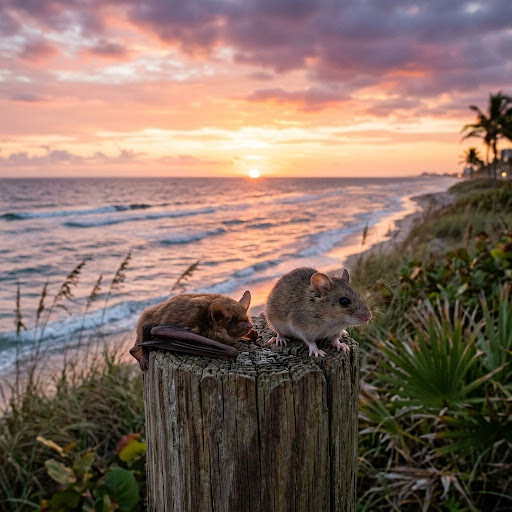
Bats in the attic. Rodents are scratching behind the walls. These aren’t just nuisances—they’re signs that your home may be under threat from wildlife intrusions that can escalate quickly if left unaddressed. For homeowners across Palm Beach County, finding a reliable, effective, and humane solution to these problems is a top priority.
The good news? You don’t have to deal with it alone—or guess your way through a DIY fix that may not hold up. Professional wildlife removal services have transformed how Palm Beach residents reclaim their homes, their peace of mind, and their health and safety.
Here’s what you need to know about bat and rodent removal, and why professional intervention makes all the difference.
The Hidden Threat Inside Your Walls and Ceilings
Most homeowners don’t discover a wildlife problem until it’s already well-established. Bats typically roost in attics, wall voids, and behind fascia boards. Rodents—whether rats, mice, or squirrels—exploit even the smallest structural gaps to get inside, nest, and multiply.
By the time you hear the scratching, smell the odor, or spot the droppings, the infestation is rarely new. Rodents reproduce rapidly; a small entry point discovered in spring can translate into a full-blown colony by summer. Bats, while beneficial to the broader ecosystem, become a serious concern when they roost inside a home.
The risks go well beyond the obvious. Bat guano carries Histoplasma capsulatum, a fungal spore that causes histoplasmosis—a respiratory illness that can be serious for children, the elderly, and anyone with a compromised immune system. Rodents, meanwhile, chew through electrical wiring, contaminate insulation, and spread diseases like leptospirosis and hantavirus through their urine and droppings.
These aren’t scare tactics. They’re documented health risks that make prompt, professional removal not just smart—but necessary.
What Makes Bat Removal More Complex Than You’d Expect
Bat removal is genuinely one of the most technically demanding areas of wildlife control, and for good reason. Several bat species in Florida are legally protected under state and federal wildlife laws, which means removal must be handled through a process called exclusion—not extermination.
Exclusion involves sealing off a structure in a way that allows bats to exit on their own but prevents them from re-entering. Sounds simple enough, but the execution is anything but. A complete exclusion requires:
- A thorough inspection to identify every potential entry and exit point—gaps as small as ¼ inch can be enough for a bat to squeeze through.
- Correct timing—bat exclusions cannot legally take place during maternity season (typically April through August in Florida), when flightless pups are present inside the roost.
- Proper materials and installation to ensure long-term sealing without damaging the structure or creating new vulnerabilities.
Skip any one of these steps, and the bats either return or worse, get trapped inside and die, creating an entirely different and more serious problem.
Rodent Removal: Why It Demands a Systematic Approach
Rodents are opportunistic, adaptable, and persistent. Rats in Palm Beach—particularly the roof rat (Rattus rattus), which is extremely common throughout South Florida—are agile climbers that access homes from rooftops, overhanging trees, and utility lines. Once inside, they create nesting sites in insulation, drop ceilings, and wall cavities.
Effective rodent removal isn’t simply about trapping. A few snap traps placed in the garage won’t resolve an infestation that spans multiple rooms or an attic full of nesting materials. A systematic approach includes:
- Entry point identification and sealing to stop new rodents from entering while removal is underway
- Trapping programs designed around the specific rodent species and the scale of activity
- Sanitation and decontamination to remove nesting materials, droppings, and urine, which can attract new rodents if left in place
- Follow-up inspections to confirm the problem has been fully resolved
Without addressing the root cause—the entry points—any removal effort is temporary at best. Rodents will simply return.
Why Palm Beach Homeowners Choose Professional Wildlife Services
The Palm Beach region presents its own unique set of wildlife challenges. The warm, humid climate means wildlife activity is year-round, not seasonal. Dense neighborhoods sit alongside natural preserves, canals, and green corridors that serve as constant wildlife highways. The architectural styles of many Palm Beach homes—barrel tile roofs, stucco exteriors, older construction with settling gaps—create ample opportunities for intrusion.
This is where local expertise genuinely matters. A wildlife removal team familiar with Palm Beach’s specific environment knows which species are most active, which entry points are most commonly exploited, and how Florida’s regulatory landscape affects what can and cannot be done.
What to Expect From a Professional Removal Service
Calling in a professional service isn’t just about getting rid of the immediate problem—it’s about getting a complete resolution. A quality wildlife removal company in Palm Beach will walk you through the full process: inspection, removal, exclusion, and any necessary remediation of damage or contamination left behind.
Transparency matters here. Reputable companies explain exactly what they found, what they’re doing, and why each step is necessary. They don’t rush the process, and they don’t offer one-size-fits-all solutions. Homes are different, infestations are different, and the approach should reflect that.
You should also expect a follow-up. A solid exclusion and removal job includes confirmation that the work held—that no new activity is occurring and that entry points remain sealed.
The Right Time to Make the Call
Palm Beach Wildlife Services delivers comprehensive bat and rodent removal solutions that protect your home from structural damage, safeguard your family from serious health risks, and give you the confidence of knowing the job was handled correctly, completely, and in full compliance with Florida wildlife regulations. If you’ve noticed droppings, strange sounds at night, chewed wires, or an unexplained odor in your attic or walls, those are signs worth acting on quickly. The longer an infestation goes unaddressed, the more costly and complex the resolution becomes.
Waiting for the problem to resolve on its own isn’t a strategy—it’s an opportunity for the situation to get significantly worse. Wildlife removal is one area where early action pays off in every way that counts.
Frequently Asked Questions
Can I remove bats from my home on my own?
In Florida, bat removal typically must follow specific legal guidelines due to protected species laws. DIY exclusion attempts often miss entry points or violate timing restrictions, which can make the problem worse. Professional removal is strongly recommended.
How do I know if I have rodents or bats in my attic?
Rodents typically produce scratching or scurrying sounds, particularly at night, and leave droppings that are cylindrical in shape. Bats tend to be quieter, but you may notice guano (which resembles dark, elongated pellets) near entry points or along walls. A professional inspection will confirm which species is present.
How long does bat exclusion take?
The exclusion process itself can take several days to a few weeks, depending on the size of the structure and the extent of the roost. Timing is also a critical factor—exclusions cannot be performed during Florida’s bat maternity season, which typically runs from April through August.
Is rodent removal a one-time service or ongoing?
This depends on the situation. In many cases, a thorough exclusion combined with a structured trapping program resolves the issue permanently. In areas with high rodent pressure—like properties near water, wooded lots, or older construction—periodic monitoring may be advisable.
Does homeowners’ insurance cover wildlife removal or damage?
Policies vary. Some homeowners’ insurance plans cover damage caused by wildlife (such as chewed wiring or contaminated insulation), but wildlife removal itself is often not covered. It’s worth contacting your insurance provider directly to understand what your policy includes.