Sludge dewatering separates liquid from solids produced during industrial wastewater treatment. It creates a drier solid waste stream for handling and a separated liquid stream that can move to the appropriate next stage of treatment, recycling or disposal.
Captured solids still require management after separation. Sludge from clarifiers, dissolved air flotation (DAF) units, settling tanks, and other processes can retain substantial liquid. Removing some of that liquid changes the physical condition and volume of the remaining waste.
Dewatering concentrates the solid fraction into a cake by removing retained liquid. With less water present, the resulting material may require less storage space and be easier to transfer between the treatment, collection, and disposal stages.
For industrial facilities, dewatering connects wastewater separation with the practical management of captured solids.
Sludge Dewatering Makes Separated Solids Easier to Manage
The immediate purpose of sludge dewatering is to reduce the liquid retained within sludge so the solid fraction reaches a more manageable condition.
Sludge characteristics vary according to the industrial process and treatment method. Material separated from wastewater may still contain enough liquid to behave as a slurry, complicating collection, storage and transfer.
Dewatering separates more liquid from the retained solids. Depending on the wastewater and equipment, the process can produce a cake that can be collected as solid material.
Practical outcomes can include:
- drier solids for collection
- less liquid within the waste stream
- easier transfer into suitable containers
- a separate filtrate stream for further management
Vacuum and gravity dewatering systems can suit applications involving moderate-to-low wastewater flows with moderate-to-high dirt loads. Filter media allow liquid to pass through while retaining solids on the filtration surface.
For facilities handling this type of wastewater, industrial sludge dewatering solutions provide a means of separating the retained liquid before the solids are moved to storage, transport or disposal.
Lower Water Content Can Reduce the Waste Handling Load
Water contributes to the weight and volume of sludge without reducing the contaminants in its solid fraction. Removing more water reduces the amount of liquid carried with the captured solids.
This changes what needs to be handled downstream. A facility may have less wet material in temporary storage, and a firmer cake is easier to transfer into an appropriate collection container than a mobile slurry.
The financial impact varies across industrial sites. Waste classification, disposal method, sludge composition, transport arrangements and local charges influence actual costs. Specific savings should therefore not be assumed without site data.
The operational effect can be assessed more directly. Where wastewater treatment is part of routine production, sludge may be generated continuously or at regular intervals. The facility needs a repeatable method to move that material from treatment equipment to storage and, eventually, to its appropriate disposal pathway.
Reducing retained liquid before this stage means the waste-handling process deals with a more concentrated solid fraction rather than moving unnecessary water with the solids.
Dewatering, therefore, addresses moisture content before the waste reaches subsequent storage, transport or disposal stages.
How Vacuum Sludge Dewatering Works
Vacuum dewatering combines filter media, airflow and controlled cake discharge to remove liquid from sludge.
Wastewater is pumped or gravity-fed onto a continuous filtration area. A disposable membrane allows liquid to pass through while retaining heavier solids on its surface.
A vacuum producer draws air from beneath the filtration area, creating a pressure difference that assists the movement of liquid through the filter media and the removal of accumulated solids.
The process follows four main stages:
- Wastewater enters the filter. Liquid containing suspended solids is introduced onto the filtration area.
- Filter media retain the solids. Liquid passes through the membrane while heavier material remains on its surface.
- A filter cake develops. Air continues to pass through the accumulating solids, helping to remove additional liquid.
- The cake is discharged. As the cake thickens, the vacuum increases. At a preset level, an automated system can advance the conveyor and discharge the dried material into a collection bin.
Fresh filter media then moves into position, and filtration continues.
Vacuum assists moisture removal because the process does not depend entirely on liquid draining under gravity. Airflow through the accumulated cake helps draw out additional liquid.
Vacuum conditions can also control automatic belt advancement, allowing cake discharge at a defined operating point without requiring an operator to manually assess each filtration cycle.
Dewatering Does Not Automatically Make Water Suitable for Discharge
Sludge dewatering separates the solids from the retained liquid. It does not necessarily remove dissolved contaminants or make the resulting filtrate suitable for every discharge or reuse application.
Depending on the industrial process, separated water may still contain dissolved substances, oils, metals, chemicals or other contaminants. Additional treatment may therefore be required.
Wastewater intended for sewer discharge must meet the requirements of the relevant water authority. Sydney Water, for example, applies acceptance standards to industrial trade wastewater entering its wastewater system. These cover suspended solids and limits for various other substances, with site-specific conditions applying where required.
Assessing wastewater can involve examining:
- suspended and dissolved material
- oils and grease
- metals and process chemicals
- pH
- wastewater flow and solids loading
- intended discharge or reuse pathway
These characteristics help determine what needs to happen after dewatering.
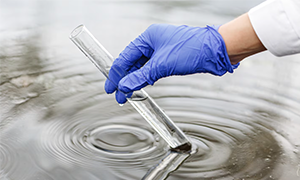
Dewatering addresses the physical separation of liquid and solids. Other treatment processes may be needed for contaminants that remain dissolved in the filtrate. Water analysis can identify these characteristics and provide a stronger basis for selecting the appropriate treatment sequence.
Equipment Selection Should Follow Wastewater Characteristics
Selecting dewatering equipment requires more than matching a unit to total wastewater volume.
Flow rate, solids loading, particle characteristics and sludge consistency affect filtration behaviour. A moderate-to-low-flow stream with a relatively high solids concentration presents a different treatment challenge than a high-volume stream with a lower dirt load.
Useful operating information includes:
- normal and peak flow
- average and peak solids loading
- sludge source and consistency
- particle characteristics
- required cake condition
- available installation space
- downstream treatment and disposal arrangements
Sludge source provides further context. Dewatering equipment may receive solids generated by DAF units, clarifiers or settling tanks, each of which can produce material with different characteristics.
Production conditions can also change the composition of wastewater. Raw materials, cleaning processes and manufacturing schedules may affect the solids entering the treatment system.
Testing representative wastewater samples alongside nominal flow data provides a more complete basis for equipment selection. The aim is to match the dewatering process to the actual material being treated rather than relying on capacity alone.
Conclusion: Managing Sludge More Effectively
Sludge dewatering provides captured solids and separated liquid with distinct pathways through the remaining wastewater management process.
Removing retained water reduces the amount of liquid carried with the solids and can produce a cake that is more practical to collect, store and transfer. The separated liquid can then be assessed for its intended destination, with further treatment applied where contaminants or discharge requirements necessitate it.
Effective dewatering depends on understanding the complete waste stream. Wastewater flow, solids loading, sludge characteristics and downstream requirements determine how the separation stage should operate.
When these factors are properly assessed, dewatering provides a controlled transition from wastewater treatment to final waste handling, with a defined next step for both the captured solids and separated liquid.