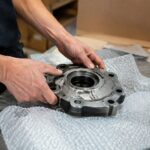
The manufacturing industry is witnessing rapid advancements driven by significant technological innovations and evolving industrial needs. Among the pivotal elements in this transformation are the gases and equipment utilised across various manufacturing processes. Providers such as Coregas gas solutions play a crucial role in supplying advanced gases tailored to support the emerging equipment trends in the sector.
Helium’s Increasing Role in Manufacturing
One mounting trend is the utilisation of specialist gases, such as helium, in manufacturing applications. Helium’s unique properties, including its inertness and thermal conductivity, make it highly desirable for specialised equipment cooling, leak detection, and controlled environments. Its application in clean room environments and laser technologies is expanding the capabilities of manufacturing equipment, allowing for higher precision and efficiency.
Advancement in Welding Technologies
Welding remains a fundamental process in manufacturing, yet its equipment is undergoing transformative changes influenced by innovations in gas mixtures and delivery methods. The adoption of advanced gas welding technologies is enhancing the quality, speed, and safety of metal fabrication. Customised welding gases optimise combustion and shielding properties, leading to improved joint strength and reduced defects. These improvements significantly affect the assembly lines in automotive, aerospace, and heavy machinery manufacturing sectors.
Automation and Integrated Gas Systems
Automation is a defining feature of present-day manufacturing plants. Equipment increasingly integrates automated gas delivery systems to precisely manage the flow and composition of industrial gases essential for processes like laser cutting, heat treatment, and additive manufacturing. Automated systems reduce human error, increase productivity, and ensure a safer working environment by controlling gas pressures and detecting leaks, providing real-time monitoring capabilities.
Adaptation to Sustainability and Safety Standards
Emerging equipment trends also align with tightening sustainability and safety standards. Manufacturers are deploying gas technologies that minimise emissions and energy consumption. Inert gases such as argon and nitrogen are utilised more frequently to create safer environments for sensitive manufacturing operations, reducing the risk of oxidation and combustion. These gases are essential components of the specialised equipment that contributes to cleaner production processes.
Impact on Quality Control and Inspection
Advanced manufacturing equipment now integrates enhanced quality control measures. Gases such as helium assist non-destructive testing methodologies, enabling more accurate detection of flaws within materials without damaging the components. These improvements elevate the overall manufacturing quality and reliability, supporting industries where product integrity is critical, such as aerospace and medical devices.
Flexible Manufacturing and Equipment Versatility
Flexible manufacturing systems demand equipment capable of rapid adaptation to varied product specifications. The ability to alter gas types and concentrations quickly enables versatile operational modes. This adaptability is instrumental in responding to fluctuating market demands and custom product manufacturing.
Enhanced Thermal Processing Equipment
Thermal processing remains a core manufacturing function, and equipment is evolving to incorporate advanced gas atmospheres for precise temperature control and material treatment. For example, hydrogen-enriched gas mixtures improve carburising and annealing processes, yielding superior material characteristics. These specialised gases enhance the performance of thermal equipment in producing high-grade metals and composites.
Role of Supplier Partnerships in Equipment Innovation
Collaborations with expert gas suppliers such as Coregas Pty Ltd facilitate the integration of cutting-edge gases into manufacturing processes. Such partnerships enable access to customised gas solutions and support that optimise equipment performance and industrial innovation. The supplier’s expertise ensures that manufacturers remain competitive by adopting the latest technologies efficiently.
Conclusion
The trajectory of emerging equipment trends in manufacturing is largely influenced by advances in industrial gases and their applications. From helium’s specialised usages to innovations in gas welding technologies, and the integration of automated gas systems, manufacturing remains dynamic and forward-looking. By leveraging the capabilities provided by premier suppliers and embracing these technological trends, manufacturers can enhance product quality, operational efficiency, and sustainability across diverse industrial segments.