Farming has always demanded a careful balance between cost management and operational efficiency. For growers looking to expand their planting capacity without stretching their capital budgets, the used agricultural equipment market offers a compelling solution. Among the most sought-after implements in this space is the seed drill — a machine that has quietly revolutionised how crops are established across diverse soil types and climates. Whether you are managing a small family holding or scaling up a commercial operation, understanding the value of pre-owned seeding equipment can significantly influence your bottom line and your harvest outcomes.
The Role of Seed Drills in Precision Agriculture
Seed drills are not simply tools for dropping seeds into the ground. They are precision instruments designed to place seeds at consistent depths, at controlled spacing, and with minimal soil disturbance. This level of accuracy translates directly into better germination rates, more uniform crop emergence, and ultimately higher yields per hectare. Unlike broadcast seeding methods, which scatter seed across the surface and leave much to chance, a seed drill ensures that each seed is placed in an environment where it has the best possible opportunity to establish itself.
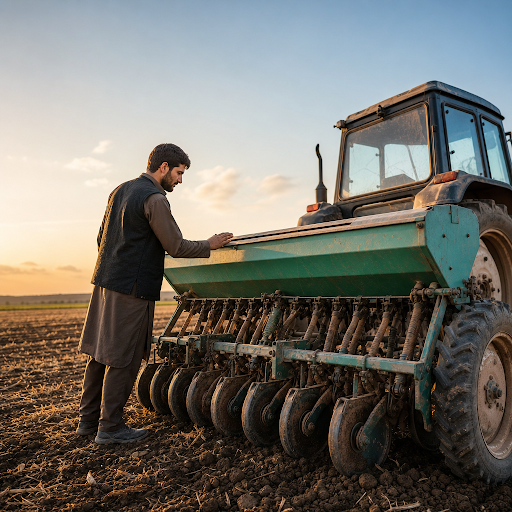
Modern seed drills — even those that are several years old — often come equipped with features such as disc coulters, press wheels, and adjustable row spacing mechanisms. These components allow farmers to adapt the machine to different crops, from winter wheat and barley to oilseed rape and legumes. The versatility of a well-maintained seed drill makes it one of the most valuable assets in any arable operation.
Understanding Soil Preparation and Its Connection to Seeding Success
Effective seeding does not begin with the drill itself — it begins with the land. Proper soil preparation, including cultivation, levelling, and drainage management, creates the seedbed conditions that allow a seed drill to perform at its best. Farmers who invest in quality land shaping and earthworks often find that their seeding equipment delivers far superior results. This connection between groundwork and planting performance is something that experienced agronomists consistently emphasise. As explored in SFC Terrain Works and the future of land shaping, the quality of the terrain beneath your crops is just as important as the equipment you use to plant them. Investing in both areas creates a compounding benefit that shows up clearly at harvest time.
The Financial Case for Buying Used Seeding Equipment
New agricultural machinery carries a significant price premium. A brand-new seed drill from a leading manufacturer can cost tens of thousands of pounds, placing it out of reach for many smaller operations or those just beginning to transition from manual or broadcast seeding methods. The used equipment market, by contrast, offers machines that have already absorbed the steepest portion of their depreciation curve. A drill that is three to five years old may retain ninety percent of its functional capability while costing a fraction of its original price.
This financial reality is driving a growing number of farmers toward the pre-owned market. Buyers who take the time to inspect machines carefully, review service histories, and understand the mechanical condition of what they are purchasing can secure exceptional value. The key is knowing where to look and what questions to ask.
What to Look for When Purchasing a Pre-Owned Seed Drill
When evaluating a used seed drill, there are several critical areas to assess. First, examine the coulters and disc blades for wear. These components are subject to significant abrasion and will need replacement if worn beyond acceptable tolerances. Second, inspect the seed metering mechanisms for accuracy and consistency — any irregularity here will directly affect seeding rates and crop uniformity. Third, check the frame for signs of stress cracking or previous repairs, which could indicate the machine has been subjected to heavy use or difficult operating conditions.
It is also worth reviewing the availability of spare parts for the specific make and model you are considering. Some older or less common brands may present challenges when components need replacing, so opting for a machine from a well-supported manufacturer can save considerable time and expense down the line. Asking for maintenance records and, where possible, speaking with the previous owner about the machine’s working history will give you a much clearer picture of what you are buying.
Where to Source Quality Used Seed Drills
For farmers actively searching the market, finding a reliable source of pre-owned planting equipment is essential. If you are looking for a used seed drill for sale, HR Agripower offers a broad selection of pre-owned planting and seeding machinery across multiple makes and models, making it a practical starting point for buyers who want to compare options and find equipment suited to their specific operation. Sourcing from a reputable dealer also provides a degree of assurance that private sales often cannot match, including the ability to ask technical questions and, in some cases, access after-sale support.
Safety Considerations When Operating Seeding Machinery
Agricultural machinery, including seed drills, presents a range of safety considerations that must be taken seriously. Operators should always read the manufacturer’s manual thoroughly before use, ensure that all guards and safety mechanisms are in place, and never attempt to clear blockages while the machine is in motion. Tractor-mounted implements carry particular risks related to PTO (power take-off) shafts, which can cause serious injury if not properly guarded and handled with care.
For comprehensive guidance on safe working practices with agricultural machinery, the Health and Safety Executive’s guidance on safe use of farm machinery provides clear, practical advice that all operators — whether experienced or new to the equipment — should review regularly. Maintaining a culture of safety on the farm protects not only the operator but also any workers or bystanders in the vicinity of the machinery.
HR Agripower: A Trusted Name in Agricultural Equipment
HR Agripower has established itself as a credible and well-regarded source of agricultural machinery across the United Kingdom. With a focus on connecting buyers with quality used equipment across a wide range of categories — from tillage and cultivation to planting and seeding — the company serves the needs of farmers at every scale of operation. Their inventory is regularly updated, and their team brings genuine agricultural knowledge to the buying process, helping customers identify machines that are genuinely suited to their land, crops, and working conditions.
For farmers who want to make informed purchasing decisions without the pressure of a hard sell, HR Agripower’s approach offers a refreshing alternative. Their platform allows buyers to browse at their own pace, compare specifications, and reach out with questions before committing to a purchase.
Conclusion: Making the Right Investment for Your Farm’s Future
Choosing the right seeding equipment is one of the most consequential decisions an arable farmer can make. A well-chosen seed drill, properly maintained and matched to the right soil and crop conditions, will deliver returns season after season. The used equipment market makes this level of investment accessible to a far wider range of operations than the new machinery market alone could serve. By approaching the purchase with diligence, seeking expert guidance, and prioritising both performance and safety, farmers can secure equipment that genuinely transforms their planting operations — and their harvests — for years to come.