In Canada, late summer is an active season for property maintenance, forestry work, landscaping, and small-scale construction projects. Rural property owners, contractors, and equipment operators often need to manage brush, logs, rocks, and demolition materials before seasonal weather changes limit outdoor activities. Efficient material handling becomes important because many job sites require compact machines that can work in areas where larger equipment cannot operate effectively.
A mini skid steer skeleton grapple attachment provides a specialized solution for handling irregular and bulky materials. By combining lifting capability with gripping control, this type of attachment helps operators move materials more efficiently while maintaining better visibility and control. Understanding its operating principles, applications, and safety requirements allows equipment managers and operators to use the attachment more effectively.
Technical Overview of Skeleton Grapple Attachments
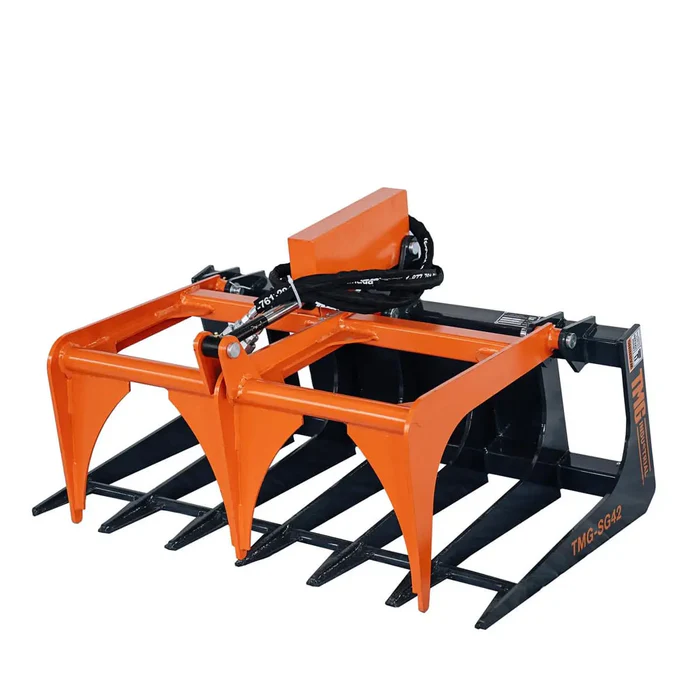
A skeleton grapple attachment is designed with an open frame structure that allows smaller materials such as soil, dirt, and loose debris to fall through while retaining larger objects. This design makes it different from solid bucket attachments, which are primarily intended for carrying loose materials.
The operating principle is based on hydraulic-powered grapple arms. These arms open and close around materials, creating a secure grip for transportation, sorting, and loading tasks. The open design improves visibility, allowing operators to position the attachment more accurately during complex handling operations.
Common applications include:
- Removing brush and branches after land clearing
- Handling logs, rocks, and construction debris
- Sorting materials during property cleanup
- Supporting landscaping and agricultural maintenance tasks
Improving Efficiency, Safety, and Job Site Productivity
Material handling is often one of the most time-consuming parts of outdoor projects. Without suitable attachments, operators may need manual labor or multiple machines to complete basic cleanup and transportation tasks. A mini skid steer skeleton grapple attachment improves workflow by allowing one compact machine to perform lifting, sorting, and moving operations.
For example, a contractor clearing a residential lot may use the grapple to collect fallen branches, separate rocks from soil, and prepare the area for further construction work. This reduces unnecessary equipment movement and helps maintain a more organized work site.
The main productivity advantages include:
- Faster handling of irregular materials
- Improved operator control compared with manual methods
- Reduced need for additional equipment
- Better visibility during loading operations
Technical Foundations and Equipment Compatibility
The performance of a mini skid steer skeleton grapple attachment depends on proper compatibility between the attachment and the carrier machine. Hydraulic capacity, lifting ability, attachment mounting systems, and operating weight all influence safe and effective performance.
Important considerations include:
- Skid steer hydraulic capability
- Material weight and size
- Ground conditions at the work location
- Operator experience with grapple control
A compact skid steer working in a wooded area may require different operating techniques compared with one used on a construction site. Understanding the working environment helps operators avoid unnecessary stress on both the machine and attachment.
Performance Factors and Maintenance Requirements
Several factors influence grapple performance, including material type, hydraulic response, operator technique, and maintenance condition. Heavy logs require controlled movement, while loose brush may require different gripping methods to prevent material loss during transport.
Regular inspection is important for maintaining reliable operation. Operators should check hydraulic connections, grapple pivot points, mounting components, and structural areas before use. Proper maintenance helps reduce downtime and improves equipment service life.
Safety Practices for Grapple Attachment Operation
Because grapple attachments handle heavy and unstable materials, safety procedures are essential. Operators should understand load limits and maintain awareness of surrounding conditions during operation.
- Inspect the attachment before each operation
- Secure materials before transporting them
- Avoid lifting loads beyond machine capacity
- Keep workers away from active handling areas
- Operate on stable surfaces whenever possible
Safe operation is especially important during forestry cleanup or demolition work, where materials may have uneven shapes and unpredictable movement.
Equipment Types and Application Differences
Grapple attachments are available in several forms, including root grapples, brush grapples, demolition grapples, and skeleton grapples. Each design serves different material handling requirements.
A skeleton grapple is particularly useful when operators need to separate larger materials from smaller debris. However, it may not be the ideal choice for transporting fine loose materials that require a closed bucket design.
Advantages and Limitations of Skeleton Grapple Attachments
The primary advantage of a mini skid steer skeleton grapple attachment is flexibility. It improves handling capability while maintaining the compact size and maneuverability of smaller equipment.
However, limitations should also be considered. The attachment is designed for specific material handling tasks and may not replace specialized equipment for excavation, heavy lifting, or large-scale industrial operations.
Conclusion and Future Trends in Compact Equipment Attachments
As property maintenance, construction, and land management continue to require more efficient equipment solutions, compact attachments will remain important tools for improving job site productivity. A mini skid steer skeleton grapple attachment demonstrates how specialized tools can expand machine capabilities without increasing equipment complexity.
Future attachment development is expected to focus on improved durability, operator safety, and greater compatibility with compact machinery. For equipment managers and operators, understanding attachment technology and correct operating practices remains essential for achieving safe and efficient material handling through reliable compact attachment systems.