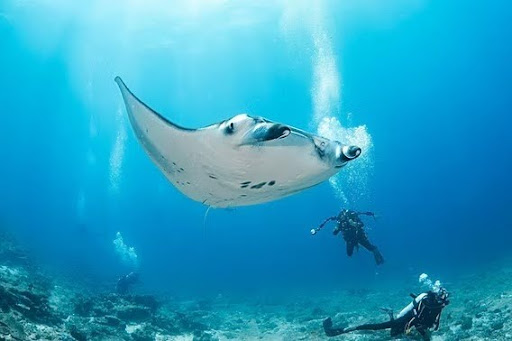
Gliding beside a manta ray ranks among diving’s greatest thrills. The Maldives offers some of the best manta encounters on the planet. This guide covers the seasons, the top dive sites, and the behavior that makes these rays so special. It also shows you how to plan a dive trip built around them.
What Makes Manta Rays So Special
Manta rays are among the ocean’s most graceful creatures. They can reach a wingspan of up to 7 meters and weigh nearly 2 tonnes. Yet they glide through the water with calm, effortless beauty.
Despite their size, mantas are harmless to divers. They feed only on tiny plankton, filtering it through their wide mouths. They have no stinger and no interest in people.
Mantas are also curious and intelligent. They often circle divers and play in streams of bubbles. This gentle nature turns a single sighting into a lifelong memory.
Two Types of Mantas You Can See
The Maldives is home to two manta species. Knowing the difference helps you plan your dives.
Reef Manta Rays
These are the most common in the Maldives. They visit cleaning stations and feed near reefs and lagoons. You can see them across many atolls all year.
Oceanic Manta Rays
These are the larger of the two. They prefer deeper, open water in the far south. Atolls like Fuvahmulah and Addu offer the best chance to meet them.
Understanding the Manta Seasons
Manta movement follows the plankton. The plankton follows the monsoon. This creates a clear, predictable pattern across the year.
From May to November, the southwest monsoon pushes plankton to the eastern atolls. Mantas gather there in large numbers. This is the peak feeding season.
From December to April, the northeast monsoon shifts the plankton west. Mantas follow it to the western sides of the atolls. Sightings stay strong, just in different spots.
Knowing this pattern is the key to success. Dive the right side of the atoll for the season, and your chances soar.
Best Places for Manta Ray Diving
Certain sites stand out for reliable manta action. Each offers a different style of encounter.
Hanifaru Bay, Baa Atoll
This UNESCO Biosphere Reserve is world-famous. From June to October, hundreds of mantas gather to feed. Only snorkeling is allowed, which keeps the site calm and protected.
South Ari Atoll
South Ari offers year-round manta sightings. Cleaning stations like Madi Faru draw rays in every season. It pairs well with whale shark trips in the same waters.
Lhaviyani Atoll
Fushifaru Thila is a protected manta cleaning station. From October to March, mantas line up to be cleaned. The site also bursts with snappers and reef fish.
Addu and Fuvahmulah
The deep south hosts the giant oceanic mantas. Cleaning stations here see steady action on incoming currents. This region suits divers chasing the largest rays.
Liveaboard routes reach many of these sites in a single trip. Exploring them through guided manta ray diving in the Maldives expeditions lets you follow the rays as the seasons shift across the atolls.
Cleaning Stations Versus Feeding Aggregations
Mantas visit the Maldives for two main reasons. Each creates a different kind of dive.
At cleaning stations, mantas hover above coral while small fish remove parasites. Divers can settle on the reef and watch the show unfold. These dives are calm, steady, and ideal for photos.
During feeding aggregations, mantas gather in open water to eat plankton. They somersault and loop in a behavior called barrel rolling. When numbers climb high, they may perform rare cyclone feeding in a swirling chain.
What a Manta Dive Feels Like
A manta dive is slow and mesmerizing. You do not chase the ray. You hold your position and let it come to you.
Mantas often pass just above your head. Their wingspan can block the sunlight for a moment. The sheer scale of the animal is hard to put into words.
Stay calm and breathe slowly. Sudden moves can scare a manta away. Patience almost always brings the best encounters.
Tips for Diving Responsibly With Mantas
Mantas are protected animals in the Maldives. Your behavior keeps them safe and relaxed. Good etiquette also leads to longer encounters.
Follow these key rules underwater:
- Never touch or chase a manta ray
- Stay low and still near cleaning stations
- Do not block the manta’s path
- Avoid camera flash, which startles them
- Keep your fins clear of the coral
- Listen to your dive guide’s briefing
These habits protect the rays and the reef. They also make for richer, more natural encounters. Respectful diving keeps these sites thriving.
Photographing Manta Rays
Mantas are a dream subject for underwater photographers. A few simple choices improve your shots.
Use a wide-angle lens to fit the whole animal. Shoot upward to capture the manta against the light. Move slowly and let the ray fill the frame on its own.
Skip the flash in protected areas like Hanifaru Bay. Use natural light near the surface instead. Often a short video captures the grace better than a photo.
Skill Level and Preparation
Many manta dives suit a range of experience levels. Cleaning stations are often shallow and calm. Beginners with good buoyancy can enjoy them.
Some sites sit in stronger currents. A reef hook helps you hold position without harming coral. Solid buoyancy control matters most for a steady, safe dive.
Bring your own mask and dive computer. Choose nitrox if you want longer bottom times. Arrive prepared, and you can focus fully on the mantas.
Frequently Asked Questions
When is the best time for manta ray diving in the Maldives?
Mantas appear year-round across different atolls. The peak feeding season runs May to November on the eastern atolls. Hanifaru Bay is best from June to October.
Are manta rays dangerous?
No. Mantas are gentle filter feeders with no stinger. They pose no threat to divers or snorkelers. Simply keep a respectful distance.
Do I need to be an experienced diver?
Not always. Many cleaning stations are shallow and calm. Beginners with good buoyancy can dive them, though some sites need current experience.
Can I snorkel with manta rays instead of diving?
Yes. Hanifaru Bay and South Ari offer excellent snorkeling. Mantas often feed near the surface, making them easy to watch.
How close can I get to a manta ray?
Stay still and let the manta approach you. Never touch or chase it. Mantas often come close on their own when you stay calm.
Which atoll has the biggest manta rays?
The far south holds the giant oceanic mantas. Addu Atoll is known for the largest wingspans. Fuvahmulah also offers seasonal oceanic manta dives.
Final Thoughts
Manta ray diving in the Maldives is a true bucket-list experience. Time your trip to the season, pick the right atolls, and dive with respect. Whether at a busy cleaning station or a feeding frenzy, these gentle giants will leave you in awe. Plan well, and the mantas will do the rest.