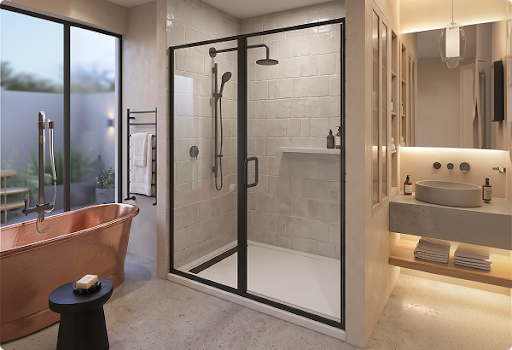
A bathroom renovation often comes down to choosing fixtures that improve both appearance and daily comfort. Shower enclosures are a major part of that decision because they affect how open the room feels, how water is contained, and how easy the space is to clean. Among the many enclosure styles available, a swing shower door with inline panel is often chosen for bathrooms that need a polished, spacious look without sacrificing practicality.
This type of enclosure combines a hinged shower door with a fixed glass panel placed beside it. The result is a layout that can work especially well in alcove showers, corner installations, and larger custom shower openings. Instead of relying on bulky framing or sliding tracks, the design keeps the entrance clear and creates a more seamless connection with the rest of the bathroom.
What Is a Swing Shower Door with an Inline Panel?
A swing shower door is a hinged glass door that opens inward, outward, or both, depending on the hardware and installation. An inline panel is a stationary glass section attached directly beside the door. Together, they form a wider enclosure opening while maintaining a clean, modern appearance.
This configuration is common in frameless shower door installations because it allows for large glass surfaces with minimal visible hardware. The fixed panel helps stabilize the enclosure and can make the shower opening feel more balanced than a door alone. It is also a practical choice when the shower opening is too wide for a single hinged door but does not require a full sliding or bypass system.
Why Homeowners Choose This Shower Door Style
One of the main reasons homeowners choose this enclosure style is the sense of openness it creates. Large glass panels allow light to pass through the shower area, making even a smaller bathroom feel brighter and less confined. This is especially valuable in bathrooms with limited natural light, where heavy framing or opaque shower curtains can make the room feel darker.
Another advantage is the clean, contemporary look. Frameless shower doors with inline panels are often associated with upscale bathroom remodeling because they emphasize simplicity and transparency. The glass enclosure can highlight tile work, stone surfaces, and other design features inside the shower rather than hiding them behind a curtain or bulky frame.
Functionality also matters. A hinged door provides a wide entry opening, which can be more comfortable for daily use than a narrow sliding door. The inline panel helps contain water spray while allowing the door to remain a manageable size.
Popular Bathroom Layouts for Inline Panel Enclosures
This enclosure style is adaptable to several bathroom layouts. In an alcove shower, the inline panel can fill the extra width beside the hinged door, creating a balanced enclosure across the opening. In a corner shower, the fixed panel can extend along one wall while the door opens from the adjacent side.
Larger walk-in shower designs may also use inline panels to create a more open entrance. In these layouts, the fixed glass section can help define the shower area without making it feel boxed in. Because the panel is stationary, it can also provide additional support for the enclosure and reduce the amount of hardware needed on the moving door.
The right layout depends on the bathroom’s dimensions, the direction the door needs to swing, and the placement of nearby fixtures such as vanities, toilets, and towel bars.
Frameless, Semi-Frameless, and Framed Options
When considering this enclosure style, homeowners will usually choose among frameless, semi-frameless, and framed designs. Frameless shower doors use thick tempered glass and minimal hardware, creating the cleanest and most modern appearance. They are popular in contemporary bathrooms because they make the shower feel almost invisible.
Semi-frameless options include some framing around parts of the enclosure, often around the fixed panel or door edges. These designs can provide additional structural support while still maintaining a relatively open look. Framed shower doors use metal framing around the glass panels and are generally more traditional in appearance.
The choice among these styles often depends on budget, bathroom design preferences, and the desired level of visual openness.
Glass Types and Finishes to Consider
The type of glass used in a shower enclosure affects both appearance and maintenance. Clear tempered glass is the most common choice because it maximizes light and keeps the bathroom feeling open. It also allows decorative tile, stone, or shower fixtures to remain visible.
Frosted or textured glass can provide more privacy while still allowing light to pass through. These finishes may be useful in shared bathrooms or in homes where privacy is a priority. Low-iron glass is another option for homeowners who want the clearest possible appearance with less green tint.
Most modern shower enclosures use tempered safety glass, which is heat-treated to increase strength and break into smaller, less hazardous pieces if damaged. Protective coatings can also be applied to reduce water spots and soap scum buildup.
Hardware Finishes and Design Details
Hardware plays a major role in the final look of the enclosure. Hinges, handles, brackets, and support bars are available in finishes such as chrome, brushed nickel, matte black, polished nickel, and oil-rubbed bronze. Matching the hardware to faucets, cabinet pulls, and lighting fixtures can create a more cohesive bathroom design.
Minimal hardware is often preferred for frameless shower doors because it keeps the focus on the glass and the surrounding tile work. However, the hardware still needs to be strong enough to support the weight of the hinged door and maintain proper alignment over time.
Installation Factors to Plan For
Installing a hinged shower door with an inline panel requires careful measurement and planning. The shower opening must be measured accurately, including width, height, wall plumbness, and curb level. Even small variations can affect how the glass panels fit and how the door swings.
Door swing clearance is another important consideration. The hinged door needs enough room to open without hitting nearby fixtures, walls, or furniture. In smaller bathrooms, installers may need to adjust the swing direction or choose hardware that allows inward opening.
Because the enclosure uses heavy tempered glass, professional installation is usually recommended. Proper anchoring, sealing, and alignment help prevent leaks and ensure that the door operates smoothly.
Maintenance and Long-Term Care
A glass shower enclosure can remain attractive for many years with regular care. Wiping down the glass after showers helps reduce water spots and mineral buildup. Mild, non-abrasive cleaners are generally recommended to avoid damaging protective coatings or scratching the glass.
Hardware should also be checked periodically to ensure hinges and handles remain secure. In frameless designs, keeping seals and sweeps in good condition helps maintain water containment.
Compared with shower curtains or heavily framed enclosures, a frameless glass enclosure can be easier to keep looking clean because there are fewer crevices where soap scum and mildew can collect.
How This Style Compares to Sliding Doors
Sliding shower doors are a common alternative for wider shower openings. They work well in bathrooms where there is limited space for a door to swing outward. However, sliding doors usually require tracks and overlapping panels, which can create a busier visual appearance.
A hinged enclosure with an inline panel offers a cleaner, more open look and provides a wider entry opening. It can also feel more luxurious because it resembles the type of enclosure often seen in high-end hotel bathrooms and spa-inspired home designs.
The best choice depends on the bathroom layout. If swing clearance is available, the hinged style can provide a more spacious and elegant result. If space is tight, a sliding door may be the more practical option.
Who This Shower Door Style Works Best For
This enclosure style is especially well suited for homeowners who want a modern, airy bathroom design. It works well in medium to large shower openings, bathrooms with attractive tile work, and remodels where maximizing light is important.
It can also be a good option for people who prefer a wide, comfortable shower entrance. Because the door swings open, it may be easier to enter and exit than some narrower sliding door configurations.
However, it may not be the best fit for very small bathrooms where the door swing would interfere with nearby fixtures. In those cases, a sliding or pivot-style enclosure may be worth considering.
Making the Right Choice for Your Bathroom
Choosing a shower enclosure involves balancing style, space, maintenance, and installation requirements. A Swing Shower Door with Inline Panel can be an excellent choice for homeowners who want a bright, modern bathroom with a spacious feel. Its combination of a hinged door and fixed glass panel offers both visual openness and practical water containment.
Before making a final decision, it is important to consider the shower opening size, door swing clearance, glass type, and hardware finish. Consulting with a qualified installer can help ensure the enclosure is measured correctly and installed safely.
With the right planning, this shower door style can become a long-lasting bathroom feature that enhances both the room’s appearance and everyday functionality.