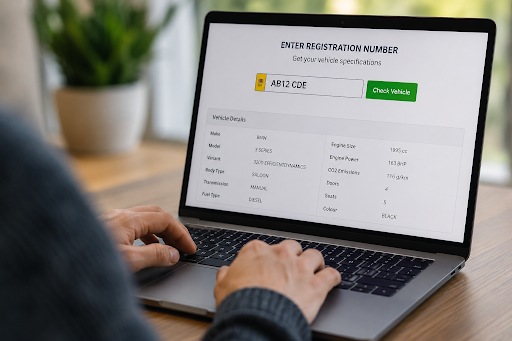
Every used car comes with a registration number. It sits on a plate, appears in the listing, and is printed on the V5C logbook. Most buyers never think much about it beyond using it to find the car online.
What they do not realise is that registration number is a key to a vast amount of information about the vehicle. Enter it into the right tool and within seconds you get the exact make, model, engine size, fuel type, colour on record, body type, emissions standard, and transmission. That is the technical DNA of the vehicle.
For buyers, this information serves a specific purpose. It tells you whether the car advertised is actually the car in front of you, and whether the spec the seller has described is accurate or inflated. For sellers with something to hide, it is the opposite of welcome transparency.
Why vehicle specification matters before you buy
A vehicle’s specification is not just a list of features. It directly affects the price you should pay, the insurance quote you receive, the tax band the car falls into, and whether it meets the environmental standards your area requires.
If you are unsure of the exact variant you are looking at, you can read the caranalytics guide to get what model is my car for detailed information on how to use a spec check effectively and what different data points mean.
A seller might describe a car as a particular engine size, fuel type, or trim level in their listing. What they describe and what the DVLA records have officially logged for that vehicle do not always match. Sometimes the discrepancy is innocent, a seller genuinely misremembering or confusing details. Sometimes it is more deliberate, an attempt to make the car sound more appealing or powerful than it actually is.
Either way, you only find out what the official records say by checking the registration number. The DVLA is the source of truth on this. What they have on file is what matters for road tax, emissions compliance, and MOT testing.
What a proper car spec check actually returns
When you enter a registration number into a vehicle spec check tool, the report pulls data directly from DVLA records and returns:
- Make and model. The manufacturer and the specific model variant. Confirms the car is what the listing claims.
- Engine size in cubic centimetres. Expressed as cc. A car advertised as a 1.6 litre that comes back as 1.4 is not a small issue.
- Fuel type. Petrol, diesel, hybrid, or electric. Affects running costs, tax, and insurance premiums.
- Colour on record. The DVLA registered colour. A mismatch between this and the physical car is worth investigating.
- Body type. Saloon, estate, hatchback, MPV, SUV, coupe. Sometimes sellers misrepresent this.
- Transmission. Manual or automatic. A straightforward difference that significantly affects value and appeal.
- Euro emission standard. Tells you whether the car meets current emissions regulations, critical for ULEZ compliance and future restrictions.
- Number of seats and doors. These can be misrepresented or genuinely misremembered.
- MOT history with mileage at each test. A timeline of recorded mileage going back years, critical for spotting clocking.
- Tax status and expiry date. Whether the car is currently legal to drive.
For buyers, this is the first layer of verification. It takes ninety seconds and tells you whether the basic facts about the car match reality.
Free vs. Premium Vehicle Data Comparison
| Check Type | Data Points Included | Best Used For | Cost |
| Free Spec Check | Make, Model, Engine Size, Fuel Type, Colour, BHP, Euro Status, MOT Expiry | Verifying listing accuracy and baseline specifications | £0.00 |
| Premium History Report | Everything in Free + Outstanding Finance, Stolen Status, Write-off (Category) History, Mileage Anomalies | Final peace of mind before transferring any money | From £10.99 |
When spec discrepancies are a red flag versus a genuine mistake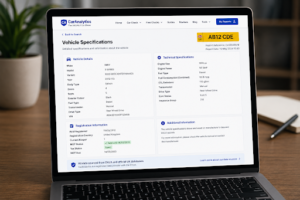
Not every difference between what is advertised and what DVLA records show is sinister. Some are simply seller error.
A genuine mistake might be a seller misremembering the fuel type, or confusing the exact engine size between two similar models. These happen more often than you might think, particularly when someone has owned a car for several years and is selling it quickly.
A genuine concern is when the discrepancy seems designed to make the car more valuable or more appealing. An engine listed as larger than it actually is, a fuel type changed from diesel to petrol to make it sound more economical, or a trim level upgraded from standard to sport. These patterns suggest deliberate misrepresentation rather than honest confusion.
The check itself does not judge intent. It just shows the facts. What you do with those facts is then up to you. If the spec does not match and the seller has a reasonable explanation that you can verify, it might not be a dealbreaker. If the explanation does not satisfy you, or if multiple specs do not match, you have concrete grounds to renegotiate the price or walk away before any money changes hands.
How to use a spec check in your buying process
The right time to run a spec check is before you commit to anything. Here is the sequence that protects you:
- You find a car listed online. Note the registration number from the listing.
- You run the spec check immediately. Before viewing, before contacting the seller, before you have invested any time or expectation. The check takes seconds.
- You compare the results against the listing. Does the make and model match? Does the engine size match? Does the colour? Do the basics line up?
- If something does not match, you contact the seller and ask for an explanation. Get it in writing if you can. If the explanation does not satisfy you, you decide whether to pursue the car or look at other options.
- Only if the spec check comes back clean do you proceed to arrange a viewing. The check is step one. It filters out the obvious problems before you invest time and travel.
The best part of this process is that it costs almost nothing and takes almost no time. A free spec check through a vehicle history provider covers the basics. For a more comprehensive report that also checks for outstanding finance, stolen markers, and write-off history, full reports start at £4.99. That is less than you will spend on petrol driving to view the car.
What sellers would prefer you did not know
If a seller has been describing a car in ways that differ from the official spec, a registration check is the last thing they want. They cannot dispute the DVLA data. They cannot argue with what is officially on record. All they can do is explain away the discrepancy or acknowledge they were not accurate with the listing.
This is why some sellers actively discourage spec checks, or act defensive when asked for the registration number. It is also why a seller who hands over the registration and actively encourages you to check anything you like is usually a seller with nothing to hide.
For buyers, this is useful context. The registration check is not something to request apologetically as if you are being suspicious. It is basic due diligence. Any seller genuinely confident in their car has no reason to object.
Making the spec check part of every used car purchase
Used car buyers who never run into problems with spec discrepancies tend to have one thing in common. They check every car, every time, before they go any further. It becomes automatic rather than something they debate.
The check costs nothing to free depending on how detailed a report you want. It takes ninety seconds. It gives you baseline facts you cannot get any other way, and it puts you in a stronger position when negotiating because you have verified the spec independently rather than relying on what the seller has told you.
For a quick check right now, you can get a free car specs check on caranalytics using just the registration number no account, no payment, and results in seconds.
Frequently Asked Questions (FAQs)
Q: Is a DVLA car spec check completely free?
A: Yes. Basic vehicle specification data such as make, model, engine size, fuel type, and registration date is public record and can be accessed completely free using just the vehicle’s registration number.
Q: Why does the seller’s listing show a different engine size than the spec check?
A: This happens either due to an honest mistake by the seller or a deliberate attempt to inflate the car’s value. Always trust the official DVLA record over a seller’s written description, as the logbook data dictates your insurance and tax bands.
Q: Can a car’s registered colour be changed legally?
A: Yes, but the owner is legally required to notify the DVLA immediately if a vehicle is resprayed or wrapped in a new colour. If the physical car colour doesn’t match the spec check report, it indicates either an unreported color change or potentially a more serious issue like a cloned vehicle.