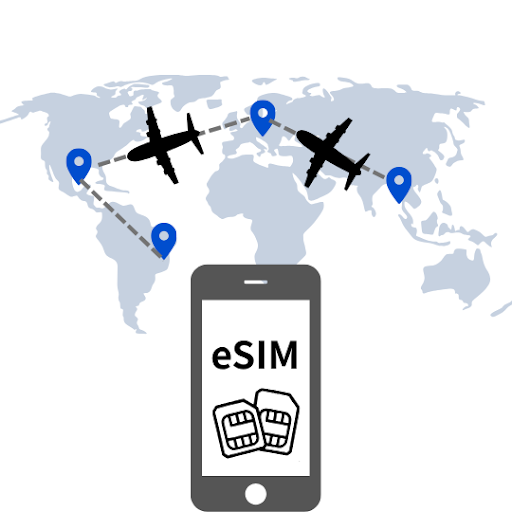
If you have ever landed in a foreign country and watched your phone frantically search for signal, only to receive a text warning you about eye-watering roaming charges, you already understand why the eSIM has quietly become the single most important travel accessory of the last decade. For frequent flyers, digital nomads, backpackers, and first-time international travelers alike, an eSIM has replaced the fumbling ritual of hunting down a local SIM card at the airport kiosk. No more paper clips, no more pigeon-Spanish negotiations with a sales agent, no more losing your original SIM in a hotel drawer for the rest of your life.
An eSIM (embedded SIM) lets you activate a local or regional mobile plan directly on your phone within minutes, often before your plane has even taken off. Whether you are heading to Tokyo for a two-week ramen tour, exploring the Amalfi Coast, or setting up a remote work base in Bali, an eSIM keeps you connected the moment you turn off airplane mode.
In this comprehensive guide, we will unpack exactly what an eSIM is, how it works, why it has become a travel essential in 2026, and how it compares with physical SIM cards and pocket WiFi. We will also walk through step-by-step setup instructions, common troubleshooting tips, myths that still confuse travelers, and where the technology is heading next. By the end, you will know exactly how to choose and install the right eSIM for your next trip.
What Is an eSIM?
The letter “e” in eSIM stands for “embedded.” Rather than being a small removable plastic chip that slides into a tray on the side of your phone, an eSIM is a tiny chip permanently built into the motherboard of your device. Instead of physically swapping cards to change carriers or plans, you simply download a digital SIM profile onto that chip, usually by scanning a QR code or tapping a button in an app.
The concept is not brand new. The GSMA, the international body that governs mobile standards, first introduced eSIM specifications for consumer devices back in 2016. But adoption exploded once Apple removed the physical SIM tray from US iPhone models, and Google, Samsung, Xiaomi, and other manufacturers rolled out compatible flagship devices worldwide. Today, virtually every premium smartphone released since 2022 supports eSIM natively.
For travelers, the practical difference is enormous. In the physical SIM era, you had to research a local operator, find a store, provide identification documents, sometimes wait for activation, and then store your home SIM somewhere safe for the return trip. With an eSIM, all of that is compressed into a few taps on your screen, and your original home number stays exactly where it is.
How Does an eSIM Work?
Understanding the mechanics helps you troubleshoot problems on the road and choose better plans for your travel style.
The Technology Behind eSIMs
An eSIM is essentially reprogrammable hardware. The embedded chip inside your phone can hold multiple “profiles,” each representing a different mobile carrier and plan. When you buy a travel eSIM, the provider sends you an activation code (usually a QR code, sometimes a manual activation string). Your phone contacts the carrier’s servers, downloads a small profile file, and installs it. From that moment onward, the phone can register on that carrier’s mobile network exactly like it would with a physical SIM.
The Activation Process
Most travel eSIMs follow the same simple flow:
- Purchase an eSIM plan online for your destination country or region.
- Receive a QR code or activation link via email or an app.
- Open your phone’s cellular settings and choose “Add eSIM” or “Add Cellular Plan.”
- Scan the QR code or paste the activation details.
- Choose whether the new plan should handle data, calls, texts, or all of the above.
- Turn on data roaming for that specific eSIM line (this does not trigger charges from your home carrier; it simply allows the profile to connect to the correct local network).
The whole process typically takes less than five minutes. You can do it from your couch at home the night before your trip and simply activate the profile when you land.
Why eSIMs Have Become a Game-Changer for Travelers
The travel industry has quietly reorganized itself around eSIM technology. Here is why so many seasoned travelers now consider it non-negotiable.
Instant Activation Without Physical Cards
The biggest single benefit is convenience. Airport SIM kiosks are notorious for long lines, tourist markups, and confusing prepaid plans printed in a language you may not read. With an eSIM, you can compare providers online while sipping coffee at home, pay in your local currency, and land in a new country with working mobile data before you have even collected your baggage.
Keep Your Home Number Active
Because eSIMs run alongside your physical SIM (or alongside another eSIM), you keep receiving calls, iMessages, WhatsApp messages, and banking two-factor authentication codes on your primary number. This solves one of the classic pain points of international travel: missing an important text from your bank because you swapped out your SIM and cannot receive the verification code.
Avoid Predatory Roaming Charges
Even in 2026, international roaming from your home carrier can cost between five and fifteen US dollars per day, sometimes more depending on the destination. A regional travel eSIM often costs a fraction of that for far more data. For a two-week trip through Europe, an eSIM plan can easily save you over a hundred dollars compared to daily roaming fees.
Multiple Profiles on One Device
Modern phones can store multiple eSIM profiles at once and switch between them instantly. This is a game-changer if you are on a multi-country trip. For example, you can install one profile for your week in Japan, another for a stopover in South Korea, and a third regional profile for a Southeast Asia leg. No physical swapping, no lost cards, no visits to phone stores.
Environmentally Friendlier
A small point, but a real one: eliminating billions of plastic SIM cards, plastic holders, and paper packaging every year has a meaningful environmental benefit that many carriers now highlight as part of their sustainability commitments.
eSIM vs Physical SIM vs Pocket WiFi: Which Is Best for Travel?
Travelers essentially have three options for connectivity abroad. Each has genuine trade-offs, and the best choice depends on your device, your destination, and how you travel.
eSIM: Pros and Cons
Pros: Instant setup, no physical card to lose, keeps your home number active, easy to buy in advance, competitive pricing, works with multiple carriers on one device, and no need for airport queues.
Cons: Requires a compatible phone (roughly 2018 and newer for iPhone, 2020 and newer for most Android flagships). Setup requires WiFi or existing mobile data the first time. Not all budget or older phones support the technology.
Physical SIM: Pros and Cons
Pros: Works on virtually any phone, sometimes cheaper for long stays, useful in countries with limited eSIM support, and easy to top up in person at local shops.
Cons: You must physically buy it on arrival, remove your home SIM, risk losing tiny plastic pieces, and often provide passport identification. You also lose access to your home number unless you carry a dual-SIM device.
Pocket WiFi: Pros and Cons
Pros: Can share a connection across multiple devices and multiple travelers, useful for families or small groups where not everyone needs their own data plan.
Cons: Extra device to carry and charge, rental fees add up quickly, must be picked up and returned, easy to leave behind in a hotel room, and it has limited range from the device itself.
For most solo travelers, couples, and even small groups where everyone has their own phone, an eSIM is now the default winner on cost, convenience, and reliability.
Which Devices Support eSIM?
Compatibility is the first thing to verify before buying any travel eSIM. Nothing ruins arrival day faster than discovering your phone cannot install the plan you already paid for.
iPhones
Every iPhone from the XS, XR, and XS Max onward supports eSIM, with the exception of some region-specific variants. US iPhone 14, 15, and 16 models are eSIM-only, meaning they have no physical SIM tray at all.
Android Phones
Google Pixel 3 and later support eSIM in most regions. Samsung Galaxy S20 and later flagship models generally support eSIM, though some regional variants (particularly Chinese-market versions) may not. Xiaomi, Oppo, Motorola, and OnePlus have rolled out eSIM support on selected models since 2022.
iPads, Watches, and Laptops
Cellular iPads, Apple Watch models with LTE, and even some newer laptops (Microsoft Surface Pro, HP EliteBook, Lenovo ThinkPad) support eSIM profiles, which can be handy for backup connectivity while traveling.
To verify quickly, open your phone’s dial pad and type *#06#. If a value called “EID” appears alongside the IMEI, your device supports eSIM. Alternatively, check the manufacturer’s specifications page for your exact model and region before you buy.
How to Choose the Best eSIM for International Travel
Not all eSIM providers are created equal. Once you confirm your device is compatible, use these criteria to narrow down the right plan for your trip.
Data Allowance
Ask yourself honestly how you use your phone abroad. Casual maps, messaging, and occasional social media usually stay under 1 GB per week. If you post videos, use ride-hailing constantly, or work remotely, you may need 3 to 10 GB or unlimited plans. Unlimited eSIM plans have become far more common and affordable in the last two years, and are worth it for most travelers who want peace of mind.
Coverage and Countries
Some eSIMs are country-specific (for example, a Japan-only plan), while others are regional (Europe covering 30+ countries) or global (over 150 countries on one profile). If your trip crosses multiple borders, a regional plan is almost always cheaper and less hassle than stacking single-country plans on top of each other.
Validity Period
Plans typically range from a single day to 90 days. Choose one that comfortably covers your entire trip with a small buffer. Running out of data on your last night, in an unfamiliar city trying to reach your hotel, is a bad time to shop for a top-up.
Speed and Network Quality
The best eSIM providers partner with tier-one local carriers, giving you 4G LTE or 5G speeds equivalent to what locals experience. Cheaper providers sometimes throttle speeds or force fallback to 3G. Look for reviews that mention actual download speeds in the country you are visiting.
Customer Support
Things sometimes go wrong. A QR code might not scan, an activation might fail, or a network might not register on arrival. Twenty-four-hour multilingual customer support is genuinely useful, especially when it is three in the morning and you have just landed. Providers like Holafly, for example, have built much of their reputation on responsive live chat support that works no matter what time zone you are in, which matters more than travelers realize until they actually need help.
Ease of Purchase and Refunds
A good provider gives you clear pricing in your local currency, honest information about coverage limitations, easy refund policies for eSIMs that were never installed, and simple top-up options if you need more data mid-trip.
Step-by-Step Guide to Setting Up an eSIM for Your Trip
Here is the exact process most travelers follow, distilled from real trips across multiple continents.
Before You Leave Home
- Check that your phone is unlocked and eSIM-compatible.
- Update your phone’s operating system to the latest version to avoid activation bugs.
- Choose a reputable eSIM provider based on your destination and data needs.
- Purchase the plan and save the QR code or activation email somewhere accessible. A screenshot works, or star the email in your inbox.
- If the provider allows it, install the eSIM profile now while you are on stable home WiFi. Leave it turned off until you arrive.
On Arrival at Your Destination
- Turn on your phone and disable roaming on your primary SIM if you have not already.
- Activate the newly installed eSIM profile in Settings.
- Turn on data roaming for the eSIM line (again, this does not incur charges; it simply lets it register on the correct local network).
- Set the eSIM as the default line for mobile data. Keep your home line for calls and texts if you like.
- Open a browser or app to confirm data is working properly.
Troubleshooting Common Issues
If the eSIM does not connect, first restart your phone. If that fails, manually select the network in Settings under Mobile Networks. Ensure “Data Roaming” is enabled for the correct line. If the QR code will not scan, most providers offer a manual entry option with a code and address string that you can type in. When all else fails, contact customer support directly through the provider’s app or live chat. This is where quality providers really prove their worth.
Top Destinations Where an eSIM Makes Travel Easier
Some regions particularly reward travelers who plan their connectivity in advance with an eSIM.
Europe
The Schengen Area is essentially a single-market playground for eSIM providers. A single regional plan can cover a Paris-Amsterdam-Berlin-Prague itinerary without ever changing profiles. Roaming laws between EU carriers are excellent, and coverage is dense even in rural areas across most of Western and Central Europe.
Asia
Japan, South Korea, Singapore, Taiwan, and Thailand all have world-class mobile networks with strong eSIM support. Japan in particular used to require complicated tourist SIM purchases at airports, and eSIMs have eliminated that pain point entirely. Vietnam and the Philippines have also caught up rapidly.
The Americas
The United States, Canada, and Mexico all have robust eSIM ecosystems. Central and South American coverage has improved dramatically since 2023, with regional Latin America plans now widely available for travelers doing multi-country tours through Colombia, Peru, Chile, and Argentina.
Regions with More Limited Support
A handful of countries, including parts of Central Asia, some African nations, and Cuba, still have limited eSIM infrastructure. In these places, a physical local SIM may still be the more practical choice. Always check your specific destination before assuming eSIM will be available.
Common Myths About eSIMs Debunked
Myth: eSIMs are less secure than physical SIMs. In fact, eSIMs are arguably more secure. They cannot be physically stolen from your phone, and SIM-swap fraud is harder to execute against an eSIM because activation requires cryptographic authentication.
Myth: You lose your phone number when you use a travel eSIM. False. Your primary line stays active on your original SIM or primary eSIM profile. The travel eSIM is a separate line, running in parallel with your home number.
Myth: eSIMs drain your battery faster. Only very marginally. Running two active lines uses slightly more power, but the difference is negligible in daily use and can be reduced further by disabling the line you are not actively using.
Myth: eSIMs only work on the latest expensive phones. Any iPhone from 2018 onward and most Android flagships from 2020 onward support eSIM. That covers hundreds of millions of devices already in circulation worldwide.
Myth: You have to be tech-savvy to install one. The whole process is basically “scan QR code, tap a few times.” If you have ever set up a new phone or connected to WiFi, you can install an eSIM.
The Future of eSIM Technology for Travelers
The GSMA and major device manufacturers are already rolling out the next generation of eSIM, sometimes called iSIM (integrated SIM), which embeds the SIM function directly into the phone’s main processor. This will further reduce hardware costs, save internal space for larger batteries, and make cellular connectivity available on an even wider range of devices, from smaller wearables to connected cars and IoT sensors.
For travelers specifically, expect to see even more automation. Some providers are experimenting with location-aware eSIM profiles that switch networks automatically as you cross borders, single subscriptions that seamlessly cover every country you visit for a flat monthly fee, and tighter integration with airline and hotel booking apps so that connectivity is bundled into your trip from the moment you book.
5G Standalone rollout is also making eSIM plans faster and more reliable, particularly in cities like Seoul, Tokyo, London, Dubai, and Singapore where 5G coverage now rivals home broadband for typical travel use cases.
Final Thoughts: Is an eSIM Right for Your Next Trip?
For the vast majority of international travelers in 2026, the answer is a clear yes. An eSIM offers faster setup, better pricing, more flexibility, and a smoother arrival experience than any other connectivity option available today. You keep your home number active, you avoid roaming charges, and you land in a new country already online and ready to navigate.
The only travelers who might still prefer a physical SIM or pocket WiFi are those visiting countries with limited eSIM support, those using older phones without eSIM hardware, or groups where sharing a single WiFi hotspot across many devices genuinely saves money.
If this is your first time trying an eSIM, start small. Buy a single plan for one country before a shorter trip, get comfortable with the setup process, and then scale up to regional or global plans for longer journeys. Within a trip or two, you will wonder how you ever traveled without one. For more practical travel guides, destination breakdowns, and connectivity tips that make every trip smoother, Star Storyline is a great place to keep exploring.
Frequently Asked Questions About Travel eSIMs
Do I need to remove my physical SIM to use a travel eSIM? No. Modern phones can run both simultaneously. Keep your home SIM in place to receive calls and messages while the eSIM handles data abroad.
Will my phone number change when I use an eSIM? Your home number stays the same. The travel eSIM typically provides mobile data only. Some plans include a local number, but you do not lose your original one.
Can I use an eSIM in multiple countries? Yes, if you buy a regional or global plan. Country-specific plans only cover the country they were purchased for, so pick a regional plan for multi-country trips.
How much data do I really need? For light users, 1 GB per week is usually enough. Heavy users, remote workers, and video streamers should look at 5 GB or more per week, or unlimited plans for peace of mind.
Can I buy an eSIM after I have already landed? Yes, as long as you have access to any WiFi (airport, café, hotel) to complete the initial download of the profile. Once installed, it works over cellular.
What happens if my eSIM runs out of data mid-trip? Most providers allow instant top-ups through their app, so you can add more data in a couple of minutes without interrupting your trip.
Is an eSIM better than turning on roaming with my home carrier? Almost always yes. Home carrier roaming can cost ten times more per gigabyte than a comparable travel eSIM plan, and the savings only grow on longer trips.