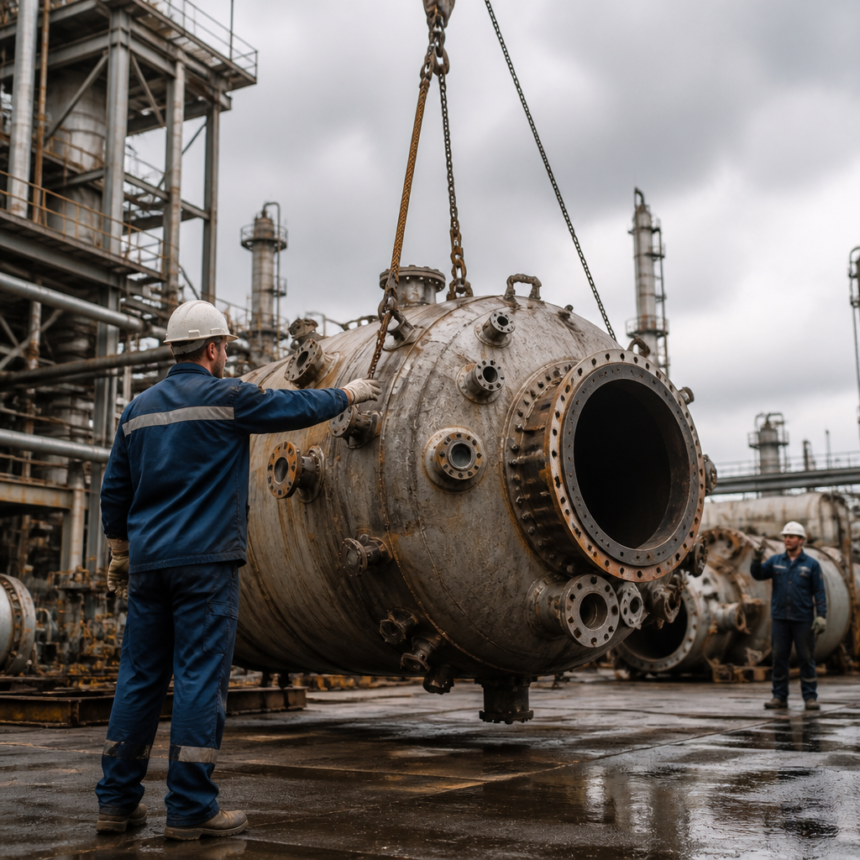
Process equipment reaches the end of its operational life for many reasons. Technology becomes obsolete, production lines shift to new chemistries, facility expansions render existing vessels undersized, or regulatory changes force costly upgrades. When a glass-lined reactor or stainless steel pressure vessel comes offline, plant managers face a decision that affects both the balance sheet and environmental compliance: what happens to thousands of pounds of engineered steel, specialty alloys, and process internals?
The answer depends on equipment condition, remaining service life, market demand, and the hidden costs of each disposal path. Unlike commodity scrap, retired reactors often retain substantial value as functional units. Understanding the salvage hierarchy helps facilities recover capital while managing the hazards inherent in decommissioning chemical process equipment.
Assessing Equipment for Second-Life Potential
Not every reactor is a candidate for resale. The first evaluation examines mechanical integrity and design life. Glass-lined vessels require visual inspection for crazing, chips, or pinholes that compromise corrosion resistance. Stainless steel reactors need ultrasonic thickness testing to map wall loss from corrosion or erosion. Pressure vessels must have current certification records and nameplate data matching ASME code requirements. Agitator shafts, seals, and drive assemblies represent additional inspection points. Equipment missing original documentation or with unverifiable service history loses significant resale value.
Process contamination history matters equally. Reactors used in pharmaceutical production may carry residues of potent active ingredients requiring specialized cleaning validation. Chemical vessels that handled pyrophoric reagents, heavy metals, or carcinogens demand decontamination procedures far exceeding normal industrial cleaning. The cost of decontamination often determines whether equipment moves to secondary markets or directly to scrap. Facilities must document cleaning procedures to transfer liability and meet buyer requirements.
Market Demand for Specific Reactor Types
Certain equipment categories command consistent demand. Glass-lined reactors between 50 and 5,000 gallons find buyers across pharmaceutical, agrochemical, and fine chemical sectors. These vessels offer corrosion resistance at a fraction of exotic alloy costs. Jacketed stainless steel reactors in 316L grade appeal to food, biotech, and cosmetic manufacturers. Hydrogenation reactors with pressure ratings above 500 psi serve specialty chemical producers unable to justify new equipment costs for pilot or campaign production.
Conversely, equipment with limited applications struggles to find buyers. Single-use reactors designed for proprietary processes, vessels with non-standard mounting configurations, or exotic alloy construction for niche chemistries typically yield better returns as scrap. Geographic location also affects marketability. Reactors in regions with active pharmaceutical or chemical manufacturing see faster turnover than equipment in isolated areas where transportation costs erode value.
The Resale Path: Brokers and Secondary Markets
Facilities selling used reactors work through several channels. Specialized equipment brokers maintain buyer networks and handle technical qualifications, reducing the internal effort required. These intermediaries understand which reactor configurations suit specific industries and can identify buyers quickly. A global buyer and seller of used process plants offers another avenue, purchasing equipment outright or facilitating sales between facilities. This approach accelerates capital recovery and eliminates the holding costs of storing decommissioned assets. Online marketplaces provide broader visibility but require sellers to field inquiries, provide technical specifications, and coordinate logistics independently.
Pricing depends on factors beyond equipment condition. Market timing influences values significantly. Economic downturns compress prices as more facilities shed excess capacity. Conversely, strong demand in emerging pharmaceutical markets or specialty chemical growth drives premium pricing for well-maintained reactors. Realistic expectations help. Used glass-lined reactors typically sell for 30 to 50 percent of replacement cost when properly documented and certified. Stainless steel vessels without specialized features command lower percentages. Equipment requiring re-glassing, pressure testing, or major refurbishment sees discounted valuations reflecting those costs.
When Salvage Beats Resale
Some reactors yield higher returns when dismantled for component recovery. Agitator assemblies, variable frequency drives, temperature control systems, and instrumentation packages often outlast the base vessel. High-quality gear reducers, magnetic drive couplings, and explosion-proof motors find ready buyers. Specialty valves, sanitary fittings, and sight glasses also command salvage premiums. This approach makes sense when vessel integrity has degraded but internals and auxiliaries remain serviceable.
Copper coils, stainless steel baffles, and nickel alloy internals carry scrap value exceeding mixed steel rates. Separating these materials during decommissioning increases recovery. However, salvage operations introduce safety considerations. Cutting into vessels that held flammable solvents, pyrophoric materials, or reactive chemicals requires hot work permits, atmospheric testing, and specialized contractors. The risks parallel those faced by crews responding to industrial incidents, where proper hazard assessment and trained personnel make the difference between safe cleanup and catastrophic outcomes.
Direct Scrap: Lowest Return, Fastest Resolution
When equipment has no viable second-life market, scrap metal recycling provides a final option. Industrial scrap processors handle reactor decommissioning, cutting, and transportation. This path offers the lowest financial return but eliminates storage costs and liability concerns. Scrap pricing follows commodity markets. Stainless steel 316 yields higher rates than carbon steel, but values fluctuate based on global supply and demand. Clean, uncontaminated material commands premiums while mixed or coated steel receives discounted rates.
Facilities must still address environmental compliance. Residual process materials, thermal insulation containing asbestos, and lead-based paints require characterization and proper disposal. Scrap processors may reject contaminated equipment or assess surcharges for remediation. Documenting the waste stream and disposal methods protects against future liability. Many processors now provide certificates of destruction for equipment containing proprietary technology or designs, preventing intellectual property concerns from blocking disposal.
Tax and Accounting Considerations
Decommissioning decisions affect financial statements. Equipment sold as functional units may generate ordinary income or capital gains depending on depreciation schedules and holding periods. Scrap disposal typically results in losses equal to remaining book value minus scrap proceeds. Some facilities donate equipment to educational institutions or international development programs, potentially claiming charitable deductions. Tax treatment varies by jurisdiction and requires coordination between plant management, accounting teams, and tax advisors.
Timing matters for financial planning. Accelerating decommissioning into a fiscal year with strong operating income can offset gains with disposal losses. Conversely, deferring sales of high-value equipment to a subsequent period may provide needed revenue. These strategies require advance planning since reactor decommissioning involves permitting, contractor scheduling, and buyer negotiations that span months.
Emerging Value Streams in Process Equipment Lifecycle
New business models are reshaping equipment disposition. Refurbishment specialists purchase reactors requiring major work, invest in re-glassing or pressure vessel recertification, then resell with warranties. This approach converts equipment previously destined for scrap into viable production assets. The trend benefits both sellers, who receive better pricing than scrap, and buyers, who gain certified equipment at costs below new construction.
Technology advances also extend equipment life. Older reactors retrofitted with modern control systems, advanced mixing impellers, or improved heating/cooling systems gain renewed utility. These upgrades sometimes occur before decommissioning, increasing resale value, or after purchase by buyers seeking customized solutions. Understanding which modifications add value helps sellers position equipment effectively. For specialized applications like freeze-drying processes used in pharmaceutical manufacturing, secondary market equipment paired with modern automation provides cost-effective capacity expansion.
Making the Disposition Decision
Effective decommissioning starts with comprehensive equipment inventories during planning phases. Early assessment identifies resale candidates, allowing time to gather documentation, conduct inspections, and engage buyers before physical removal begins. This approach maximizes returns and streamlines project schedules. Waiting until demolition contracts are signed typically forces scrap disposal as the only feasible option.
Cross-functional teams improve outcomes. Operations staff understand equipment history and condition. Maintenance personnel know which components retain value. Environmental teams ensure compliance with decontamination and disposal requirements. Procurement or finance representatives evaluate market conditions and coordinate with brokers or buyers. Bringing these perspectives together produces disposal strategies balancing financial return, regulatory compliance, and project timelines. The decision framework should weigh resale potential against holding costs, transportation expenses, and the capital tied up in idle assets. In many cases, accepting slightly lower pricing for faster disposition delivers better overall results than holding equipment for optimal market conditions that may not materialize.