When a Texas afternoon climbs past 95 and your AC stumbles, the right first steps can protect your system and speed up a professional repair. Many common symptoms point to specific parts of a split air conditioner: the evaporator coil in the air handler, the outdoor condenser coil, the blower motor, the compressor, and the controls that coordinate them. This guide explains what warm air, short cycling, odd noises, or water around the unit often mean, what you can safely check, and what to avoid. It does not replace licensed diagnostics, but it can help Arlington homeowners prevent extra damage and communicate clearly when a technician arrives.
-
Warm air or weak airflow at the registers
If supply vents blow room temperature air, start with airflow. A clogged return filter or a collapsed filter media reduces airflow across the evaporator coil, which can ice over and further lock airflow Low refrigerant can also cause the coil to freeze, as can a failing blower motor that cannot move enough air. Turn the system off at the thermostat to thaw the coil if you see frost or the suction line is cold and sweaty at the air handler; running a frozen coil risks liquid refrigerant floodback to the compressor. If the filter is visibly dirty, replace it with the correct size and thickness. For persistent warm air after a clean filter and thaw, scheduling professional help, such as the AC repair services from Milligan Mechanical, can prevent compressor damage and pinpoint whether the cause is a refrigerant leak, a blower issue, or ductwork restrictions.
-
Short cycling, tripped breakers, or a system that will not stay on
Short cycling is when the system starts and stops every few minutes. On hot Arlington days, this often ties back to an overheated condenser coil, a failing condenser fan motor, or a refrigerant problem that triggers a high pressure switch. A breaker that trips repeatedly is a red flag for an electrical fault, such as a compressor winding short, a seized motor, or a compromised contactor. Do not keep resetting the breaker; that can overheat wiring. Instead, make safe checks: ensure outdoor airflow by clearing cotton, leaves, or grass clippings from the coil fins; verify at the thermostat that you are in Cool mode with Auto fan; and inspect for a condensate float switch at the air handler that may have shut the system down due to a clogged drain. If the unit still trips or short cycles, leave it off and arrange a diagnostic visit.
-
Outdoor unit hums but the fan or compressor will not start
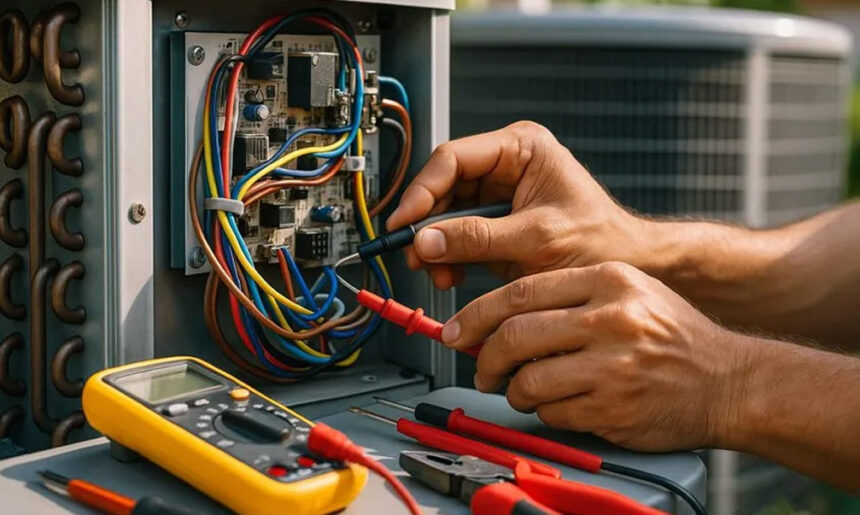
A steady hum from the condenser without fan rotation usually points to a failed run capacitor or a stuck fan motor. A clicking sound from the contactor followed by humming can indicate a compressor attempting to start but failing to overcome locked rotor torque, particularly after a power blip or lightning nearby. Do not spin the fan blade with a stick and do not open the electrical compartment. Capacitors must match microfarad ratings and voltage, and they hold a charge even after power is cut. A technician will test the capacitor under load, check the contactor for pitted contacts, measure amperage against nameplate values, and verify whether a hard start kit is appropriate or if the motor itself is failing.
-
Water around the indoor unit or a sudden shutdown on humid days
Condensation forms on the evaporator coil and drains through a pan and line; algae, dust, or sagging tubing can clog that condensate drain. Many Arlington installations include a float switch on the primary drain pan or the emergency secondary pan under an attic air handler. When the pan fills, the float opens the circuit and shuts the system down to prevent ceiling damage. Signs include water near the furnace or air handler, gurgling at the drain, or a dry supply of cool air followed by a hard stop. Power the system off, mop up standing water, and locate the drain outlet outside; a brief application of a wet dry vacuum at that outlet can clear light clogs. Avoid removing service panels around live wiring, and do not bypass a float switch. Ask your technician about adding a cleanout tee, trap maintenance, or tablets that help keep algae in check.
What to do before the technician arrives and what not to try
Simple preparation improves a repair visit. If you saw ice on lines or the coil, leave the system off for at least an hour to thaw before the appointment; airflow and pressure readings are unreliable on a frozen system. Replace a filthy return filter with the correct size, and note the date. Clear 18 to 24 inches around the outdoor unit for access and condenserairflowg. Jot down symptoms and timing: for example, “trips after 5 minutes in late afternoon” or “ums after yesterday’s storm.” Photograph any thermostat error codes. Locate the electrical disconnect at the condenser and the labeled breaker, but leave them as is unless instructed. Write down the make, model, and serial numbers from the air handler and condenser nameplates if visible. Secure pets and ensure attic or closet access to work safely and quickly.
A few things to avoid can save equipment. Don’t top off refrigerant yourself; federal rules, safety, and proper superheat/subcooling adjustments require licensed handling. Do not pressure wash the condenser coil; bent fins choke airflow and raise head pressure, risking a thermal overload. Use ultra-high MERV filters gently unless your return and duct sizing support them; too much restriction can freeze the coil and strain the blower motor. Never bypass a condensate float switch or jumper a safety. And resist the urge to keep lowering the thermostat when the system is already running flat out; if it cannot reach setpoint, forcing extended runtime can turn a manageable fault into a failed compressor.
Recognizing patterns in AC symptoms helps you protect the system during extreme North Texas heat. Warm air after a new filter points to low refrigerant or a blower issue; rapid cycling often flags condenser problems; a steady hum suggests a capacitor or motor fault; and water near the air handler usually means a clogged drain and a tripped float switch. Take safe steps, gather observations, and shut the unit down if it’s icing, tripping breakers, or repeatedly locking out. A licensed HVAC technician can then verify pressures and temperatures, test capacitors and contactors, inspect coils and drains, and make a durable repair without adding preventable damage to the to do list.