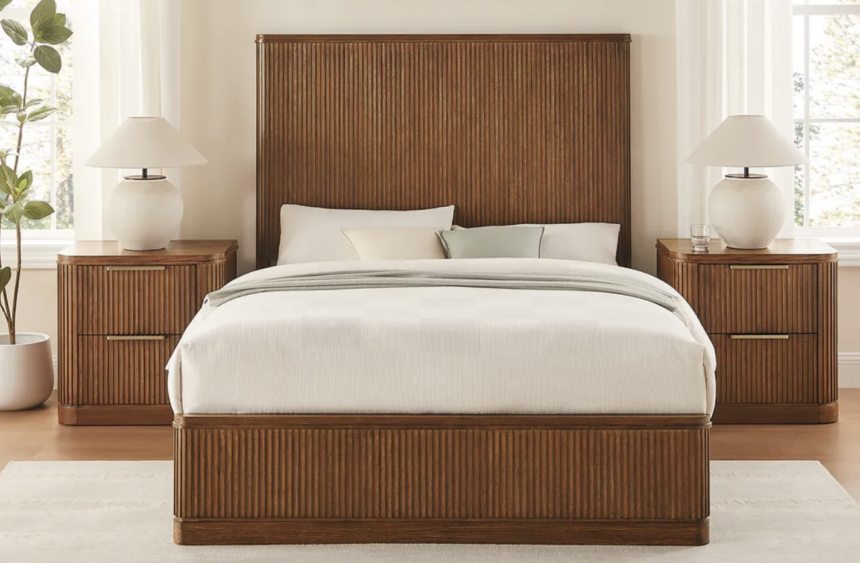
An oak nightstand and oak dresser can warm a small bedroom, but too many similar brown surfaces may make the room feel dense. Proportion, visible floor, textiles, and light determine whether wood feels grounded or crowded.
The oak dresser carries more visual weight and usually becomes the main storage anchor. An oak nightstand should support reach and nighttime essentials without filling the remaining wall or turning the bedside into another broad display surface.
Start with the room’s existing floor and bed upholstery. Then place the oak nightstand and larger cabinet where drawers can open, people can pass, and warm tones remain separated by lighter or softer materials.
Measure the Empty Space and Open Space
Record wall width, mattress height, outlet position, door swings, and the route around the bed. An oak nightstand must fit the space when its drawer or door is open, not only when the bedroom is carefully staged, empty, quiet, and still.
Use the oak dresser’s open-drawer depth when testing the opposite wall. A shallow cabinet may provide less capacity, but it can protect movement. In a compact room, comfortable, unobstructed daily circulation for both sleepers often matters more than filling every available wall with furniture and storage.
- Tape each furniture footprint on the floor.
- Add the full drawer-opening zone.
- Walk from bed to closet and door.
Decide Which Wood Piece Leads
Two oak pieces can compete if both use strong grain, deep color, and busy styling. Let the dresser establish the main wood tone. Keep the bedside piece simpler or more open so the bed remains the room’s visual center.
Scale the Bedside Piece to the Bed
The oak nightstand should place a lamp, water, glasses, or a book within comfortable reach. Check height from the mattress and width against the available path. A smaller top works when storage below stays organized.
Keep the Main Storage Wall Quiet
An oak dresser needs breathing room around its edges. Avoid placing a hamper, chair, mirror, and tall plant tightly against it. Visible wall and floor help the cabinet read as one anchor rather than the beginning of a crowded storage row.
Vary Grain Activity
If the dresser has pronounced grain or textured fronts, choose a quieter nightstand. If both pieces are visually active, reduce patterns in the rug and bedding. Small rooms benefit when one surface carries detail and others provide rest.
Use Height Carefully
Tall objects can draw the eye upward, but several on every surface create clutter. One vertical lamp or artwork grouping near the oak dresser may be enough. Keep the bedside sightline clear and maintain safe, stable lamp placement.
Separate Warm Wood With Soft Materials
The two oak pieces often look more balanced when fabric interrupts the palette. Bedding, a rug, curtains, or an upholstered headboard can bridge finishes while preventing the floor and furniture from blending into one large wood field.
Choose a Light Textile Base
Cream, oatmeal, pale gray, muted green, or soft blue may create contrast without making the wood look orange. Test fabric beside the furniture under the room’s actual light. Undertones can shift after sunset or near colored walls.
Repeat Oak in Small Details
Use a narrow frame, tray, or chair arm to carry warmth across the room. Avoid adding another large cabinet solely to repeat the tone. Small echoes can connect the oak nightstand to the storage wall without using more floor space.
Control Shine
Matte walls, woven fabric, and ceramic lighting soften reflections from finished wood. A small bedroom may feel calmer when different materials handle light differently. Limit bright metal finishes and repeat one accent through pulls, lamps, or frames.
| Room Element | Helpful Role | Space-Saving Choice |
|---|---|---|
| Oak furniture | Adds warmth and weight | One lead tone |
| Rug or bedding | Separates wood surfaces | Light, low-contrast palette |
| Lighting | Reveals grain at night | One focused bedside lamp |
| Wall decor | Adds vertical interest | One grouped composition |
Make Storage Reduce Visual Noise
Keep nighttime items with the oak nightstand and clothing with the oak dresser. Small rooms feel crowded faster when categories spill across multiple surfaces. Clear roles also make a short morning or evening reset easier.
Protect Bedside Reach
Place only the objects used from bed on top. An oak dresser should handle folded clothing, while the bedside drawer stores chargers, glasses, or a current book. Avoid using the oak nightstand as overflow for unrelated clothing.
Manage cords so they do not cross the walking path or pinch in drawers. A compact surface needs fewer charging devices, not a denser collection of adapters. Keep personal products according to their label and away from children when required.
Organize Heavy Items Lower
Store heavier folded pieces in lower drawers and stay within the maker’s load instructions. Anchor clothing storage furniture according to current safety guidance, especially where children live or visit. An oak dresser’s weight alone does not prevent a tip-over.
Tune the Room With Light and Editing
Observe both oak pieces in daylight, lamp light, and with the screen devices normally used before bed. Warm bulbs may deepen amber tones, while cool light may reveal gray notes in the finish.
Layer Light Instead of Adding Decor
Use general light plus one focused bedside or wall lamp. The oak nightstand should have enough usable surface for the lamp base without crowding essentials. A dresser may need no additional light if the room already has balanced illumination.
If the wood still feels heavy, remove objects and expose more wall first. Move a basket, reduce artwork, or choose lighter bedding before replacing furniture. Editing often changes visual weight more effectively than adding another pale accessory.
Check the Doorway View
Stand at the entrance and notice which piece dominates. The oak dresser should not block the visual path to the bed. If the oak nightstand disappears beside a large headboard, repeat its tone once at a higher level.
- View the room with daylight only.
- Turn on the normal evening lighting.
- Remove one object from each crowded surface.
Keep Warmth Useful
Warm wood works in a small bedroom when it supports storage and reach without claiming every wall. Leave floor and surface visible, repeat materials lightly, and let textiles clearly separate similar tones across the bed, floor, and window through every change of season.
Review the room after a normal week. If clothes, chargers, or books remain on top, adjust storage roles before adding organizers. A compact bedroom feels calmer when the system is easy to reset each morning and evening without shifting other furniture, not when every visible object matches.