Technology is changing even the simplest parts of the workplace, and vending is no exception. Modern vending solutions have moved far beyond coin-operated machines stocked with a limited selection of snacks. Today, businesses can provide convenient food and beverage access through cashless payments, better inventory management, modern equipment, and more reliable service. Just as importantly, having access to dependable vending machine repair can help businesses minimize disruption when equipment needs attention and keep workplace refreshment options available to employees.
For business owners and facility managers, these improvements are about more than offering snacks. Smart vending can become part of a broader workplace strategy focused on convenience, employee experience, operational efficiency, and effective use of available space. When implemented thoughtfully, vending solutions can provide useful benefits without requiring a business to operate its own food service program.
Greater Convenience for Employees
Convenience is one of the clearest advantages of workplace vending. Employees often need drinks, snacks, or quick meals during the day, and leaving the workplace every time they need something can be inconvenient.
Providing refreshments on-site allows employees to access what they need without traveling to a convenience store, café, or restaurant. This can be particularly valuable for workplaces located in industrial areas, large office parks, warehouses, healthcare facilities, and other locations where nearby food options may be limited.
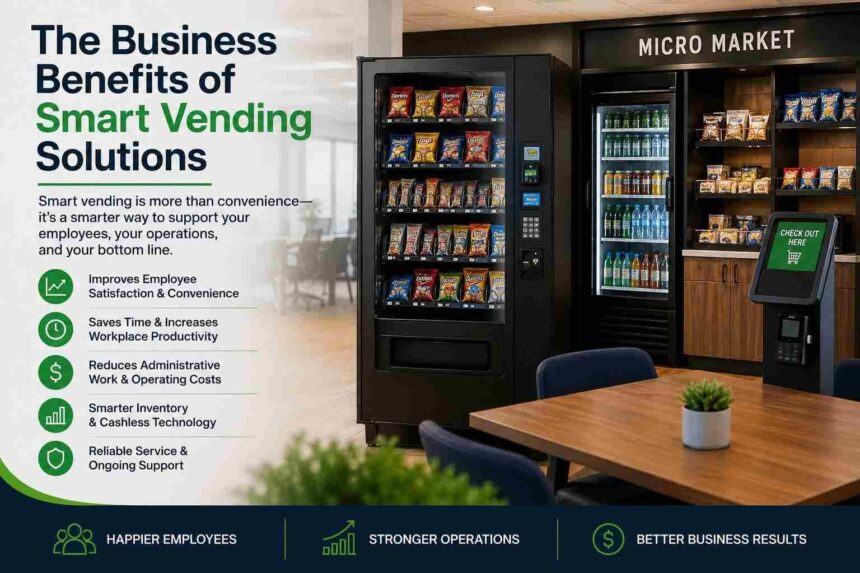
Businesses are also looking beyond traditional machines. A micro market for office use can provide an open, self-service environment where employees can browse a broader selection of meals, snacks, and beverages and complete purchases through a self-checkout system. Best Vending describes its micro markets as customizable workplace setups that can include fresh food and cashless checkout technology.
Supporting a More Efficient Workday
Smart vending solutions can also contribute to operational efficiency. When refreshments are conveniently available inside the workplace, employees may spend less time leaving the property for routine purchases.
This does not mean businesses should discourage employees from taking proper breaks. Breaks are an important part of a normal workday. Instead, the goal is to give employees more choices about how they use that time.
Someone with a short break may prefer grabbing a drink or snack in the building rather than driving elsewhere. Another employee may still choose to leave for lunch. Providing convenient options simply adds flexibility.
For employers, that flexibility can help make the workplace function more smoothly, particularly in environments with structured shifts or limited break periods.
Cashless Payments Create a Simpler Experience
One of the biggest changes in vending technology has been the shift toward cashless transactions. Consumers have become accustomed to paying with cards, smartphones, and contactless payment systems in almost every part of daily life.
Workplace vending has followed the same direction. Modern equipment can make purchasing faster by accepting common digital payment options rather than requiring employees to carry coins or small bills.
Best Vending, for example, currently highlights payment options including credit cards, tap-to-pay, Apple Pay, and Google Pay on its vending equipment.
For businesses, this type of technology can help create a workplace experience that feels consistent with the convenience employees already expect when shopping outside the office.
Smarter Inventory Can Reduce Empty Shelves
Traditional vending management can create problems when inventory is checked only during scheduled visits. Popular products may sell out before the next service, while less popular items can remain in the machine for too long.
Connected vending technology can improve this process by providing better visibility into inventory levels. Operators can use sales and inventory information to determine which products need replenishment before servicing a location.
Best Vending states that its wireless technology can track machine inventory so products can be replenished more efficiently and slower-selling items identified.
For employees, the technology itself may be invisible. What matters is the result: a better chance of finding the products they want when they visit the break room.
Businesses Can Offer More Variety
Another advantage of modern vending is the ability to serve a wider range of preferences. The traditional image of a vending machine filled exclusively with candy, chips, and soda no longer reflects every workplace setup.
Businesses can consider beverages, traditional snacks, fresh foods, and options intended for different dietary preferences. The ideal mix will depend on the workforce, operating hours, location, and available space.
Micro markets expand this flexibility even further because open shelving and refrigeration can accommodate products that may not fit efficiently into a conventional machine.
This allows employers to think about refreshments as a customizable workplace amenity rather than a standardized vending setup.
Reliable Service Protects the Investment
Technology is useful only when it works consistently. A vending machine that frequently fails to process payments or dispense products can quickly become a source of frustration.
That makes maintenance and responsive service an important part of any vending program. Businesses evaluating vending providers should consider not only the equipment itself but also how restocking, maintenance requests, refunds, technical problems, and equipment issues are handled.
Reliable service helps protect the value of the amenity. When problems are resolved promptly, businesses can continue providing employees with the convenience they expected when the vending program was introduced.
Smart Vending Can Reduce Administrative Work
Running an internal snack program may sound straightforward, but it can create additional responsibilities. Someone must purchase products, monitor inventory, organize storage, clean the area, and decide what needs to be reordered.
A professionally managed vending solution can reduce some of that administrative burden. Instead of treating refreshments as another recurring office-management task, companies can rely on a service provider to manage much of the equipment and product replenishment.
This can be particularly helpful for growing businesses where administrative teams already manage numerous workplace responsibilities.
The result is a relatively simple amenity that can operate without requiring employees to run a small retail operation themselves.
Workplace Amenities Can Influence Employee Experience
Employees evaluate workplaces based on many small experiences. Compensation, leadership, flexibility, career development, and organizational culture will usually matter far more than any single amenity, but the quality of the physical workplace still contributes to everyday satisfaction.
Convenient refreshments can be one part of that environment.
A well-organized break area gives employees a dedicated place to step away from their desks, talk with colleagues, and recharge during the workday. Vending machines, coffee equipment, seating, and micro markets can all contribute to making that space more useful.
Businesses should not view these amenities as replacements for strong workplace policies. They are supporting features that can make the employee experience more convenient.
Smart Solutions Can Fit Different Business Environments
Another advantage of vending is flexibility. Not every business needs the same refreshment program.
A small office may need only a few machines or a simple coffee station. A larger corporate workplace may benefit from a micro market with fresh food and self-checkout. Warehouses and manufacturing environments may prioritize round-the-clock access because employees work across multiple shifts.
Healthcare facilities, educational institutions, residential properties, dealerships, and other organizations may have completely different requirements.
Businesses should therefore begin by evaluating their workforce size, operating hours, available space, employee preferences, and expected usage. The best vending solution is the one that fits how the organization actually operates.
Technology Can Help Control Operating Costs
Businesses naturally need to consider cost when introducing any workplace amenity. Smart vending solutions can offer advantages because they do not require the same staffing model as a traditional café or cafeteria.
Automated purchasing, inventory monitoring, and self-service systems can help provide convenient food and beverage access with relatively limited day-to-day involvement from the employer.
Some newer equipment also incorporates energy-efficient features. Best Vending, for example, notes the use of energy-efficient vending equipment with LED lighting among its technology offerings.
Companies should still compare providers, service arrangements, equipment requirements, and any associated costs before making a decision.
Making Smart Vending Part of a Broader Workplace Strategy
The most effective vending program should not exist in isolation. Businesses can consider how it fits alongside other workplace amenities such as coffee stations, water filtration, collaborative spaces, employee lounges, wellness initiatives, and flexible working areas.
The objective is not to fill the workplace with unnecessary perks. It is to identify services that solve everyday problems for employees while remaining practical for the business.
Companies can also collect feedback after implementing a vending program. Understanding which products employees use, what they would like to see added, and whether the location is convenient can help improve the service over time.
Final Thoughts
Smart vending solutions demonstrate how relatively simple workplace services can benefit from technology. Cashless payments, inventory monitoring, broader product selections, reliable maintenance, and self-service markets can make refreshments easier to access while reducing some of the administrative burden placed on businesses.
The strongest business case is not that vending alone will transform productivity or employee retention. Rather, it can provide a practical combination of convenience, efficiency, and improved workplace experience. For companies looking for manageable ways to modernize their facilities, smart vending can be one useful component of a broader workplace strategy.