Commercial buildings need high-level glazing specialists whenever architectural glass must be inspected, maintained, replaced, or upgraded in places that standard ground-level access cannot reach, or where the work creates extra safety, structural, or logistical risks. This may involve a cracked panel fifty metres above the ground, a damaged atrium roof above a busy lobby, or a large curtain wall that needs better thermal performance. Standard tradespeople may not have the equipment or training to handle the weight, height, and legal responsibility involved.
Using dedicated high level glazing specialists RAIL allows difficult building envelope work to be completed without putting the public, the structure, or daily business activity at risk. From tall office blocks to multi-storey transport stations, these specialists bring technical knowledge, rope access skills, and lifting equipment for safe, accurate high-level installations.
1. Glass Panels Are Installed Above Occupied Areas
Whenever architectural glass is positioned above public paths, entrances, pavements, or busy indoor atriums, there is almost no room for error. A falling pane or loose shards could cause serious damage or fatal injuries. Guidance such as CIRIA C632 looks at overhead glazing by asking whether broken parts could fall and injure people below.
Specialists examine how overhead glass will behave after a breakage. They check that the system uses suitable toughened laminated glass with strong interlayers. If high-level panels fail or show signs of stress in these areas, qualified specialists should attend quickly. They can set up exclusion zones and carry out containment or replacement work without placing pedestrians at risk.
2. Windows or Curtain Walls Are Difficult To Reach
Modern commercial buildings often have complex shapes, stepped elevations, deep overhangs, and very tall façades that normal access equipment cannot reach. Mobile elevating work platforms (MEWPs) usually reach their practical limit at about 45 metres. On taller buildings, or in narrow city streets where a cherry picker cannot fit or safely set up its outriggers, access becomes a major technical problem.
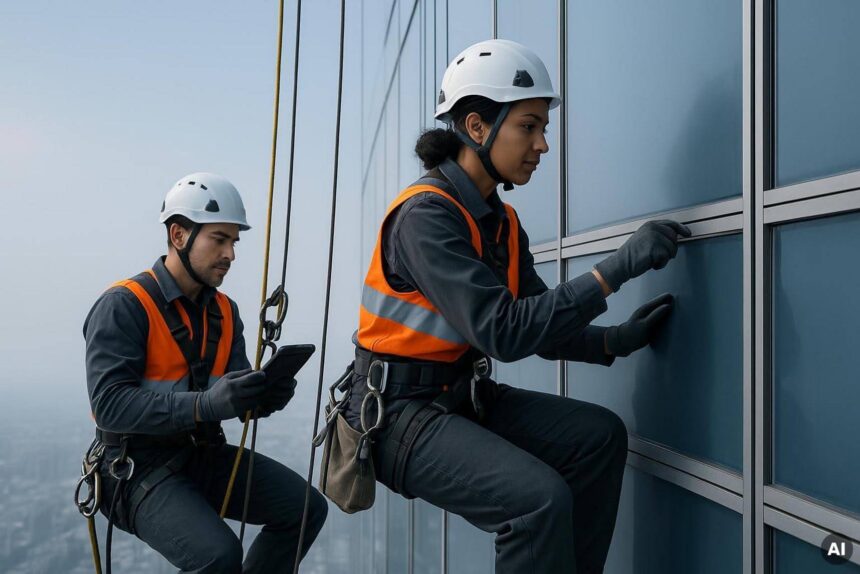
In these situations, specialist rope access teams, often certified by IRATA, or Building Maintenance Unit (BMU) operators may be needed. These workers know how to install safe rigging lines, reach awkward recesses, and work securely on vertical surfaces where ordinary window installers cannot operate.
3. Glazing Units Are Oversized, Heavy, or Structurally Complex
Modern façades often use large insulated glass units (IGUs) that weigh hundreds of kilograms or even more than a tonne. Moving a large, multi-layered glass sheet into a frame high above the ground cannot be done safely with hand suction cups and basic scaffolding.
High-level contractors use specialist handling systems, including spider cranes, dual-circuit vacuum lifters, counterweighted beam systems, and precision glazing robots. These tools let teams guide large structural panels into position with millimetre accuracy. This helps prevent frame jamming, edge damage, and unexpected stress on the structure.
4. Glass Has Cracked, Failed, or Broken at Height
Unexpected breakage in high-level glass needs a fast and organised response. A cracked outer pane in a multi-storey curtain wall can send glass into the street below. Building owners cannot wait several weeks for a general contractor to work out how the site can be accessed and made safe.
Glazing specialists provide emergency make-safe services. They may apply strong safety film, fit temporary mechanical restraints, or install local boarding before a full replacement is arranged. Their teams can quickly bring in access equipment, remove the damaged unit safely, and check that nearby panes have not suffered harmful secondary movement or stress.
5. A Building Refurbishment Changes the Glazing Requirements
Updating an older commercial building to meet modern energy standards often involves replacing old single glazing or early double glazing with solar-control, triple-glazed, or vacuum-insulated units. These upgrades can greatly change the weight of the façade, wind loads, and the amount of movement caused by temperature changes.
Specialist contractors work with structural and façade engineers during refurbishment projects. They check whether existing frames, mullions, and anchor brackets can carry the new units. They then replace panels across occupied buildings while keeping disruption to normal business as low as possible.
What Problems Require a Specialist Glazing Contractor?
Commercial glazing is exposed to constant weather, repeated temperature changes, and mechanical vibration. Faults often begin with small defects or long-term wear that general maintenance staff may not have the tools or training to find and repair.
Finding the cause of glazing damage early helps protect building owners from wider problems, such as water entering the structure around the glass or sudden panel failure.
Failed Seals, Condensation, and Misted Insulated Units
Insulated Glass Units use sealed spacers around the edges to hold insulating gases, such as argon, between the panes. Over time, heat changes, sunlight, and building movement can damage the edge seals. Moist air may then enter the sealed space.
This causes mist, streaks, and condensation between the panes, where it cannot be wiped away. A failed unit affects the appearance of an important commercial building and reduces sound and heat insulation. It usually needs to be removed and replaced with a new IGU fitted accurately into the frame.
Spontaneous Breakage and Nickel Sulphide Inclusions
Toughened glass can sometimes break without an impact because of tiny contaminants called nickel sulphide (NiS) inclusions. These particles become trapped in the glass during production. They may expand slowly over time and disturb the internal stresses until the entire pane suddenly breaks.
These incidents often show a recognisable “butterfly” fracture pattern around the source of the inclusion. High-level specialists can identify this type of breakage, secure the broken safety glass, and recommend heat-soaked replacement panes that reduce the chance of another unexplained failure.
Loose, Corroded, or Damaged Frames and Fixings
A high-performance glass unit is only as safe as the frame and fixings that hold it to the building. Long exposure to acid rain, salt in coastal air, and standing water can cause aluminium oxidation, corrosion in fixing bolts, and damage to pressure plates.
Specialist contractors do more than replace the glass. They inspect pressure plates, structural silicone joints, isolation gaskets, and anchor cleats. If corrosion has weakened the frame, they repair, realign, or redesign the support parts before fitting the replacement pane.
Which Regulations and Standards Apply to High-Level Glazing?
Commercial glazing work in the UK is controlled by a wide range of health, safety, building, and construction rules. Breaches can leave property owners, landlords, and facilities managers facing serious legal claims and problems with cover.
Glazing specialists plan their work around these requirements so each installation follows the relevant national standards.
Work at Height Regulations and Site Safety Duties
The Work at Height Regulations 2005 state that duty holders should avoid work at height where possible. If it cannot be avoided, they must use the safest suitable equipment to reduce both the chance of a fall and the harm it could cause. The rules also require proper task planning, competent supervision, and checks on lifting and access equipment before use.
Specialist contractors prepare Risk Assessments and Method Statements (RAMS) for each project. These documents cover the rigging setup, wind limits, emergency rescue plans, and the size of exclusion zones. They give building owners a clear record of how the work will be managed safely.
Building Regulations for Safety Glazing and Guarding
UK Building Regulations, including Approved Document K on protection from falling, collision, and impact, set performance rules for glass in areas where people may hit or fall against it. Glass near walking surfaces, beside doors, or used in vertical balustrades must either break into safer blunt pieces or stay together without falling out of the opening.
Other standards, including BS 6262 for glazing in buildings and BS 5516 for sloping and roof glazing, set requirements for glass types and support systems used overhead. These rules cover resistance to snow and live loads from maintenance work.
How Should Building Owners Manage High-Level Glazing Risks?
Waiting for a pane to crack, move, or leak before arranging maintenance is unsafe and costly. Emergency work at height may require rushed access arrangements, road closures, and faster, more expensive glass production.
A planned façade maintenance programme helps protect the structure, keep the public safe, and maintain the long-term value of a commercial building.
Schedule Routine Inspections and Façade Maintenance
Commercial property owners should arrange regular, recorded façade inspections with qualified glazing consultants or high-level rope access teams. Tall façades need hands-on condition surveys at set intervals to check gasket condition, anchor bolt torque, frame corrosion, and the bond of structural silicone.
Regular inspections can find small defects, such as failed edge sealant, early delamination along laminated edges, or loose pressure-plate screws, before they lead to major failures. Early seal repairs and frame maintenance can extend the life of the building envelope and reduce the need for early glass replacement.
What Should You Look for in a High-Level Glazing Specialist?
Choosing a contractor for high-level commercial glazing affects building operations, public safety, and financial risk. Facilities managers should check potential contractors carefully instead of comparing prices alone.
Strong glazing contractors can show a wide range of completed projects, current safety qualifications, and reliable links with major glass manufacturers.
Experience With Commercial and Multi-Storey Buildings
High-level commercial façades include structural connections and access issues that do not appear in ordinary residential glazing. Potential specialists, such as Rope Access in London, should show clear experience with large curtain walls, unitised façades, and commercial atriums.
Review previous project examples, references from facilities management companies, and work on buildings with similar access problems. An experienced contractor will know how to work with highway authorities on street permits, bus lane closures, and pedestrian diversions.
Appropriate, Training, and Safety Documentation
High-level glazing carries serious risks, so suitable cover is very important. Commercial glazing contractors should have strong Public Liability and Employers’ Liability policies that cover work at height. They may also need Professional Indemnity cover for design and specification services.
Check that workers have current trade qualifications, including CSCS cards for construction sites, IRATA certificates for rope access, and IPAF certificates for mobile access equipment. A reliable contractor should provide these records, along with project-specific RAMS, before work begins.